
2026年9月1日
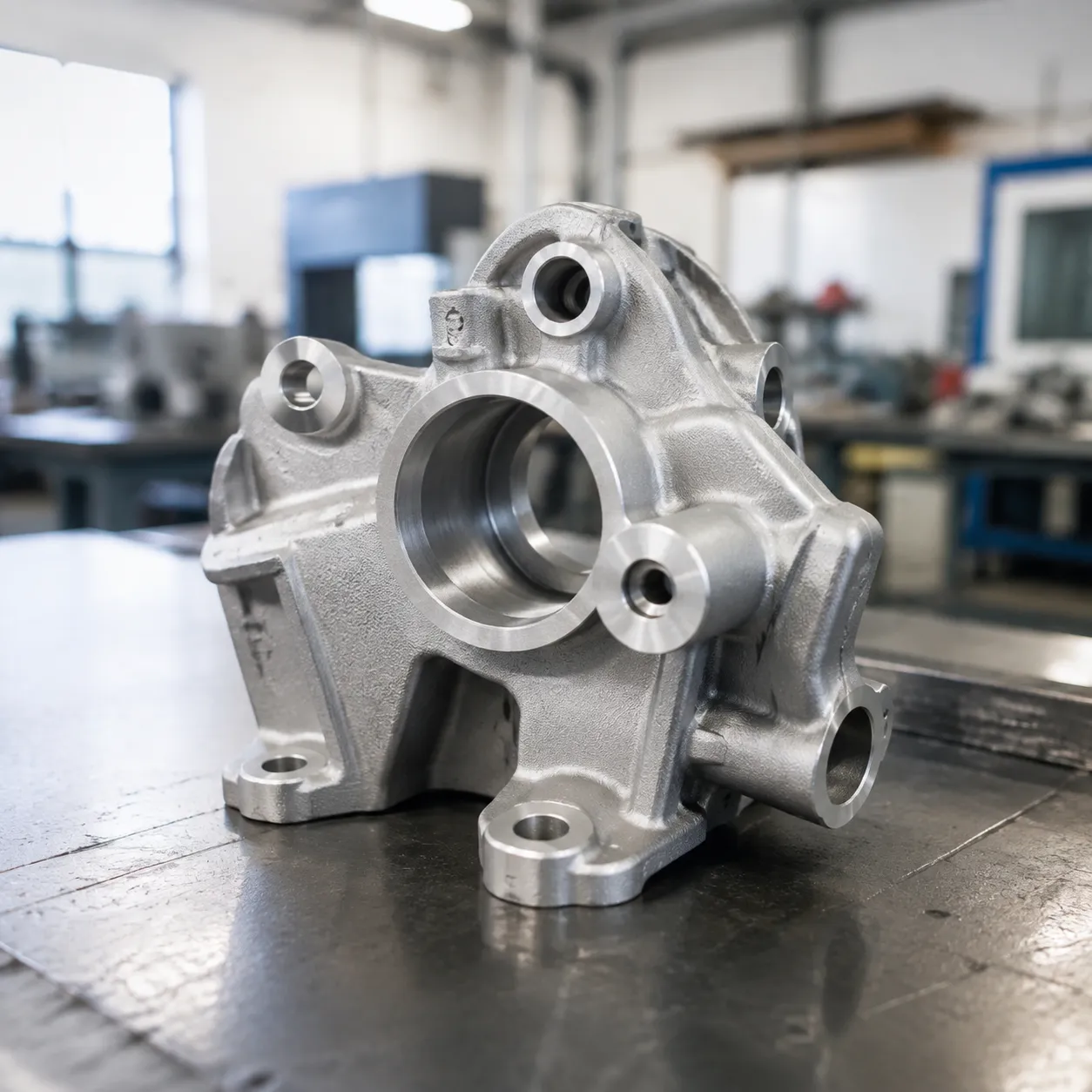
High-quality investment casting parts with precise tolerances, versatile alloys, and custom manufacturing solutions for aerospace, automotive.
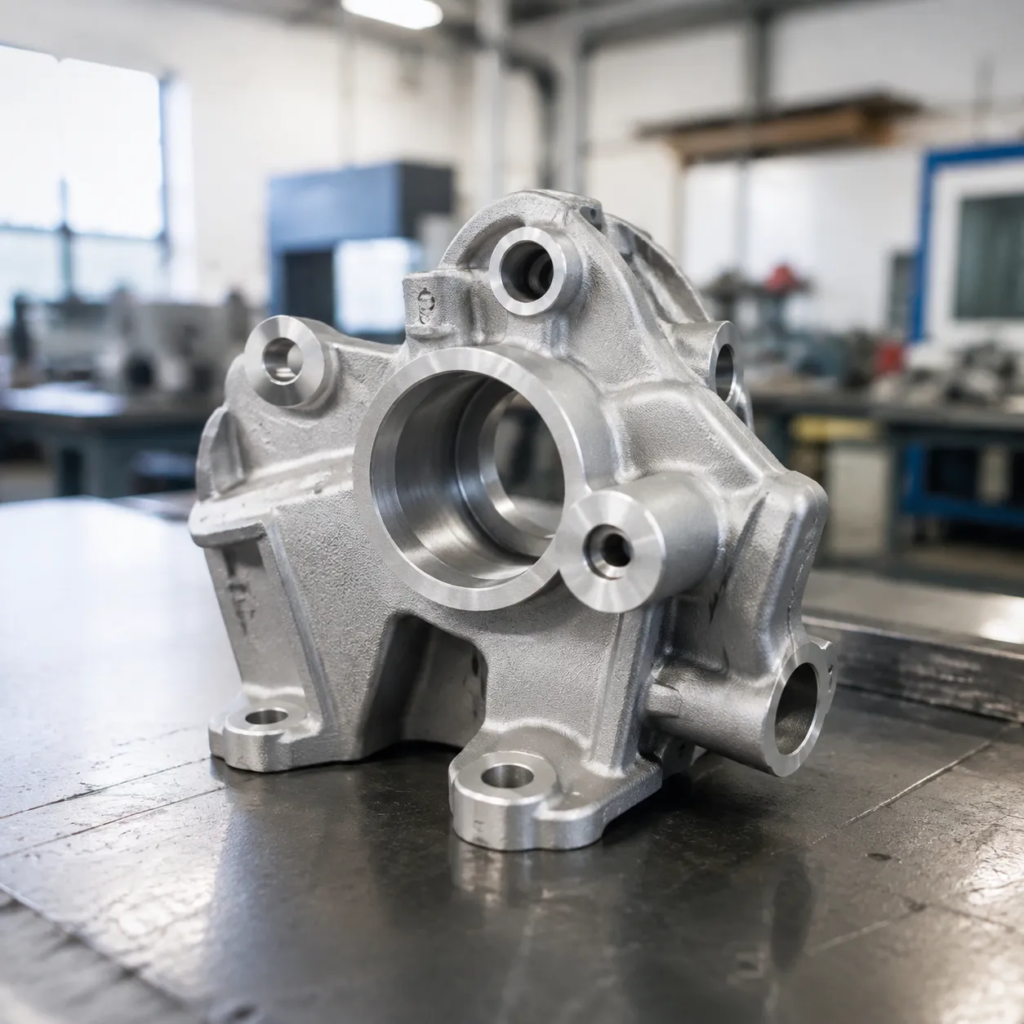
What is an Investment Casting Part?
An investment casting part is a net-shape metal component manufactured through the lost wax casting process. We inject wax into a precision die to create a replica pattern, coat that pattern with ceramic to build a rigid shell, melt the wax away, and pour molten metal into the resulting cavity. This method produces custom metal components with high dimensional accuracy and minimal need for secondary machining.
Geometries and Precision Features
We engineer precision investment casting components to realize complex designs that traditional sand casting or CNC machining cannot easily duplicate:
- Complex Internal Passages: Intricate fluid channels, curved internal voids, and blind holes.
- Thin-Wall Structures: Uniform wall thicknesses down to 1.5 mm without sacrificing structural strength.
- Fine Surface Features: Clear logos, part numbers, knurling, and sharp contours cast directly into the metal.
Primary Alloy Options
We cast a broad range of ferrous and non-ferrous metals tailored to your specific mechanical and environmental requirements:
| Alloy Family | Key Characteristics | Typical Components |
|---|---|---|
| Stainless Steel | Outstanding corrosion resistance, toughness, and hygienic properties | Valve bodies, pump impellers, marine hardware |
| Carbon & Alloy Steel | High tensile strength, impact resistance, and cost efficiency | Structural brackets, gears, heavy machinery parts |
| Aluminum Alloys | Lightweight performance and high strength-to-weight ratio | Aerospace brackets, electronic housings |
| Superalloys (Nickel/Cobalt) | Extreme heat tolerance, creep resistance, and oxidation control | Turbine blades, high-temperature engine parts |
Key Benefits of Using Investment Casting Parts
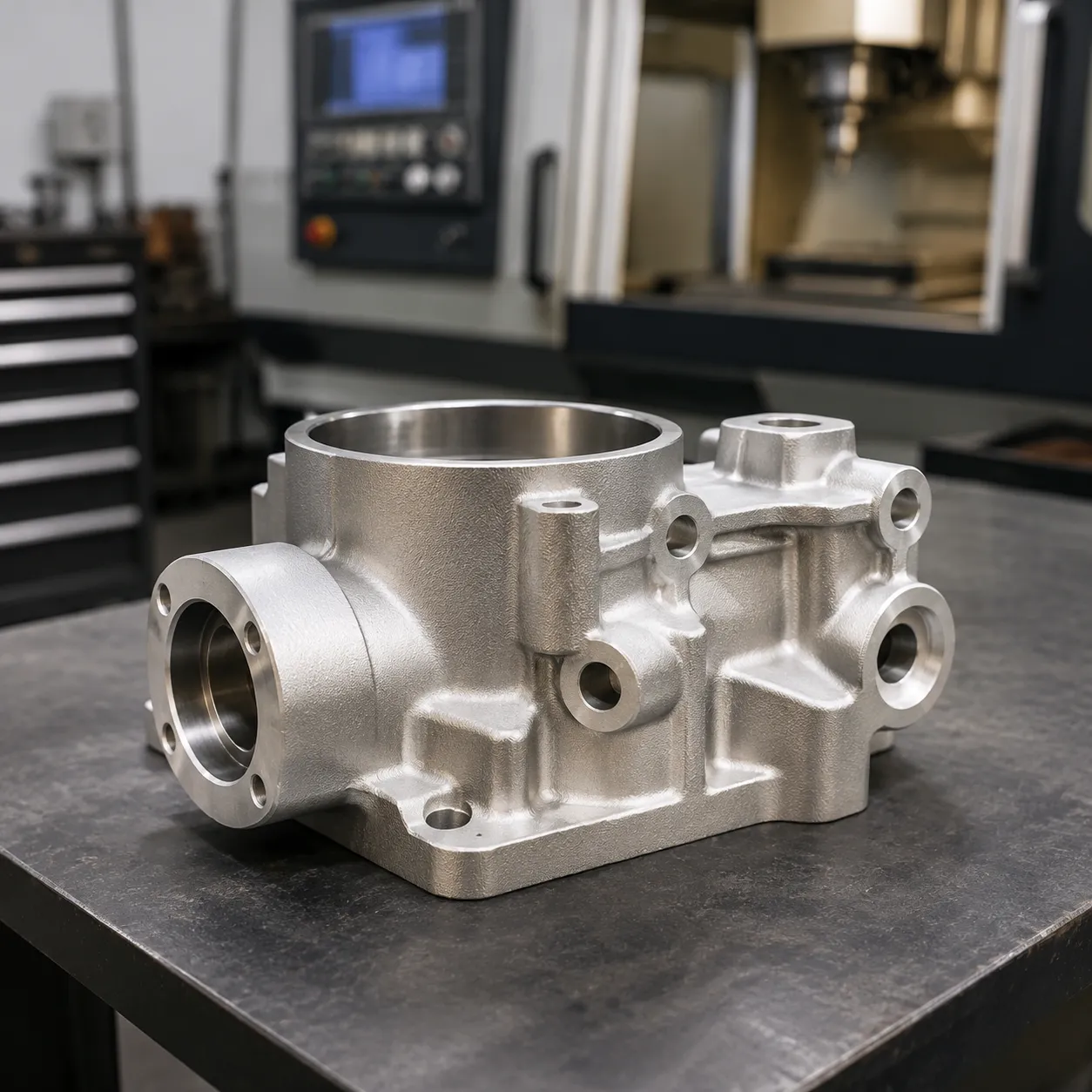
When we manufacture an investment casting part, we deliver exceptional precision and structural integrity. The lost-wax method gives engineers complete design freedom, eliminating many of the constraints found in standard machining or basic fabrication.
| Key Advantage | Technical Capability | Production Value |
|---|---|---|
| Intricate Geometries | Casts internal channels, thin walls, and fine details | Eliminates multi-part assemblies |
| Tight Tolerances | Holds linear tolerances down to ±0.005 in/in | Reduces costly secondary machining |
| Smooth Surface Finish | Achieves standard surface roughness Ra 3.2–6.3 µm | Ready-to-use parts straight out of shell |
| Alloy & Weight Range | Pours stainless steel, carbon steel, and superalloys | Suitable from sub-ounce up to 100+ lbs |
Intricate Geometries and Tight Tolerances
We form complex features like internal passages, blind holes, and sharp undercuts directly in the ceramic mold. Controlling shell expansion and alloy shrinkage allows us to hold strict dimensional tolerances, producing precision investment castings that fit exact blueprint specifications. Understanding the full investment casting process benefits and tolerances helps optimize parts before tooling begins.
Superior Surface Finish with Minimal Machining
The fine ceramic slurry creates an extraordinarily smooth mold wall. Every metal investment casting part comes out of the shell with an excellent surface finish Ra (typically 125 to 250 RMS), drastically cutting down on extra grinding, polishing, or secondary metal removal.
Alloy Flexibility Across Part Weights
We pour a broad selection of materials to meet your exact mechanical demands, including stainless steel, carbon steel, aluminum, and high-heat nickel superalloys. Our process handles everything from tiny component brackets to heavy industrial pump housings without compromising density or strength.
High Cost Efficiency for Any Production Scale
Because wax injection tooling costs far less than permanent die casting dies, we offer high cost efficiency across low, medium, and high-volume runs. Near-net-shape production minimizes metal scrap, ensuring maximum value from your raw material investment.
Common Industrial Applications for Investment Casting Components
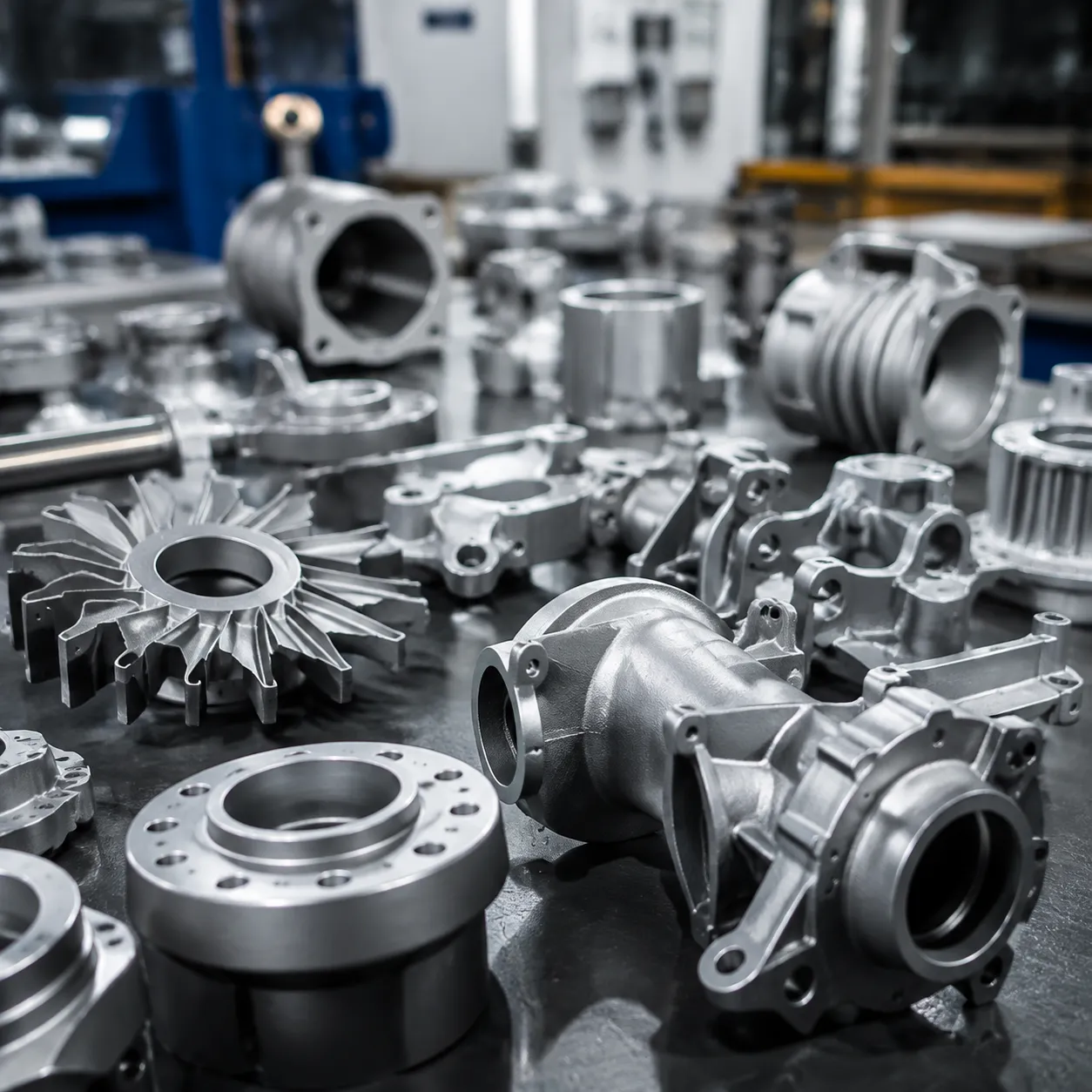
We supply custom investment casting part solutions to mission-critical industries where precision, tight tolerances, and structural integrity are essential.
Aerospace and Defense Hardware
- Engine Components: High-temperature turbine blades, fuel injectors, and combustion hardware.
- Structural Fittings: High-strength, lightweight aerospace cast parts, mounting brackets, and airframe hinges.
Automotive Sector
- Drivetrain & Exhaust: Turbocharger housings, exhaust manifolds, and transmission shift forks.
- Lightweight Assemblies: High-stress suspension components optimized using methods outlined in our aluminum alloy casting guide.
Medical Devices and Implants
- Surgical Instrumentation: Scalpel handles, retraction clamps, and robotic surgical tool heads.
- Orthopedic Implants: Biocompatible hip, knee, and shoulder replacement components with precise surface geometries.
Valves, Pumps, and Fluid Handling
- Impellers & Housings: High-efficiency pump impellers designed for smooth fluid flow.
- Industrial Valves: Pressure-tight bodies and valve and pump castings produced via our specialized process for casting stainless steel components.
Step-by-Step Investment Casting Manufacturing Process
Producing a high-precision investment casting part involves six distinct stages. We strictly control each step to ensure tight tolerances, flawless structural integrity, and smooth surface finishes.
1. Wax Pattern Injection
We inject specialized wax into precision metal tooling dies to produce exact wax replicas of the desired component. These patterns account for exact alloy shrinkage factors during cooling.
2. Sprue Assembly
Operators mount multiple wax patterns onto a central wax runner system (sprue tree) using thermal welding. This tree creates the primary channels for molten metal to enter every cavity.
3. Ceramic Shell Building
We submerge the wax tree into a liquid ceramic slurry and coat it with fine refractory sand (stuccoing). Repeating this dip-and-dry sequence several times creates a rigid, heat-resistant ceramic shell mold.
4. Dewaxing and Shell Firing
We place the coated assembly into a high-pressure autoclave to melt away the inner wax—the core step of the lost wax casting process. Afterwards, we fire the hollow ceramic shell at high temperatures (up to 1100°C) to burn off residual wax and maximize shell strength.
5. Molten Metal Pouring
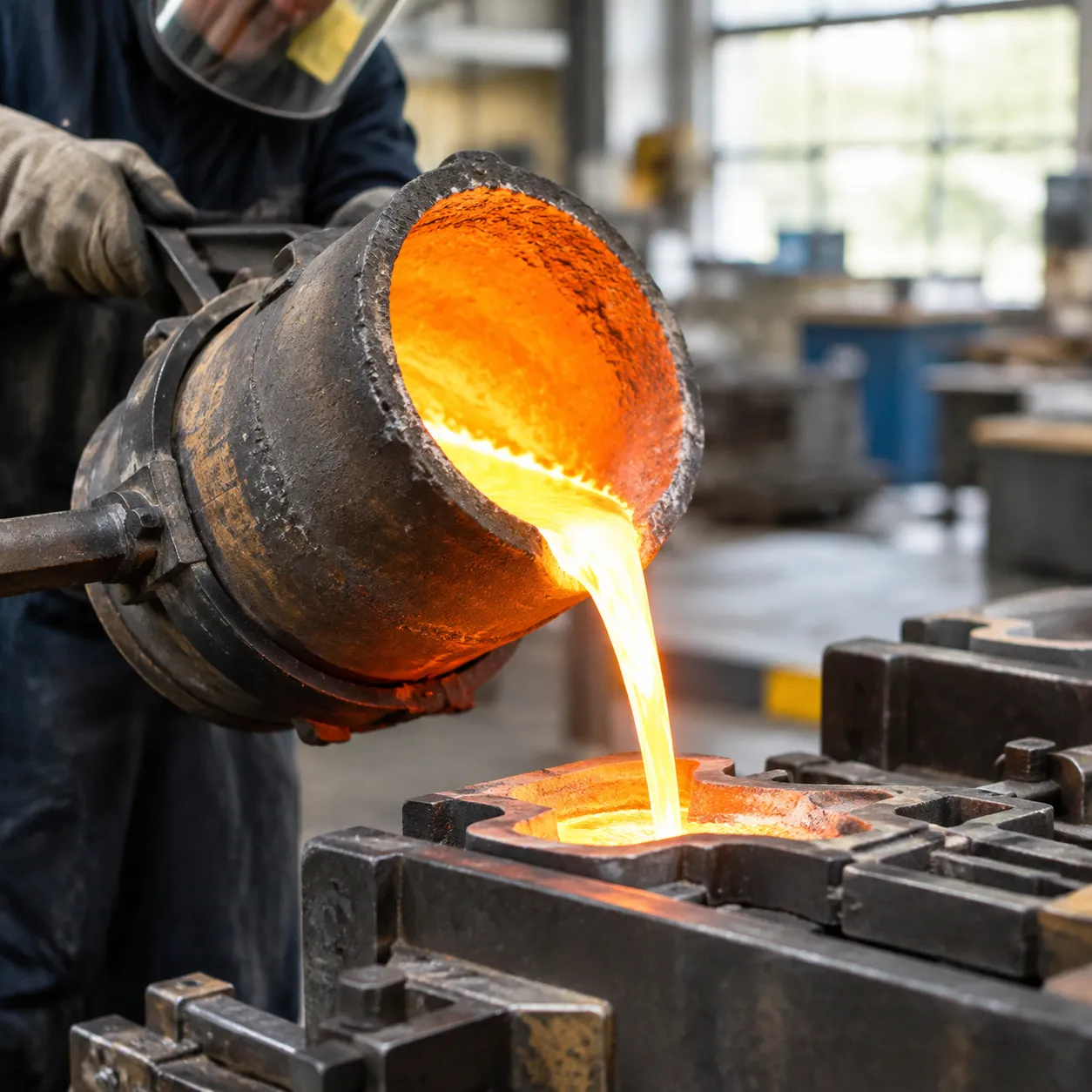
We pour molten metal directly into the preheated ceramic mold. Preheating the shell ensures the liquid alloy flows smoothly into complex geometry and thin wall sections before solidifying.
6. Shell Knock-out and Finishing
After the metal cools, we break the ceramic shell away using mechanical vibrators or hydro-blasting. We cut each investment casting part off the tree, grind down the gate connections, and apply final surface treatments like shot blasting or heat treatment.
Choosing the Best Alloy Material for Your Investment Cast Part
Selecting the ideal alloy is essential to ensure every metal investment casting part meets exact performance, environmental, and mechanical demands. We pour a wide range of ferrous and non-ferrous metals to balance strength, weight, corrosion resistance, and overall unit cost.
Stainless Steel Grades
- Best For: Maximum corrosion resistance, sanitary compliance, and structural durability.
- Common Applications: Food processing, medical tooling, chemical pumps, and marine hardware.
- Key Advantage: Stainless steel investment casting using alloys like 304, 316, and 17-4 PH provides exceptional pitting and oxidation resistance with minimal maintenance.
Carbon and Low-Alloy Steels
- Best For: High structural strength, impact toughness, and cost-efficient wear resistance.
- Common Applications: Heavy machinery, agricultural tools, mining components, and automotive brackets.
- Key Advantage: These materials easily undergo post-process thermal hardening, allowing us to deliver custom heat treatment cast components tailored to high-stress mechanical environments.
Aluminum and Titanium Alloys
- Best For: Superior strength-to-weight ratios and overall weight reduction.
- Common Applications: Aerospace housings, defense hardware, drone frames, and high-performance automotive systems.
- Key Advantage: Materials like titanium and high-strength aluminum grade 357 components deliver low-density structural reliability without adding unnecessary mass.
Nickel and Cobalt Superalloys
- Best For: High-temperature operations, extreme pressure, and aggressive chemical exposure.
- Common Applications: Gas turbine blades, combustion chambers, power generation valves, and chemical processing units.
- Key Advantage: Formulations such as Inconel, Hastelloy, and specialized cobalt-based casting for heat and wear resistance retain high tensile strength and prevent oxidation under extreme operating conditions.
Quality Control and Inspection Standards for Castings
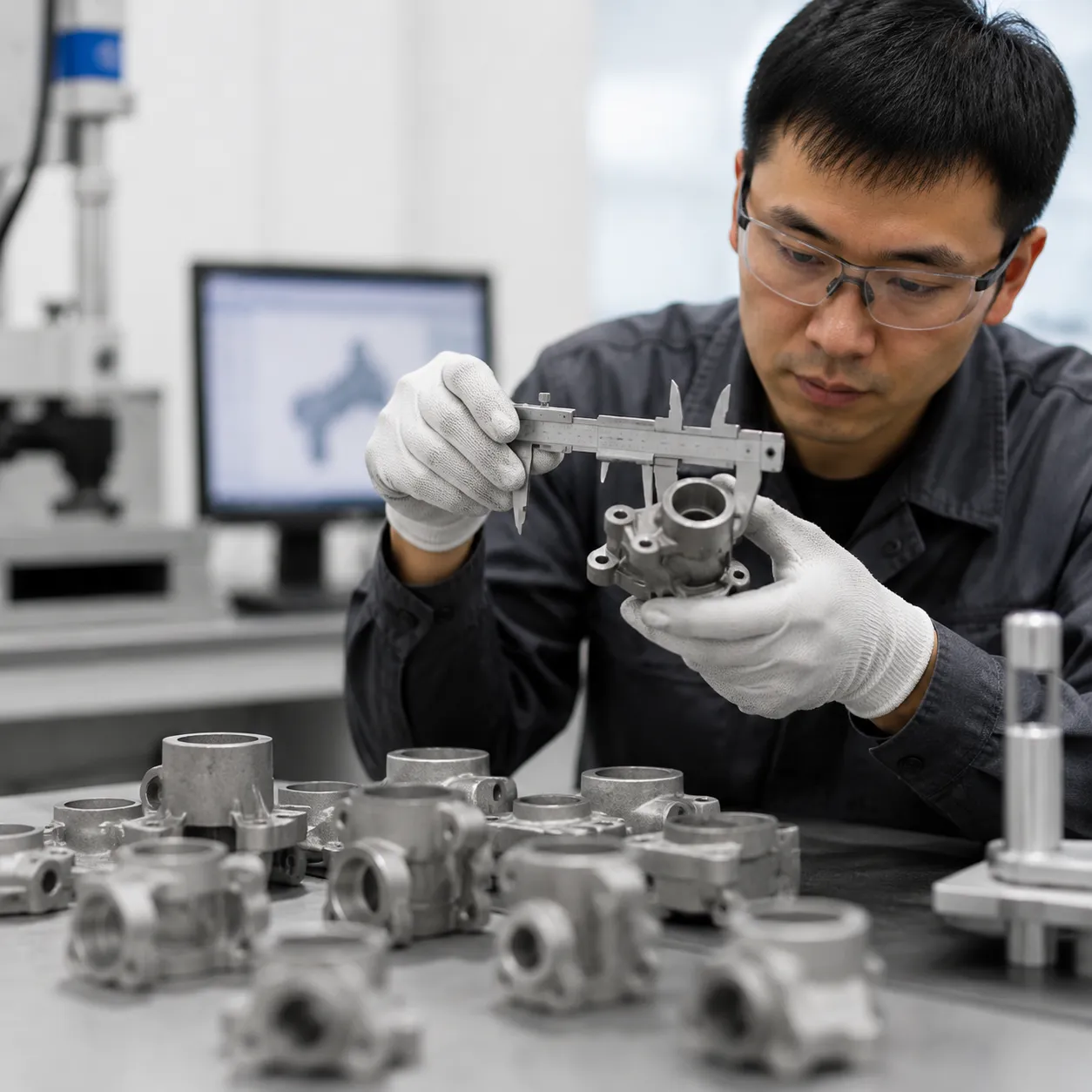
We guarantee that every investment casting part meets strict international quality standards before delivery. To ensure structural soundness and exact dimensional accuracy, we apply rigorous testing protocols to every batch of precision investment castings.
Non-Destructive Testing (NDT)
We use non-destructive testing NDT methods to inspect internal structures and surface integrity without damaging the component:
- X-Ray Radiography: Identifies internal gas porosity, shrinkage voids, and concealed structural cracks.
- Dye Penetrant Inspection: Exposes tiny surface breaches, micro-flaws, and pinholes across non-porous surfaces.
Dimensional Verification via CMM
We check critical dimensions using high-precision Coordinate Measuring Machines (CMM). Automated probes map complex geometries to verify that every finished investment casting component maintains exact dimensional tolerances matching original CAD models.
Chemical Composition Analysis
We verify alloy chemistry using Optical Emission Spectrometry (OES) prior to pouring. This step confirms precise elemental ratios for stainless steel, carbon steel, and superalloys, preventing material degradation under field operation.
Mechanical Property Testing
We perform physical load testing to verify that each metal investment casting part survives severe operating stress:
- Tensile Strength: Measures maximum load limits and yield points; analyzing these values highlights essential physical differences when comparing the difference between forging and casting.
- Hardness Testing: Validates surface wear resistance using standardized Rockwell and Brinell hardness scales.
- Impact Resistance: Evaluates energy absorption and material toughness under sudden physical shocks using Charpy impact testing.
- Alloy Validation: Assesses structural reliability, especially when matching specific alloy requirements against established stainless steel strength grades.
Investment Casting vs Alternative Metal Fabrication Methods
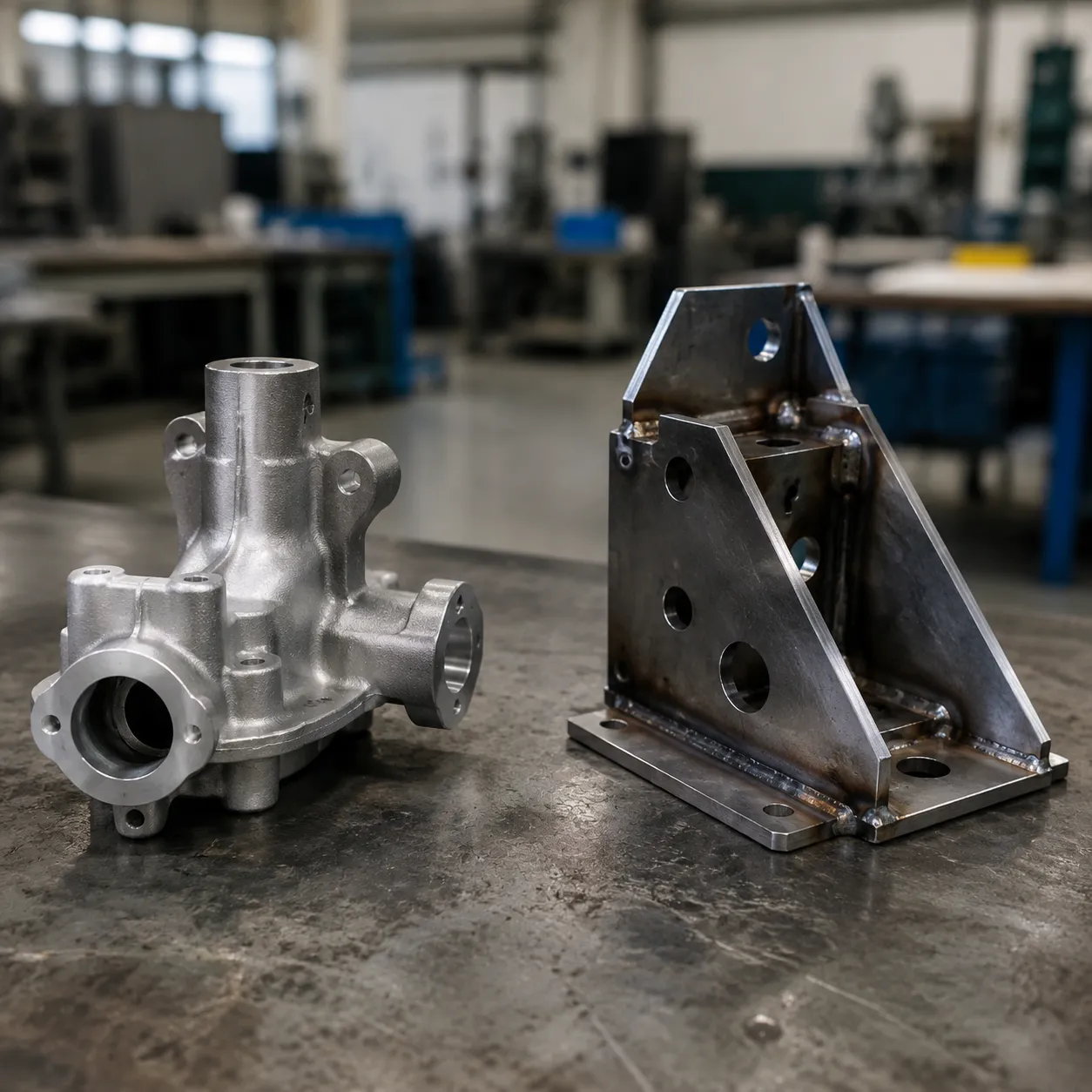
Investment Casting vs Die Casting
Evaluating a die casting vs investment casting cost and material guide highlights distinct structural advantages depending on your production goals. An investment casting part supports almost any metal, including stainless steel, carbon steel, and superalloys, whereas die casting remains restricted largely to non-ferrous metals like aluminum and zinc. While die casting offers lower per-unit costs for ultra-high volumes, investment casting requires significantly lower initial tooling costs and supports intricate internal voids without requiring draft angles.
Investment Casting vs Sand Casting
Comparing sand casting vs investment casting comes down to surface roughness and precision requirements. Sand casting is cost-effective for massive, heavy components where surface appearance is secondary. In contrast, precision investment castings deliver smooth surface finish Ra levels (typically 125–250 µin) and tight dimensional tolerances, eliminating expensive surface grinding and cleanup steps.
Investment Casting vs CNC Machining
Machining complex geometries from solid metal billet creates excessive material waste and long cycle times. For a deeper breakdown of how primary casting processes integrate with post-machining, explore our sand mold casting guide on precision materials and CNC machining. We manufacture near-net-shape custom metal cast components that reduce raw material scrap by up to 90%, saving high-cost alloys while reducing subtractive CNC operations to final critical dimensions.
Quick Process Comparison
| Process | Dimensional Tolerances | Surface Finish (Ra) | Initial Tooling Cost | Material Flexibility |
|---|---|---|---|---|
| Investment Casting | High (±0.005 in/in) | 125–250 µin | Moderate | Exceptional (Ferrous & Non-Ferrous) |
| Die Casting | Very High (±0.002 in/in) | 32–63 µin | High | Limited (Non-Ferrous only) |
| Sand Casting | Moderate (±0.030 in/in) | 300–560 µin | Low | Broad (Ferrous & Non-Ferrous) |
| CNC Machining | Highest (±0.001 in/in) | Custom (32–125 µin) | None | Unlimited (High scrap rate) |
Frequently Asked Questions About Investment Casting Parts
What dimensional tolerances can an investment casting part typically hold?
Standard linear tolerances for a custom investment casting part generally fall within ±0.005 inches per inch (±0.13 mm per 25 mm). For critical features, we can achieve even tighter precision through optimized wax injection tooling and controlled heat treatment.
How does the initial tooling cost compare to other casting techniques?
Tooling for investment casting is considerably less expensive than the high-strength steel dies required for pressure die casting. While initial mold costs are higher than simple sand casting patterns, utilizing our precision investment casting services for custom parts significantly reduces or eliminates post-cast machining, driving down the overall production cost per unit.
What surface finish roughness (Ra) is expected directly out of the ceramic shell?
Parts cast through this method achieve an exceptional standard surface finish Ra ranging between 125 to 250 µin (3.2 to 6.3 µm). This fine surface quality is smooth enough for most industrial, fluid handling, and structural applications right out of the shell.
What is the standard lead time for prototyping vs mass production?
- Prototyping: Utilizing 3D-printed wax or polymer patterns for direct shell creation typically takes 2 to 4 weeks.
- Mass Production: Creating hard aluminum wax-injection tooling and running production cycles generally takes 6 to 10 weeks, depending on geometric complexity and material demands, including specialized alloy or aluminum investment casting services.
 English
  Russian
  German