
2026年9月19日
Discover durable cast alloy solutions with excellent strength corrosion resistance and reliable performance for industrial applications
Custom Cast Alloy Engineering & Core Foundry Capabilities
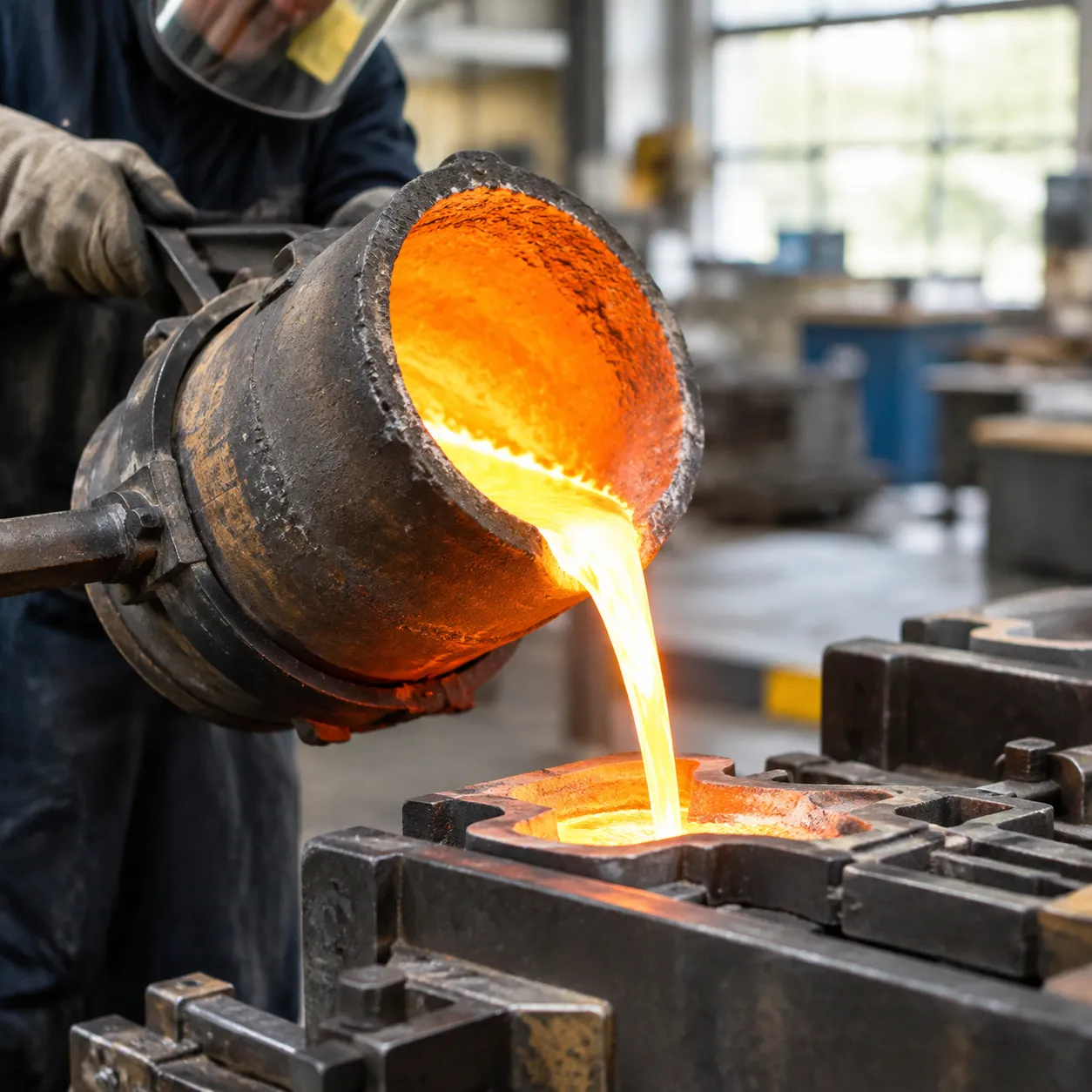
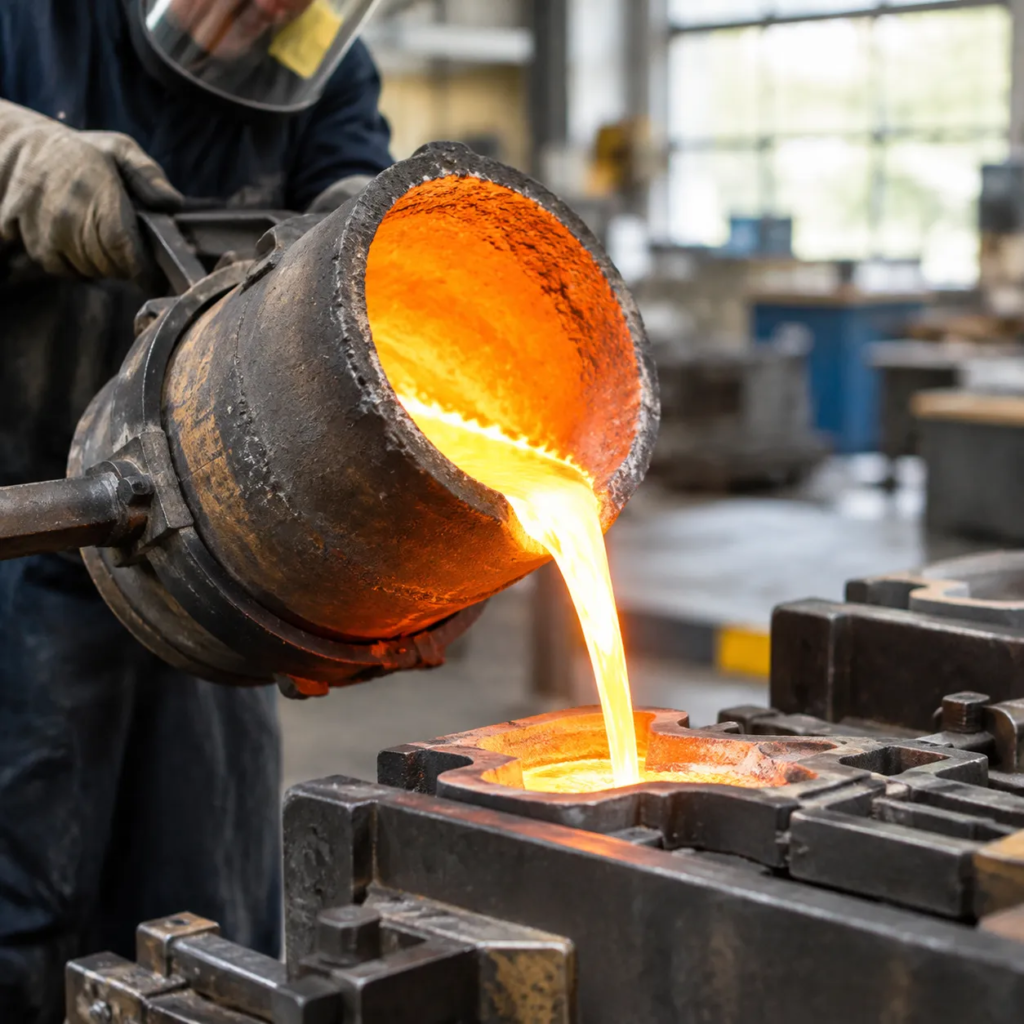
We deliver end-to-end cast alloy manufacturing solutions designed to eliminate porosity, reduce machining cycles, and resolve critical supply chain delays. Our foundry combines advanced metallurgical engineering with modern tooling methods to produce cast alloy components that meet strict mechanical, structural, and dimensional criteria.
Core Engineering Differentiators
- Near-Net-Shape Precision: Tooling and gating systems are optimized to yield near-net geometry, drastically reducing secondary CNC cycle times and raw material waste.
- Controlled Metallurgical Microstructures: Controlled melt degassing and tailored solidification modeling ensure dense, defect-free internal grain structures across every pour.
- Consistent Dimensional Stability: Tight process parameter monitoring ensures repeatable casting tolerances batch after batch.
Foundry Capacity Snapshot
| Production Metric | Standard Capability |
|---|---|
| Part Unit Weight | 0.01 kg to 5,000+ kg |
| Annual Output Capacity | 15,000+ Metric Tons |
| Dimensional Standards | ISO 8062-3 CT4 – CT8, DIN 1680 |
| Prototyping Lead Time | 2 to 3 Weeks (3D Printed Patterns / Fast Tooling) |
| Mass Production Lead Time | 4 to 6 Weeks (Standard Batch Runs) |
Our engineering team works directly from your CAD files (STEP, IGES, DXF) to transition concepts into full production runs with consistent turnaround times and complete material traceability.
Cast Alloy Material Selection & Metallurgical Specifications
Choosing the right alloy composition balances mechanical performance, corrosion resistance, machinability, and production cost. Our foundry melts and pours a broad spectrum of ferrous and non-ferrous metals, matching specific operating environments with the optimal metallurgical composition. Review our casting alloy properties and material selection guide to evaluate baseline characteristics across common industrial alloy groups.
Ferrous Cast Alloy Steel Grades
We process an extensive selection of ferrous materials engineered for structural integrity, wear resistance, and extreme pressure:
- Carbon and Low-Alloy Steels: High mechanical strength and cost efficiency using ASTM A216 (WCB, WCC) for standard industrial pressure systems and ASTM A352 (LCB, LCC) for low-temperature operating environments.
- Austenitic Stainless Steels: Corrosion protection in chemical, marine, and sanitary environments with CF8, CF8M, and ultra-low-carbon CF3M alloys. Explore our specific cast stainless steel custom casting alloys and grades for severe media applications.
- Duplex & Super Duplex Steels: High yield strength combined with resistance to pitting and stress corrosion cracking utilizing Duplex 2205 (CD3MN) and Super Duplex 2507 (CE3MN).
Non-Ferrous and Specialty Cast Alloys
For lightweight designs, thermal conductivity, or extreme heat and corrosive exposure, we supply specialized non-ferrous formulations:
- Cast Aluminum Alloys: High strength-to-weight ratios and thermal dissipation utilizing A356 for structural ductility and A380 for high-fluidity die casting.
- Copper and Bronze Alloys: High lubricity and marine corrosion resistance using nickel-aluminum bronze C95800 and heavy-duty tin bronzes.
- Nickel-Base Superalloys: High-temperature creep and oxidation resistance featuring Inconel 625, Inconel 718, and Hastelloy C276.
Mechanical Property Matrix
| Alloy Category | Material Grade | Tensile Strength (MPa) | Yield Strength (MPa) | Elongation (%) | Hardness (Typical) |
|---|---|---|---|---|---|
| Carbon Steel | ASTM A216 WCB | ≥ 485 | ≥ 250 | ≥ 22 | 137 – 187 HBW |
| Low-Temp Steel | ASTM A352 LCC | 485 – 655 | ≥ 275 | ≥ 22 | ≤ 197 HBW |
| Stainless Steel | ASTM A351 CF8M | ≥ 485 | ≥ 205 | ≥ 30 | 140 – 180 HBW |
| Duplex Steel | 2205 (ASTM A890 4A) | ≥ 620 | ≥ 415 | ≥ 25 | ≤ 260 HBW |
| Aluminum Alloy | A356-T6 | ≥ 230 | ≥ 165 | ≥ 3.5 | 75 – 90 HBW |
| Nickel-Al Bronze | C95800 | ≥ 585 | ≥ 240 | ≥ 15 | 150 – 190 HBW |
| Nickel Superalloy | Inconel 625 (Cast) | ≥ 690 | ≥ 345 | ≥ 30 | 180 – 240 HBW |
Advanced Cast Alloy Manufacturing Processes
We select the optimal casting method based on part geometry, production volume, material grade, and mechanical performance requirements. Our foundry utilizes four core processes to deliver defect-free cast alloy components.
Precision Investment Casting (Lost Wax)
- Best for: Complex geometries, thin-walled sections, and tight dimensional tolerances.
- Capabilities: We utilize silica sol and water glass molding to produce near-net-shape parts in stainless steel, alloy cast steel, and superalloys, minimizing secondary machining. For specialized high-wear applications, our high-quality investment casting parts maintain superior metallurgical integrity and fine surface finishes.
Resin and Green Sand Casting
- Best for: Heavy-duty, high-tonnage structural components.
- Capabilities: Configured for large-scale industrial hardware, valve bodies, and pump housings. Sand cast alloy parts benefit from robust mold rigidity, accommodating component weights from a few kilograms up to several tons with reliable internal soundless.
High-Pressure & Low-Pressure Die Casting
- Best for: High-volume non-ferrous components requiring rapid cycle times.
- Capabilities: Automated die casting setups for cast aluminum alloy and zinc components. This process provides tight repeatability, excellent dimensional consistency, and smooth as-cast surface finishes across large production runs.
Centrifugal Casting Solutions
- Best for: Symmetrical, high-density cylindrical and tubular components.
- Capabilities: Molten cast alloy is poured into a high-speed rotating die, forcing impurities to the inner bore for easy removal during machining. Ideal for seamless alloy bushings, cylinder liners, rings, and pressure-retaining sleeves requiring uniform grain structures.
Technical Specifications & Cast Alloy Tolerance Standards
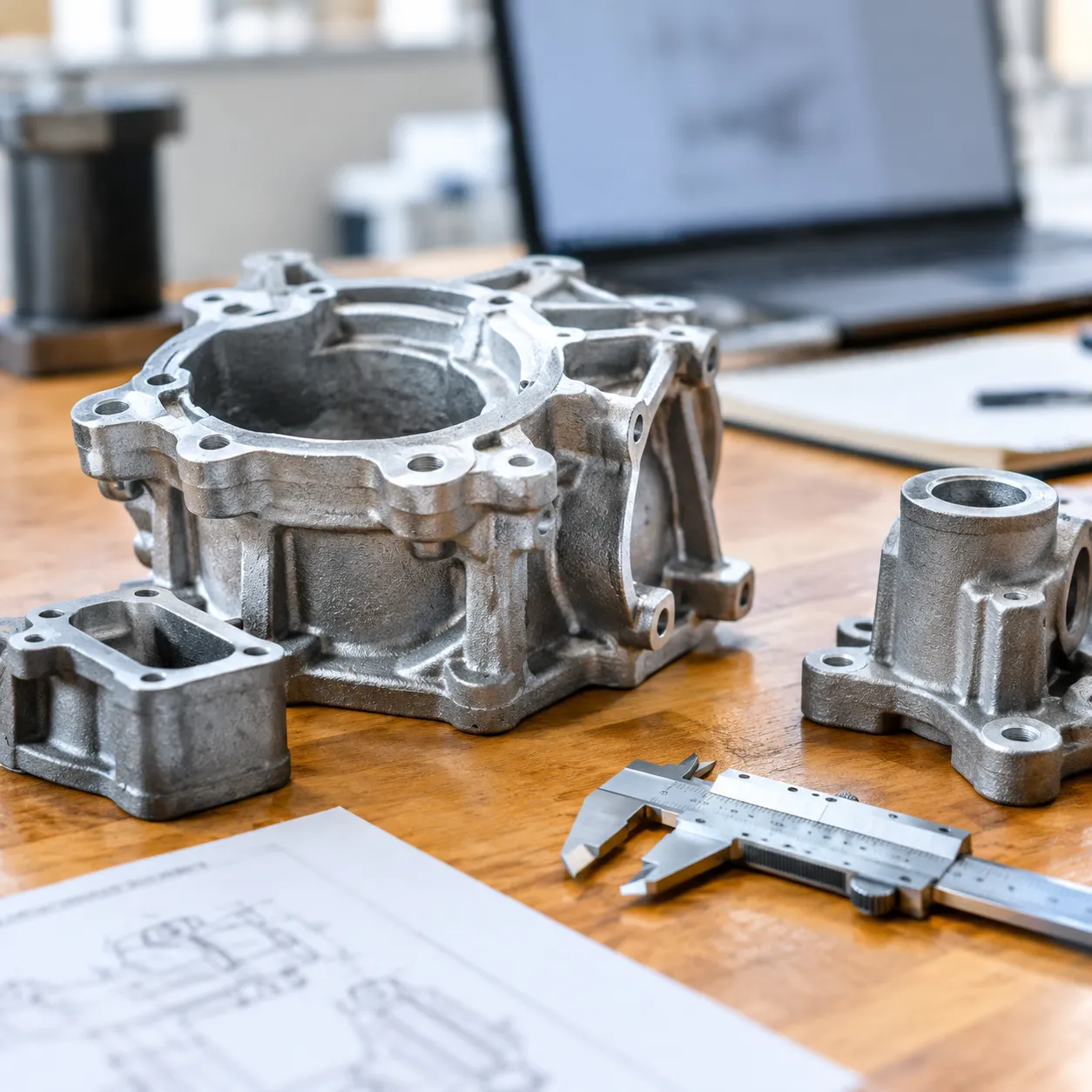
We maintain strict control over dimensional stability and surface integrity across every production run. Our foundry aligns all cast alloy manufacturing with international standards—including ISO 8062-3, DIN 1680, and ASTM A802—to guarantee repeatable part geometry and minimize post-machining allowance.
Dimensional Tolerance & Surface Finish Matrix
| Casting Method | ISO 8062-3 Tolerance Grade | Surface Roughness (Ra) | Min. Wall Thickness | Standard Draft Angle |
|---|---|---|---|---|
| Investment Casting (Lost Wax) | CT4 – CT6 | 1.6 – 3.2 μm | 1.5 mm | 0.5° – 1.0° |
| High-Pressure Die Casting | CT4 – CT5 | 0.8 – 3.2 μm | 1.0 mm | 1.0° – 2.0° |
| Resin / Shell Sand Casting | CT7 – CT8 | 6.3 – 12.5 μm | 3.0 mm | 1.5° – 3.0° |
| Green Sand Casting | CT8 – CT10 | 12.5 – 25.0 μm | 5.0 mm | 2.0° – 5.0° |
For high-precision applications, our precision casting solutions with ISO 8062 accuracy ensure linear tolerances as tight as ±0.1 mm on critical features, reducing material waste and tool wear during downstream operations.
Geometric Design & Wall Thickness Guidelines
Achieving defect-free cast alloy components requires strict adherence to baseline design parameters during the pattern tooling phase:
- Wall Thickness Transitions: Maintain gradual section changes with blending fillets (minimum radius = 0.5 × nominal wall thickness) to avoid hot spots, localized shrinkage, and stress cracking.
- Draft Angles: Apply standard 1° to 2° draft on vertical surfaces to ensure clean pattern extraction and mold release without surface tearing.
- Surface Quality Control: Visual and tactile surface comparisons comply with ASTM A802 Level I and Level II standards for high-stress areas.
- Machining Stock Allowances: Optimized allowances between 1.0 mm and 3.0 mm depending on part envelope, ensuring clean tool engagement without cutting into subsurface porosity.
Secondary CNC Machining & Cast Alloy Finishing Services
To bridge the gap between as-cast tolerances and exact engineering prints, we provide full in-house secondary machining and finishing operations. Our turnkey approach to precision casting and CNC machining eliminates multi-vendor handoffs, reduces lead times, and ensures every cast alloy part meets your exact dimensional and metallurgical specifications before delivery.
Precision Multi-Axis CNC Machining
Our machine shop handles raw castings with dedicated fixturing designed to minimize setup variation and maintain critical datum references.
- Multi-Axis Capabilities: In-house 3-axis, 4-axis, and high-speed 5-axis CNC machining centers.
- Core Operations: Precision milling, turning, boring, tapping, reaming, and multi-face profiling.
- Tight Tolerances: Machining precision down to ±0.005 mm on critical bearing bores, seal faces, and mating flanges.
- Material Versatility: Optimized feeds, speeds, and tooling for cast alloy steel, nickel superalloys, cast aluminum, and bronze.
Metallurgical Heat Treatments
We tailor the mechanical characteristics of your cast alloy components through tightly controlled thermal processing cycles to optimize tensile strength, toughness, and hardness:
| Heat Treatment Process | Primary Objective | Typical Cast Alloys |
|---|---|---|
| Quenching & Tempering | Increases yield strength, core toughness, and impact resistance | Carbon & low-alloy cast steels |
| Solution Annealing | Restores corrosion resistance and dissolves chromium carbides | Austenitic & duplex stainless steels |
| Normalizing | Refines grain structure and relieves residual casting stresses | Structural alloy cast steel grades |
| Precipitation Hardening | Maximizes mechanical hardness through matrix aging | PH stainless steels & nickel-base alloys |
Surface Treatment & Corrosion Protection
We offer comprehensive surface preparation and protective coating solutions to enhance the wear resistance, aesthetics, and environmental durability of your finished CNC machined alloy castings:
- Shot Blasting & Grit Blasting: Removes residual scale and creates a uniform, clean matte surface profile (Ra 3.2–6.3 μm) for post-processing.
- Chemical Passivation: Strips free iron from stainless steel surfaces to maximize natural oxide barrier formation.
- Electroplating & Zinc Plating: Delivers reliable sacrificial corrosion protection for standard and alloy steels.
- Thermal Spray & Specialized Coatings: Provides severe wear-, erosion-, and heat-resistant barriers for demanding industrial environments.
Quality Assurance, NDT Inspection & Industry Certifications
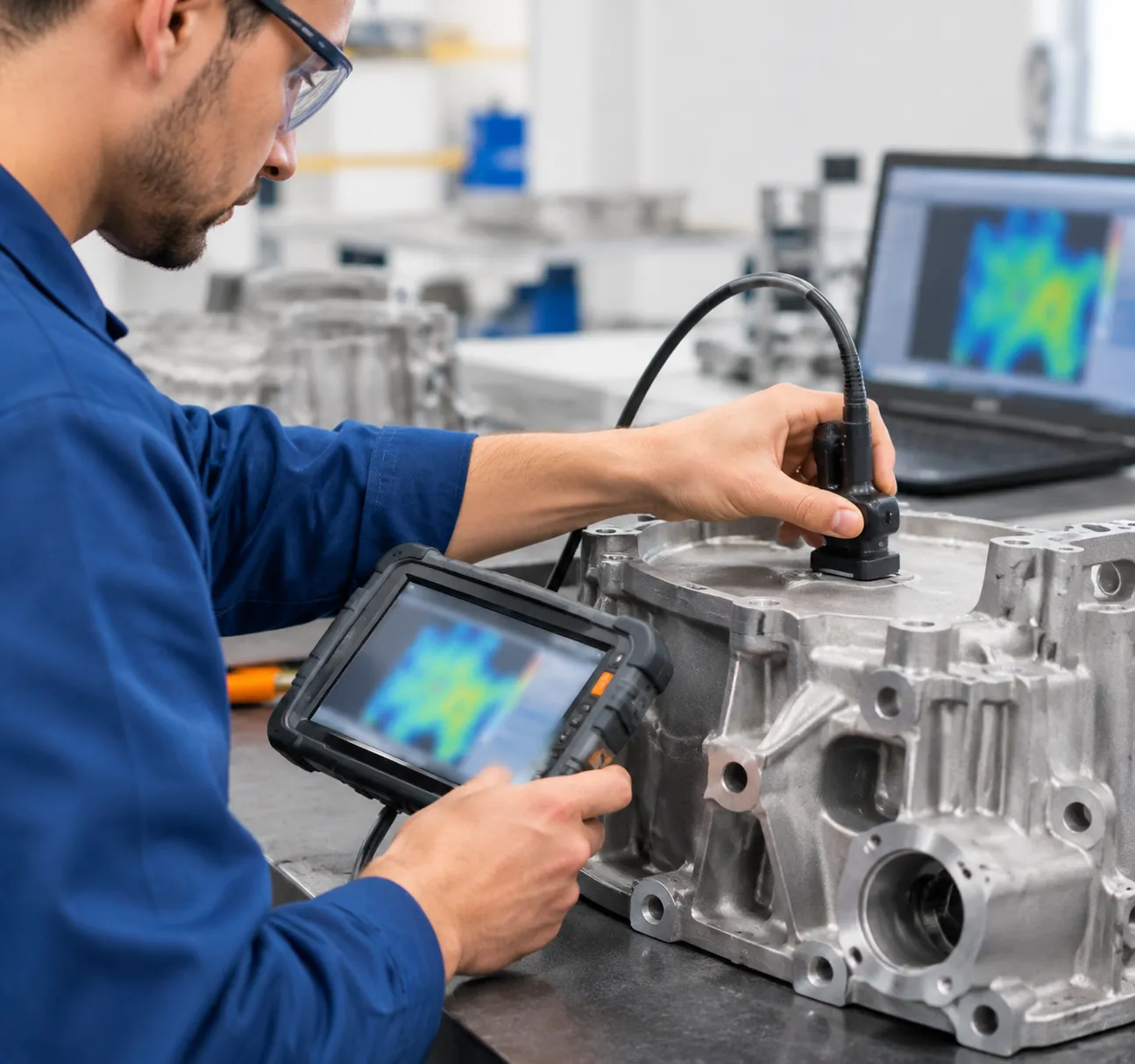
We test and validate every cast alloy component to ensure metallurgical integrity, exact dimensional tolerances, and zero internal defects. Our quality management system covers every stage of production, from raw melt analysis to final dimensional inspection.
Chemical Composition Verification & Melt Control
To guarantee that every batch matches customer chemistry and international ASTM alloy casting grades, our foundry performs comprehensive verification: Optical Emission Spectrometry (OES): Fast, precise chemical verification of all major and trace elements per heat. Positive Material Identification (PMI): On-site handheld XRF/LIBS analysis to prevent alloy mix-ups during production and shipping. Traceability: Full heat-lot tracking linked directly to raw ingot certifications.
Comprehensive Non-Destructive Testing (NDT)
We employ certified Level II and Level III NDT technicians to identify internal voids, surface defects, and structural micro-porosity across all cast alloy steel and non-ferrous parts:
| NDT Method | Inspection Scope | Target Defect Detection |
|---|---|---|
| Radiographic Testing (RT / X-Ray) | Internal structure | Volumetric defects, shrinkage cavities, gas porosity |
| Ultrasonic Testing (UT) | Subsurface & wall thickness | Subsurface inclusions, cracks, and lamination |
| Magnetic Particle Inspection (MPI) | Ferrous surface/subsurface | Micro-cracks, seams, and laps in magnetic cast alloys |
| Dye Penetrant Testing (PT) | Non-porous surfaces | Surface-breaking cracks and cold shuts on all alloys |
Mechanical Validation & 3D Scanning
Every production run is backed by mechanical testing to confirm that physical properties meet structural load requirements, critical when evaluating stainless steel strength grades and high-strength alloy castings: Tensile & Hardness Testing: Verification of ultimate tensile strength, yield point, elongation, and Brinell/Rockwell hardness ratings. Charpy V-Notch Impact Testing: Toughness validation at room, sub-zero, and cryogenic temperatures. CMM & 3D Optical Scanning: Automated Coordinate Measuring Machines provide high-density point-cloud verification against original 3D CAD models.
Global Compliance Standards & Certifications
Our foundry operations and quality systems adhere strictly to global manufacturing codes: Quality Management: ISO 9001:2015, IATF 16949 (Automotive), and AS9100 (Aerospace). Pressure Equipment: PED 2014/68/EU certification for pressurized valves, pumps, and manifold bodies. Material Traceability: EN 10204 Type 3.1 and 3.2 inspection certificates provided with full chemical and mechanical test logs.
Industrial Applications for Custom Cast Alloy Parts
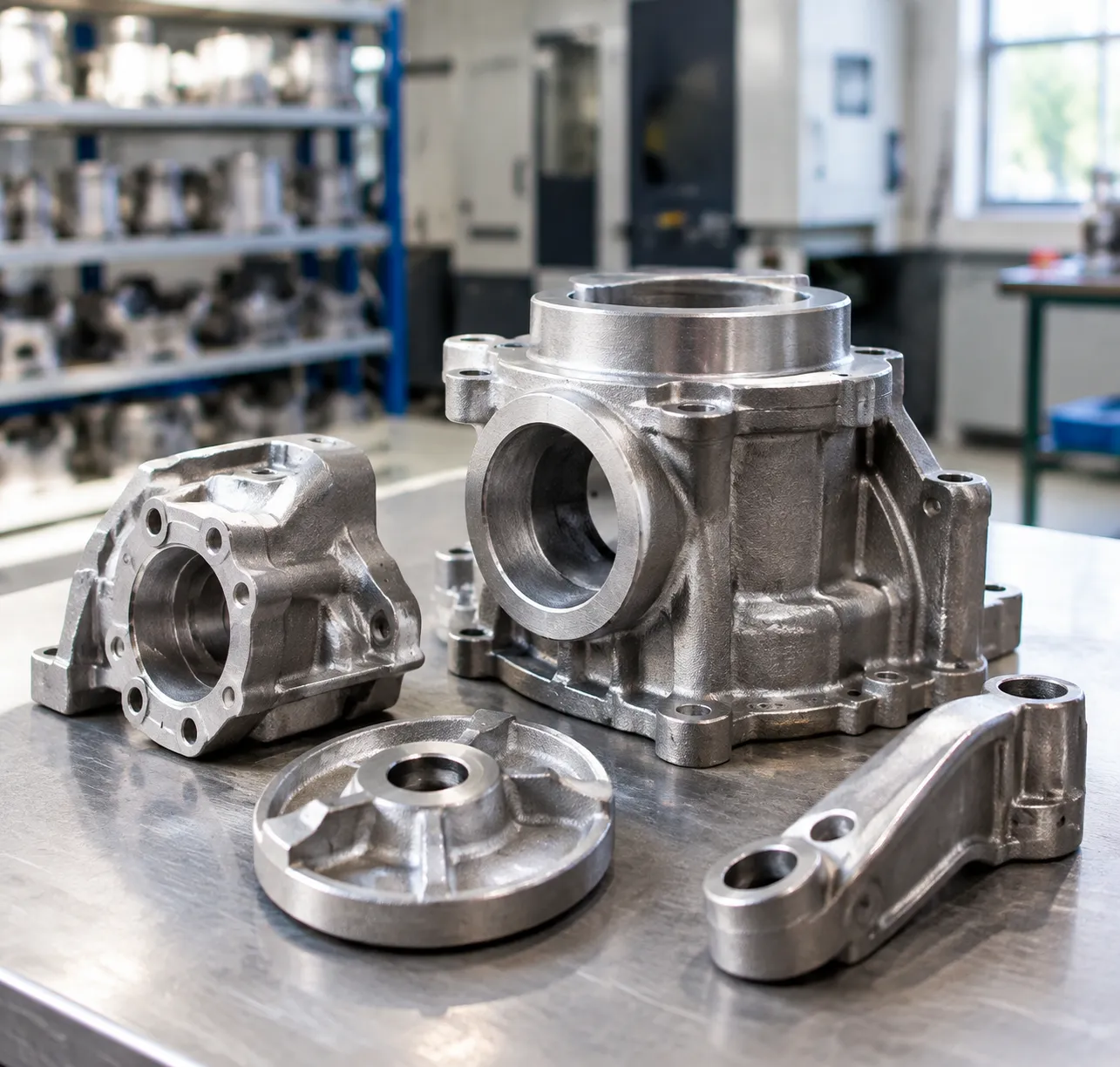
We engineer high-performance cast alloy components built to withstand extreme mechanical loads, thermal fatigue, and aggressive chemical environments. Our metallurgical casting solutions serve critical industrial sectors worldwide:
- Oil, Gas, and Petrochemical: Severe-service cast alloy steel components including high-pressure valve bodies, pump housings, choke manifolds, and flow-control assemblies engineered for high-pressure and sour-gas environments.
- Automotive and Transportation: Precision cast alloy powertrain brackets, high-temperature turbocharger turbine housings, exhaust manifolds, and chassis suspension knuckles produced from ductile iron, alloy cast steel, and lightweight cast aluminum alloys.
- Power Generation and Energy Hardware: Heat-resistant cast alloys and nickel-base formulations for gas turbine shrouds, combustion burner nozzles, stator vanes, and heat recovery steam generator (HRSG) components.
- Mining and Heavy Construction: Severe-duty sand casting manufacturer for custom metal parts capabilities delivering wear-resistant cast alloy crusher liners, excavator bucket teeth, track pads, and ground-engaging tools (GET).
- Marine and Aerospace: High-integrity impellers, marine propulsion hardware, rudder brackets, and flight-grade structural housings utilizing specialized titanium investment casting for aerospace and corrosion-resistant bronze alloys.
Cast Alloy DFM Engineering & RFQ Workflow
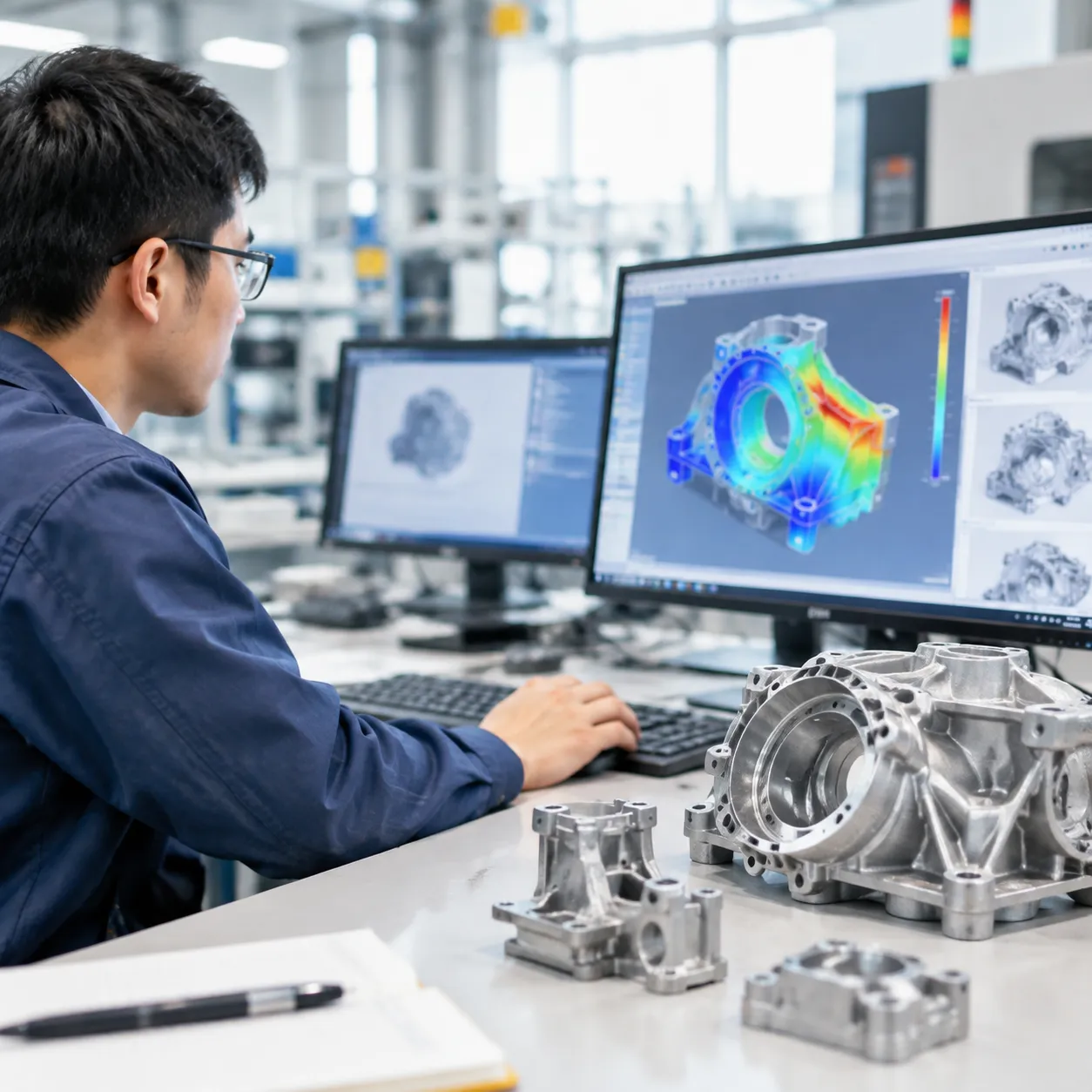
We eliminate manufacturing bottlenecks early by integrating rigorous Design for Manufacturability (DFM) reviews into every cast alloy project before cutting tooling. Our foundry engineering team analyzes your part geometry to resolve thermal mass concentrations, balance material flow, and prevent shrinkage defects.
Solidification Simulation and Porosity Prevention
Every incoming cast alloy design undergoes computer-aided thermal and mold-filling simulation. This allows us to optimize parting lines, determine exact feeder locations, and eliminate internal porosity before metal ever enters the mold.
- Parting Line & Draft Optimization: We refine split lines and draft angles (typically 0.5° to 2°) to ensure clean pattern extraction and minimal parting-line flash.
- Thermal Modulus Balancing: Wall thickness transitions are blended with generous fillets to prevent hot spots, stress risers, and crack formation during cooling.
- Gating and Riser Design: Custom gating systems are simulated to promote directional solidification, keeping high-stress zones of your cast alloy components completely sound.
+--------------------------+-------------------------------------+--------------------------------------------+ | DFM Engineering Phase | Key Technical Focus | Foundry Risk Mitigated | +--------------------------+-------------------------------------+--------------------------------------------+ | Wall Thickness Review | Uniform sections & gradual taper | Hot tears, misruns, and sink marks | | Solidification Modeling | Thermal gradient simulation | Internal shrinkage and gas porosity | | Parting Line Alignment | Core minimization & flash control | Dimensional drift and excessive grinding | | Machining Allowance DFM | 1.5 mm to 3.0 mm stock optimization | Tool chatter and excessive cycle times | +--------------------------+-------------------------------------+--------------------------------------------+
Rapid Prototyping to Hard Tooling Transition
To validate complex geometries without upfront tooling commitments, we bridge design concepts to production using additive manufacturing. For low-volume validation and pre-production testing, understanding the trade-offs between 3D printed wax vs injected wax for casting allows us to select patternless molds or printed wax patterns that deliver physical cast alloy prototypes in days rather than months.
Once your design is verified through physical inspection and destructive testing, we transition directly into hardened CNC-machined aluminum or steel tooling for high-volume alloy cast steel and precision casting runs.
RFQ Submission and CAD Compatibility
To get an accurate technical quote and DFM report within 24 to 48 hours, submit your engineering package containing your 3D models, 2D drawings, and material specifications.
- Accepted 3D CAD Formats: STEP (.stp), IGES (.igs), Parasolid (.x_t)
- Accepted 2D Drawing Formats: PDF, DWG, DXF (must include critical GD&T, datum structures, and thread callouts)
- Material & Standard Callouts: Target alloy grades (e.g., ASTM, DIN, ISO, or proprietary chemistries)
- Project Parameters: Initial prototype quantities, estimated annual usage (EAU), required heat treatments, surface finish specs, and specific NDT testing levels
Frequently Asked Questions About Cast Alloy Sourcing
What is the difference between cast alloy and wrought or forged alloy parts?
A cast alloy is formed by pouring liquid metal into a precision mold, making it the most cost-effective method for complex geometries, thin walls, and internal hollows. Forged or wrought components are mechanically pressed or rolled into shape, offering directional grain flow at the expense of geometric flexibility. Understanding the fundamental difference between forging and casting helps engineers choose the right route based on part complexity, mechanical load profiles, and tooling budgets.
Which cast alloy grade is best for high-temperature and corrosive environments?
Material selection depends on operating temperatures, mechanical stress, and exposure to corrosive media. Our foundry commonly casts the following alloy categories for extreme environments:
| Cast Alloy Family | Key Material Grades | Primary Performance Attributes | Typical Applications |
|---|---|---|---|
| Nickel-Base Superalloys | Inconel 625 / 718, Hastelloy C276 | High creep strength, oxidation resistance up to 980°C | Turbine hardware, exhaust manifolds |
| Duplex Stainless Steels | 2205, 2507, CD4MCu | Exceptional resistance to pitting and chloride stress cracking | Chemical pumps, marine valves |
| Austenitic Stainless | CF8M (316), CF3M (316L) | Broad chemical resistance, cryogenic toughness | Food processing, fluid handling |
| Heat-Resistant Cast Steels | ASTM A297 (HH, HK, HT) | Carburization and thermal fatigue resistance | Furnace fixtures, burner nozzles |
What dimensional tolerances are achievable for precision investment cast alloys?
Using our precision investment casting services, we regularly achieve dimensional precision conforming to ISO 8062-3 CT4–CT6 standards.
- Linear Tolerances: Typically ±0.12 mm for dimensions up to 25 mm, and ±0.05 mm for each additional 25 mm.
- Surface Roughness: As-cast finish between Ra 1.6 μm and Ra 3.2 μm, reducing or eliminating secondary grinding.
- Tight Feature Control: Critical bores, sealing faces, and threaded holes are cast near-net-shape with designated machining allowances for downstream CNC finishing.
How do post-cast heat treatments improve the mechanical properties of cast alloys?
As-cast metals often have non-uniform grain structures and residual casting stresses. We utilize targeted thermal cycles to refine metallurgical integrity:
- Quenching & Tempering: Tailors the balance of high tensile strength and impact toughness in alloy cast steel.
- Solution Annealing: Dissolves carbide precipitates back into the solid matrix to maximize corrosion resistance in stainless and nickel castings.
- Stress Relieving & Normalizing: Homogenizes the crystalline matrix to prevent dimensional warpage during CNC milling and turning.
- Precipitation Hardening: Increases surface and core hardness without sacrificing base-metal dimensional stability.
What are the standard lead times for custom tooling and sample production?
- Rapid Prototyping (3D Printed Patterns): 5 to 10 working days for form, fit, and functional validation without tooling.
- Production Tooling Fabrication: 3 to 5 weeks, depending on mold complexity and core requirements.
- First Article Samples & CMM Reports: Delivered within 7 to 10 days after tooling sign-off.
- Series Production: 4 to 6 weeks following sample approval and metallurgical sign-off.
 English
  Russian
  German