2026年11月9日
Explore automated ceramic shell coating with precision dipping stuccoing and drying for efficient consistent investment casting results
System Architecture & Automated Workflow
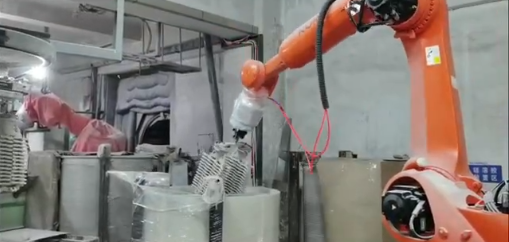
Modern investment casting shell rooms require strict repeatability to eliminate scrap caused by inconsistent layer thickness, slurry bridging, and handling damage. Our automated ceramic shell coating: dipping, stuccoing and drying systems deliver complete process control across every step of shell production. By synchronizing robotic articulation with process tracking, we turn the labor-intensive lost wax coating workflow into a closed-loop, data-driven operation.
Programmed Robotic Handoff Sequence: Wax Mount to Backup Coat
A fully automated shell mold coating line eliminates manual operator contact during the critical multi-layer build cycle. The mechanical sequence runs with precise coordination:
- Wax Tree Loading & Grip: The automated dipping robot docks directly with overhead carriers or load stations, locking onto standardized tree hangers using pneumatic fail-safe grippers.
- Primary Layer Processing: The manipulator executes controlled immersion into face-coat slurry, followed by immediate transfer to the primary sanding station to capture ultra-fine refractory grains.
- Automated Buffer Handoff: Coated trees transfer directly to overhead conveyors or drying carousels without human intervention, maintaining uniform orientation to prevent slurry runoff.
- Multi-Layer Progression: The robotic shell building system cycles parts automatically between drying buffers, intermediate dip tanks, and coarse backup stuccoing units until the structural shell meets target shell thickness and weight.
Cell Configurations: Modular Standalone Cells vs. Continuous Linear Tracks
Foundry footprint, tree weights, and production volumes dictate the structural layout. We engineer two primary deployment architectures for investment casting shell room automation:
| Feature / Metric | Modular Standalone Robotic Cells | Continuous Linear Overhead Tracks |
|---|---|---|
| Footprint Requirement | Compact, circular cell layout | Extended longitudinal floor plan |
| Payload Envelope | Up to 150 kg per tree | 50 kg to 500+ kg continuous loads |
| Throughput Target | High-mix, low-to-medium batch volumes | High-volume single-alloy production |
| Material Handling | Single robot accesses dip tanks & sanders | Multi-robot handoffs along linear indexing rails |
| Expansion Flexibility | Plug-and-play modular cell additions | Scalable by extending rail track lengths |
Centralized PLC Orchestration with RFID Recipe Management
Variations in part geometry require dedicated slurry dwell times, rotational angles, and sanding profiles. Our shell room automation runs via an integrated industrial PLC paired with continuous RFID tracking:
- Automatic Tree Identification: Industrial RFID tags embedded in tree fixtures trigger the exact dipping recipe as soon as the part enters the robot envelope.
- Dynamic Parameter Loading: The PLC sets specific tank immersion speeds, multi-axis tilt angles, sander feed gates, and required inter-coat drying intervals automatically.
- Process Tracking & Audit Logs: Every cycle records dipping time, withdrawal speed, drainage duration, and ambient dry times, creating full traceability for aerospace, medical, and industrial turbine casting standards.
Robotic Slurry Dipping Station
Consistent shell thickness starts with precise slurry immersion. In our automated shell coating line with robotic precision, the dipping cell eliminates manual dipping variations that lead to uneven shells, bubble entrapment, and premature mold failure.
- Heavy-Payload 6-Axis Washdown Robots: We deploy industrial foundry-grade robots equipped with high-payload wrists and IP67-rated protective washdown seals. These arms handle heavy wax clusters reliably, executing complex paths through every stage of automated ceramic shell coating: dipping, stuccoing and drying.
- Multi-Axis Immersion & Rotational Drainage: Our automated slurry dipping robot tilts, spins, and rolls wax trees during both entry and withdrawal. Controlled manipulation eliminates air entrapment in tight pattern pockets, while programmed, multi-angle drainage prevents slurry wedging and excessive edge build-up.
- Water-Jacketed Slurry Tanks with Low-Shear Agitation: Slurry stability dictates mold consistency. Our tanks use continuous water jacketing to regulate temperature, paired with low-shear paddle mixers that keep dense refractory flours fully suspended without introducing micro-bubbles into the bath.
- Ultrasonic Level Sensing & Automated Replenishment: Non-contact ultrasonic sensors monitor tank fluid levels in real time. As carrier liquids evaporate, the control unit triggers automatic binder additions to maintain stable depth, density, and immersion dynamics without manual operator intervention.
Precision Stuccoing and Sanding Unit
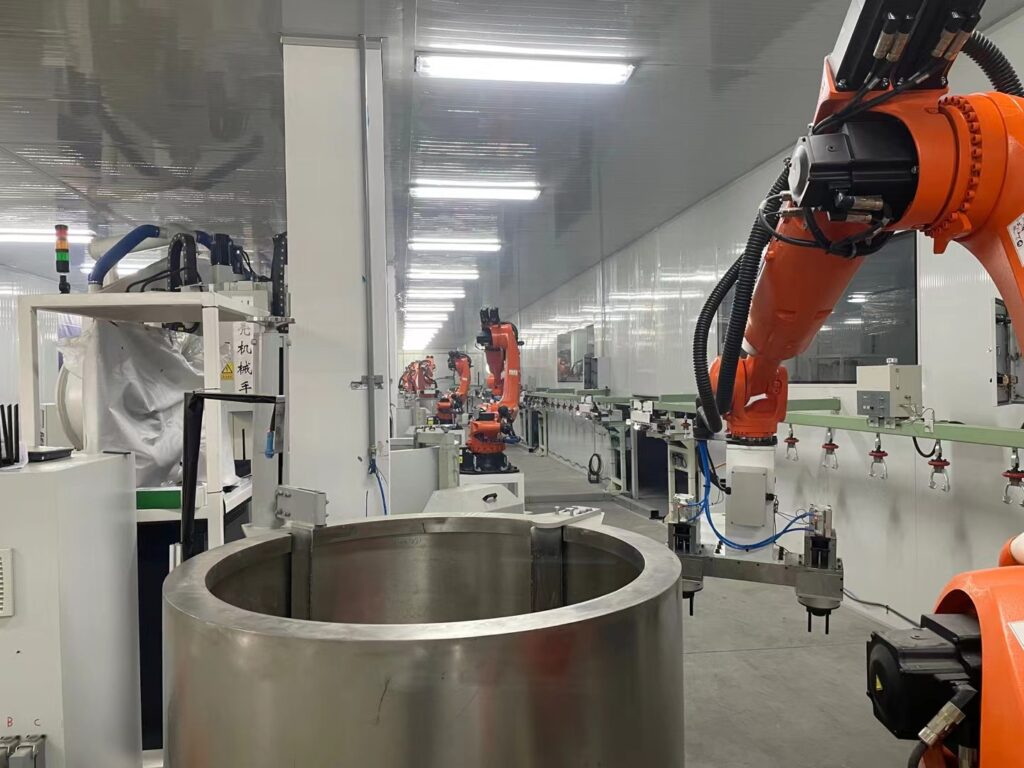
Applying refractory stucco with consistent density demands different mechanical approaches depending on shell geometry and coat layer. Within our automated ceramic shell coating: dipping, stuccoing and drying lines, we integrate two complementary sanding stations to guarantee uniform refractory grain deposition without damaging fragile wax patterns.
Rainfall Sander for Delicate Prime and Face Coats
Our rainfall sander machine delivers a gentle, gravity-fed curtain of fine refractory media (such as zircon or fine fused silica). This method protects the initial layers from mechanical wash-off and pattern distortion:
- Non-Impact Curtain: Sand falls at terminal gravity velocity, depositing fine grains onto the wet binder without dislodging sharp pattern edges.
- Controlled Mesh Distribution: Adjustable oscillating screens regulate continuous media dispersion across the pattern envelope.
- Prime Coat Integrity: Essential for investment and precision casting services requiring defect-free surface finishes and complete ceramic shell delamination prevention.
Fluidized Bed System for Deep Cavities and Structural Layers
For intermediate and backup coats, our fluidized bed stuccoing unit provides complete coverage across complex geometries:
- Low-Pressure Air Suspension: Porous aeration tiles fluidize coarse refractory media (aluminosilicate or coarse fused silica) into a liquid-like state.
- Cavity Penetration: The multi-axis robot lowers the assembly into the fluidized media, forcing refractory sand into deep undercuts, blind pockets, and tightly packed wax runners.
- Structural Wall Uniformity: Builds rapid, dense structural layers while preventing air entrapment and voids.
Automated Sand Recovery and Cyclonic Dust Extraction
Continuous operation requires clean sand and a dust-free work envelope:
| Module | Core Function | Operational Benefit |
|---|---|---|
| Pneumatic Re-Elevator | Recirculates excess refractory grains back to the hopper | Minimizes media waste and maintains a continuous sand supply |
| Vibratory Screen Sieve | Removes agglomerated refractory slurry clumps | Prevents uneven stucco deposits and surface inclusions |
| Cyclonic Dust Collector | Extracts fines, crushed dust, and airborne particulates | Keeps sand charge uniform and prevents airborne contamination across the dipping station |
Climate-Controlled Shell Drying Line
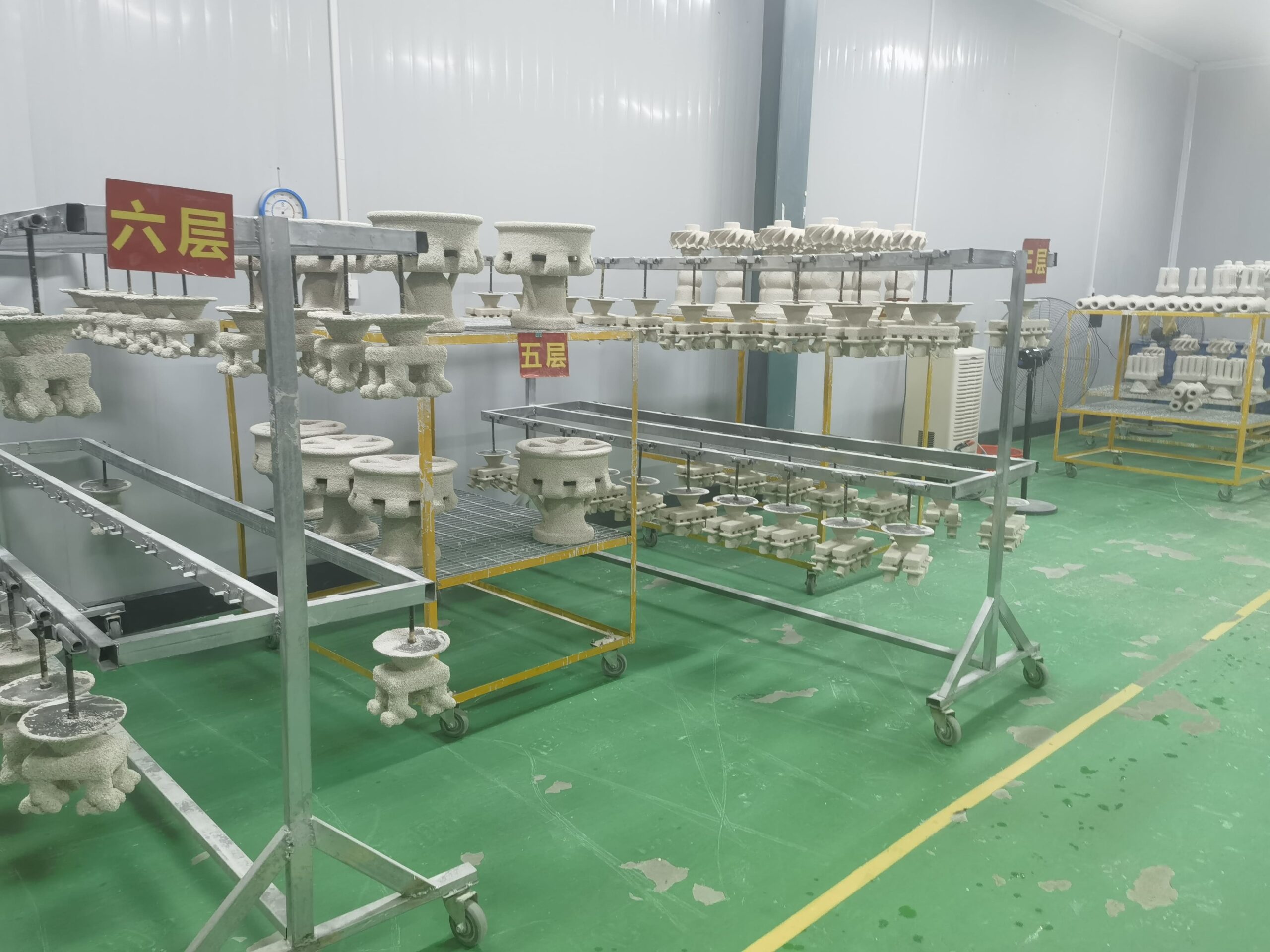
Our automated shell drying lines utilize closed-loop temperature and humidity regulation to ensure consistent ceramic integrity. By maintaining precise environmental conditions, we prevent common surface defects like skinning or premature cracking, which are critical when managing the shell sand curing process.
- Laminar Airflow Systems: We use targeted, low-velocity laminar airflow to dry shells uniformly without causing distortion or mechanical stress.
- Conveyor Integration: Our overhead power-and-free conveyors and serpentine carousel buffers maximize floor space while providing the dwell time necessary for robust inter-coat bonding.
- Moisture Monitoring: Real-time sensor arrays track moisture loss rates during the drying cycle, allowing for optimized transitions between prime and backup coats.
- Curing Efficiency: By automating the humidity and airflow parameters, we significantly reduce the time required for complete shell dehydration, ensuring every layer achieves maximum green strength before the next application.
Technical Specifications & Equipment Capabilities
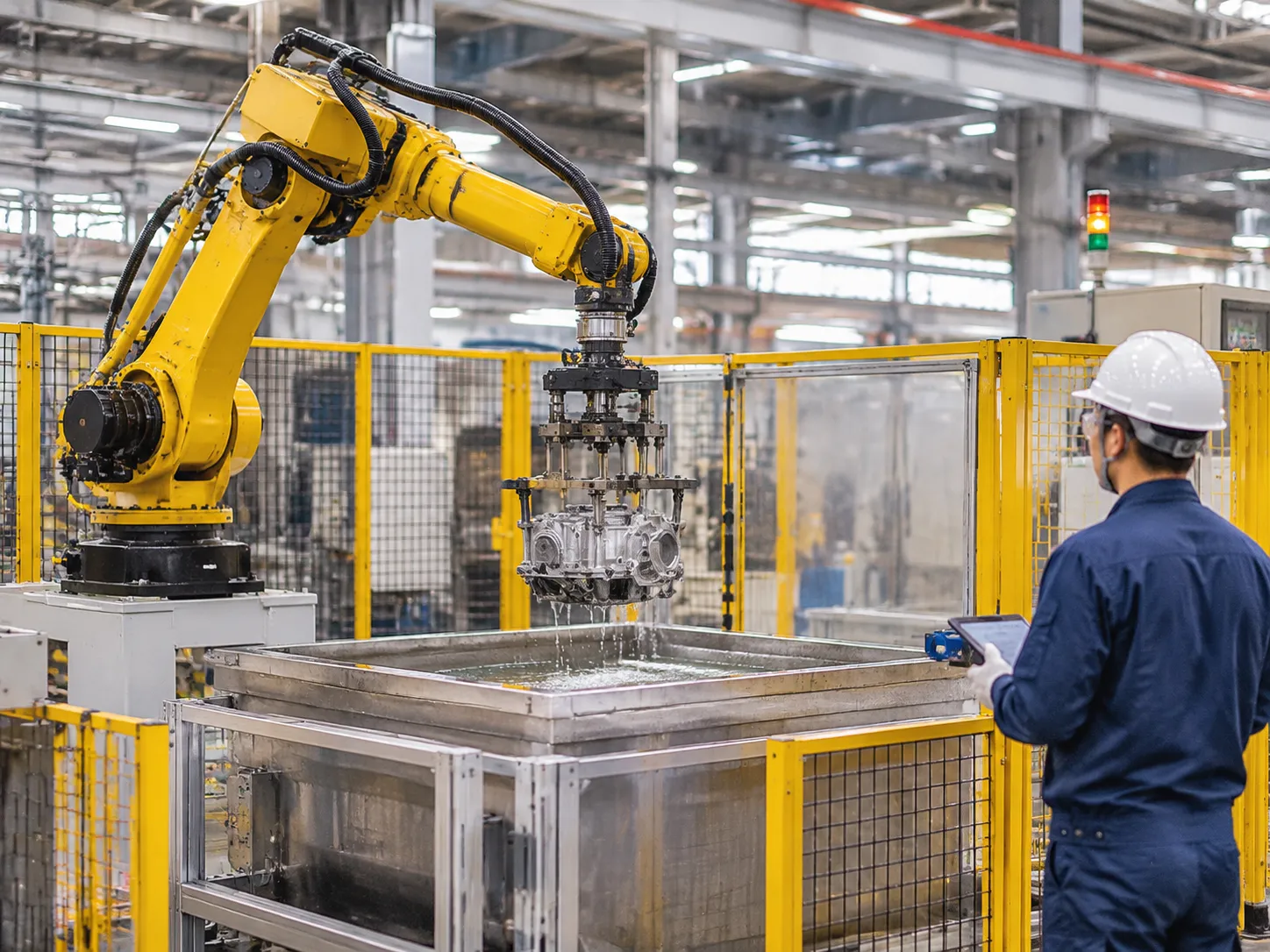
Our automated ceramic shell coating lines are engineered for continuous, high-volume production cycles. Every cell balances industrial payload limits with tight repeatability across dipping, stuccoing, and drying cycles.
Core Automation & Handling Parameters
We configure each multi-axis foundry dipping manipulator to handle heavy wax tree assemblies without arm deflection or vibration during rotation:
- Robot Payload Ratings: Standard 165 kg to 500 kg capacities at the end-of-arm tooling (EOAT).
- Operational Reach: 2,650 mm to 3,100 mm working radial envelope with full spherical coverage.
- Position Repeatability: ±0.05 mm across six programmable axes.
- Servo-Indexing Speeds: Variable rotation from 1 to 45 RPM with multi-angle dwell profiles.
Slurry Tanks & Stucco Processing Modules
Slurry rheology and refractory distribution demand rugged processing hardware. While our heavy-duty sand casting equipment addresses bulk greensand processing, these investment casting units focus on high-precision slurry viscosity control and multi-grit stucco deposition:
- Slurry Tank Capacity: 250 L to 1,200 L double-jacketed stainless steel vessels.
- Agitation Drive: 1.5 kW to 3.7 kW low-shear continuous drive with variable speed invertors.
- Refractory Grains Supported: Zircon flour, fused silica, mullite, and sintered aluminosilicate (50 to 120 mesh for rain machines; 30 to 80 mesh for fluidized beds).
- Fluidization Pressure: 0.2 to 0.6 bar adjustable low-pressure clean dry air.
Cell Specifications Table
| Subsystem | Key Parameter | Standard Range / Capability |
|---|---|---|
| Robotic Arm | Rated Payload / Maximum Reach | 210 kg – 500 kg / Up to 3.1 m |
| Slurry Unit | Slurry Tank Capacity & Cooling | 300 L – 1,000 L, chilled-water jacket (15°C–22°C) |
| Sanding Unit | Stucco Delivery Method | Rainfall sander (primary) & aerated fluidized bed (backup) |
| Conveyor System | Inter-Coat Transport | Power-and-free overhead track with servo carrier indexers |
| Utility Supply | Electrical, Air & Exhaust | 400/480V 3-phase, 6 bar dry air, 1,500 m³/h dust exhaust |
Defect Prevention & Shell Quality Control
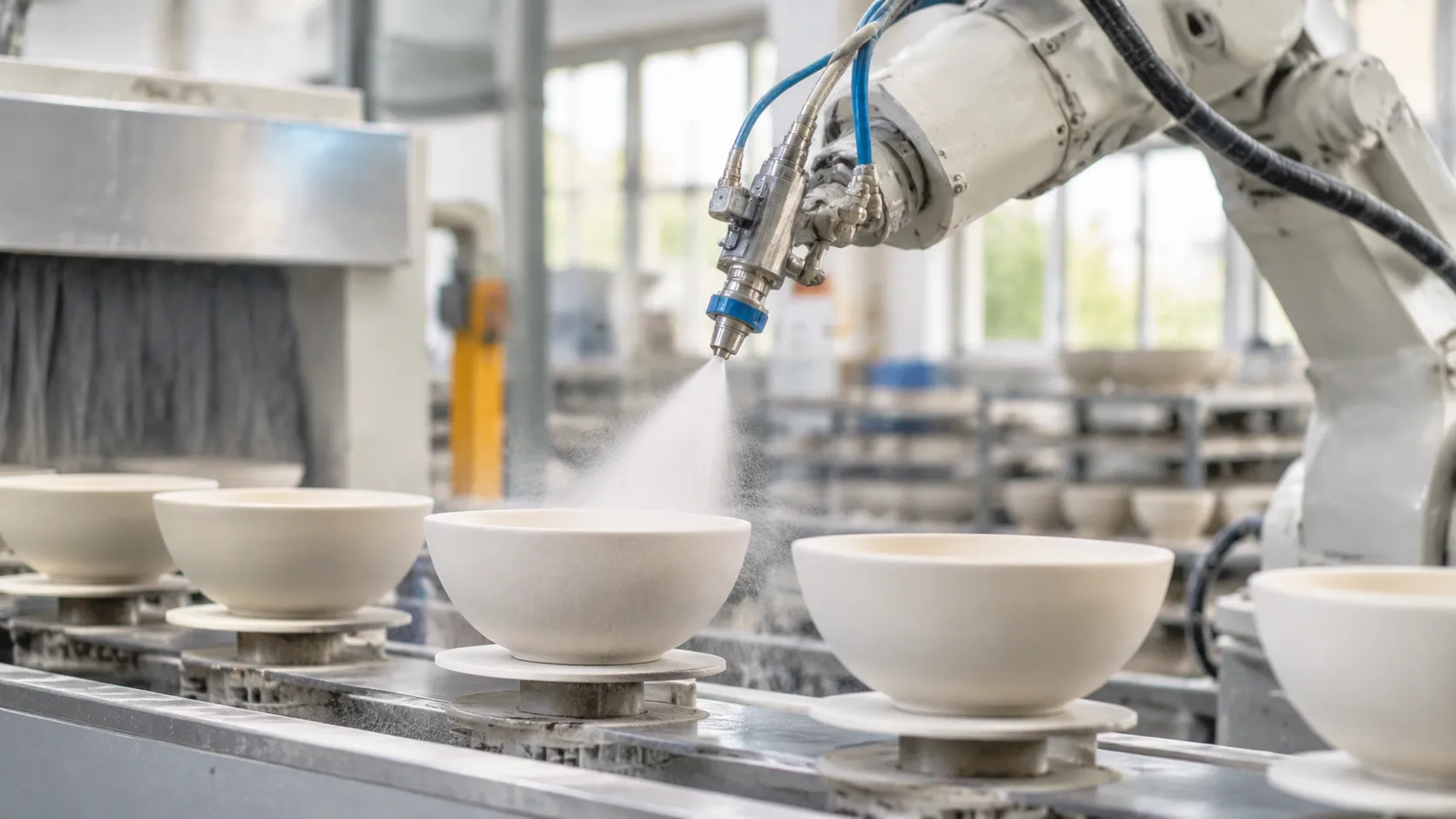
Consistent shell integrity determines your final casting yield. In our automated ceramic shell coating (dipping, stuccoing, and drying) lines, we engineer out the primary variables that cause mold failure, inclusion defects, and dimensional drift.
Slurry Wedge Elimination to Stop Thermal Shock Cracking
Manual drainage often leaves pooled slurry in tight radiuses, deep ribs, and blind cavities. These thickened areas dry unevenly and create rigid slurry wedges that cannot accommodate pattern expansion during dewaxing.
- Multi-Axis Articulated Drainage: Our robots execute programmed multi-axis spin, tilt, and rocking routines immediately after dipping to clear pockets before stuccoing.
- Controlled Drainage Speeds: By matching pattern withdrawal speed to slurry surface tension, we eliminate heavy run-down lines and teardrops.
- Thermal Stress Mitigation: Addressing localized build-ups tackles the core shell cracking causes in investment casting, ensuring the ceramic mold expands uniformly under flash-fire dewaxing conditions.
Uniform Wall Thickness Across Complex Geometries
Variations in shell thickness compromise thermal conductivity and can lead to unpredicted metal shrinkage. We hold shell wall tolerances within tight parameters through closed-loop process tracking:
| Quality Factor | Manual Shell Building | Our Automated Robotic Line |
|---|---|---|
| Edge-to-Core Shell Uniformity | ±1.5 mm to ±2.5 mm variation | Within ±0.3 mm repeatable tolerance |
| Slurry Drainage Control | Subjective, operator-dependent | Fixed angle, speed, and dwell per recipe |
| Stucco Deposition Angle | Uneven sand shadowing | Continuous 360° dynamic pattern rotation |
| Weight Consistency | Wide batch-to-batch scatter | Monitored coat-by-coat via in-line load cells |
Segregated Sanding Zones to Stop Cross-Contamination
Cross-contamination of refractory media ruins surface finish and weakens mold structure. A single coarse grain in a primary slurry dip creates pinholes and surface inclusions, while fine dust in the backup coats hinders binder penetration.
- Physical Isolation: We separate primary rainfall sanders from intermediate and coarse backup units using sealed containment booths with dedicated air curtains.
- Dedicated Cyclonic Extraction: Each sanding station runs an independent dust extraction circuit, pulling out spent fines and broken grains before they can enter the fluidized media.
- Pure Boundary Layers: Face coats retain ultra-fine zircon or fused silica distributions for superior surface finishes, while backup shells maintain maximum porosity and mechanical interlock.
Compatible Binder & Refractory Materials
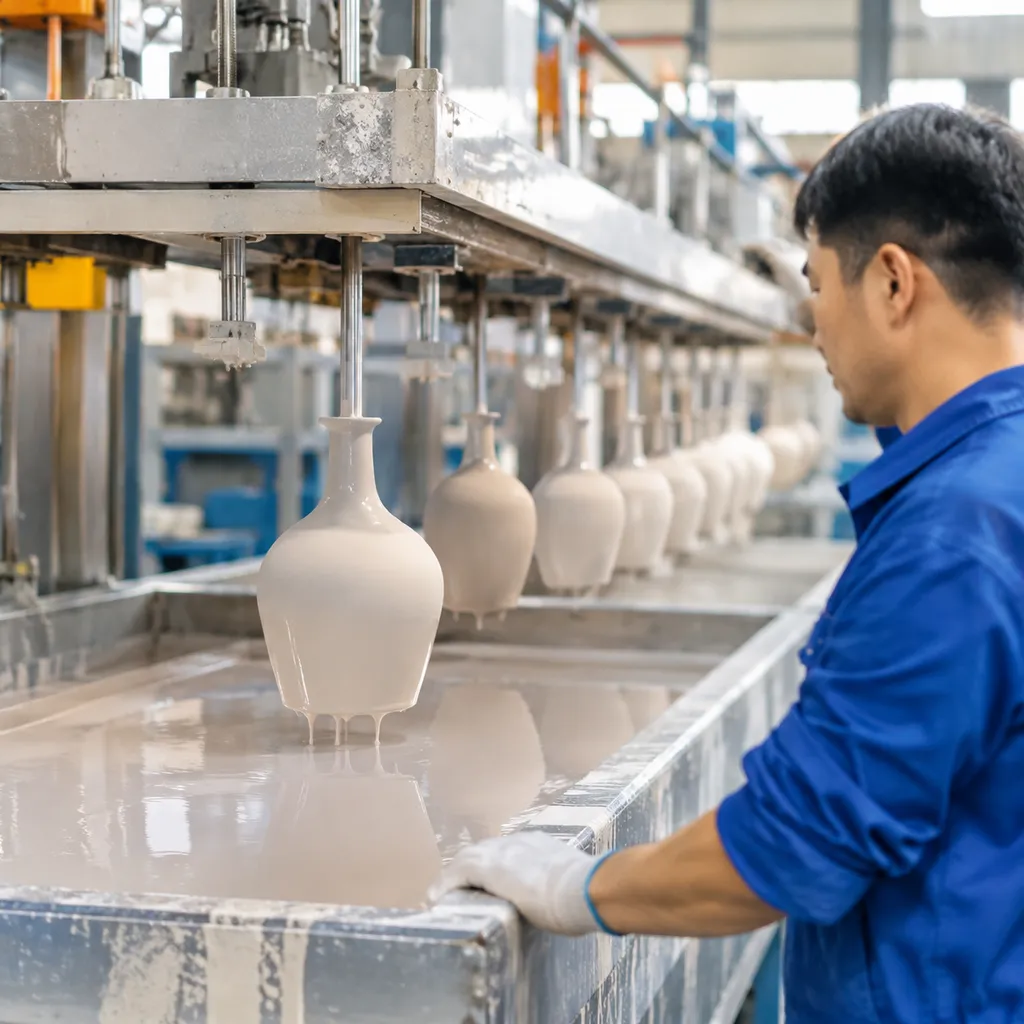
Our automated ceramic shell coating systems are engineered for high-performance versatility, supporting a wide range of industry-standard chemical systems and refractory media. We ensure that our equipment maintains the rheological stability required for consistent shell formation.
Binder Systems
We support both primary and backup layer requirements for: Water-based colloidal silica: Ideal for robust, environmentally friendly shell processing. Ethyl silicate systems: Utilized for specific metallurgical compatibility and structural shell integrity.
Refractory Grain Compatibility
Our dipping and stuccoing modules are calibrated to handle diverse refractory materials, ensuring optimal surface finish and thermal resistance for casting quality standards for reliable metal parts: Zircon: Excellent for fine prime coats and high-temperature stability. Fused Silica: Provides low thermal expansion to minimize deformation. Mullite & Alumina: Used for backup layers to improve shell strength and structural durability.
Application Scope
The precision of our robotic coating process makes it suitable for complex, high-value components where dimensional accuracy is non-negotiable. Our systems are currently optimized for the production of: Aerospace components: Including high-precision turbine blades. Industrial hardware: Such as complex impellers and high-torque pump parts. Medical implants: Requiring strict adherence to metallurgical purity and surface finish standards, often facilitated by our specialized titanium investment casting for aerospace and medical parts.
Turnkey Engineering and Integration Services
We deliver fully integrated installations engineered to drop directly into existing foundry footprints or greenfield facilities. From preliminary cycle modeling to complete commissioning, our team handles the engineering pipeline to get your automated ceramic shell coating: dipping, stuccoing and drying system online with zero guesswork.
Digital-Twin 3D Layouts and Cycle Simulations
Before metal is cut or equipment is anchored, we build a full digital-twin model of your shell room.
- Reach & Clearance Validation: 3D motion simulations verify robot arm envelopes, preventing mechanical interference between wax assemblies, tank rims, and rainfall sanders.
- Throughput Optimization: We balance dip-dwell periods, stuccoing sequences, and drying buffer times across multiple tree configurations to prevent bottlenecks.
- Prototyping & Scale-Up: We assist foundries advancing from precise cast prototypes and engineering to full-rate production by validating cycle times virtually.
Structured FAT and SAT Protocols
Every automated system undergoes rigorous two-stage qualification before full handoff:
| Testing Phase | Scope & Verification Checks |
|---|---|
| Factory Acceptance Testing (FAT) | Dry and wet dry-run trials at our build facility; full verification of multi-axis kinematics, slurry agitation reliability, sand gate actuation, and emergency stop circuits using customer-supplied wax trees. |
| Site Acceptance Testing (SAT) | On-site mechanical anchoring, utility hookups, exhaust integration, and live-slurry calibration; baseline shell weight uniformity checks across multi-coat production runs. |
Operator Training and Remote Diagnostics
Reliable operation depends on straightforward maintenance and real-time oversight. We configure our shell-building lines with intuitive HMI controls and comprehensive long-term operational support:
- HMI Recipe Management: Clear touchscreens allow operators to program immersion depths, manipulation angles, sander flow gates, and tunnel dwell times without advanced coding skills.
- Foundry Staff Training: We deliver structured on-site training for plant technicians covering robot jog modes, slurry level calibration, seal replacements, and preventive maintenance.
- 24/7 Secure Remote Support: Built-in industrial VPN gateways give our automation engineers direct access to PLC fault logs, sensor telemetry, and kinematic diagnostics to resolve issues without waiting for field dispatches.
Frequently Asked Questions
How does automated dipping reduce investment casting scrap rates?
Manual dipping leads to operator fatigue, uneven slurry buildup, and inconsistent drainage angles. Our automated dipping, stuccoing and drying sequences eliminate these variables through programmed robotic paths. By standardizing immersion speeds, dwell times, and multi-axis drainage angles, our automatic shell coating line for investment casting prevents slurry pooling in blind pockets and eliminates shell cracking caused by uneven thermal expansion during dewaxing.
What is the difference between a rainfall sander and a fluidized bed?
Both units apply refractory stucco to wet slurry coats, but their mechanical delivery methods serve different geometries:
| Feature | Rainfall Sander (Rain Machine) | Fluidized Bed System |
|---|---|---|
| Deposition Method | Gravity-fed curtain drop | Low-pressure pneumatic suspension |
| Best Process Stage | Primary and face coats | Intermediate and backup structural coats |
| Component Geometry | Broad outer profiles and delicate wax patterns | Deep internal recesses, blind holes, and re-entrant angles |
| Pattern Stress | Near-zero mechanical pressure | Minor aerated friction resistance |
How does automated climate control speed up shell drying?
Traditional air-drying risks surface skinning, where the outer layer cures while trapping liquid binder underneath. We pair targeted laminar airflow with continuous closed-loop temperature and relative humidity tracking. Maintaining stable evaporative gradients across the drying carousel cuts cycle times safely and protects against structural delamination, maximizing the operational efficiency of each automated shell coating application.
Can this automated system integrate into an existing manual shell room?
Yes. We design modular robotic cells that fit within standard foundry floor footprints. Depending on your building envelope, we can integrate standalone dipping robots alongside your existing slurry tanks or install continuous overhead power-and-free conveyors to bridge manual preparation stations with automated stuccoing and drying lines.
What payload capacities are supported for heavy wax trees?
Our system configurations deploy heavy-payload 6-axis industrial foundry robots rated from 50 kg to over 500 kg. This capacity easily handles dense commercial wax assemblies, structural alloy clusters, and heavy multi-layer ceramic shells without cycle deflection or tool-center-point drift.
 English
 Russian
 German