
2026年8月28日
Austenitic stainless steel guide covering FCC structure corrosion resistance grades 304 316 weldability and key industrial applications
Overview of Austenitic Stainless Steel Engineering
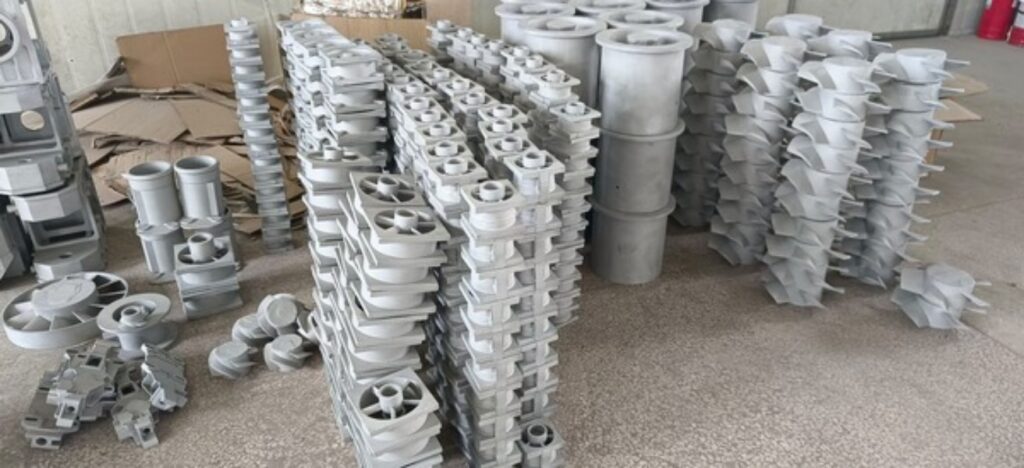
Selecting the ideal metal for severe shock loads, cryogenic processing, or aggressive chemical exposure requires a precise understanding of austenitic stainless steel. We engineer high-performance castings utilizing these versatile chromium-nickel alloys to ensure long-term structural integrity across demanding global applications.
Austenitic Microstructure
The performance of any austenitic steel grade relies directly on its atomic structure and element distribution:
- Face-Centered Cubic (FCC) Lattice: The face-centered cubic (FCC) lattice is fully stabilized at room temperature by nickel and manganese additions, eliminating the ductile-to-brittle transition temperature typical of ferritic steels.
- Non-Magnetic Properties: In its fully solution-annealed state, non-magnetic stainless steel displays minimal magnetic permeability, making it vital for electronics, medical devices, and specialized defense applications.
- Extreme Temperature Range: Delivers unmatched cryogenic impact toughness at sub-zero temperatures while maintaining high-temperature oxidation resistance and scaling resistance.
Primary Austenitic Steel Grade Groups
We classify austenitic stainless steel into three core families based on chemical composition and operating environment:
| Alloy Family | Primary Metallurgical Additions | Engineering Performance Traits | Common Grades |
|---|---|---|---|
| 300 Series | Chromium-Nickel (Cr-Ni) & Molybdenum (Cr-Ni-Mo) | 300-series stainless steel delivers exceptional general corrosion resistance, high ductility, and excellent weldability. | 304 grade stainless steel (UNS S30400), 316L marine grade alloy (UNS S31600), 317 |
| Stabilized Grades | Titanium (Ti) or Niobium (Nb) additions | Additions lock up carbon atoms to prevent chromium carbide precipitation, delivering max intergranular corrosion resistance in high-heat zones. | 321, 347 |
| 200 Series | Chromium-Manganese-Nickel (Cr-Mn-Ni) with Nitrogen | Nitrogen-strengthened 200-series manganese alloy variants offer higher yield strength as a cost-effective alternative to nickel-heavy alloys. | 201, 202 |
Chemical Composition & Mechanical Performance Data
Chemical Element Spectrum
| Element | Composition Range (%) | Primary Engineering Function |
|---|---|---|
| Chromium (Cr) | 16.0% – 26.0% | Passivation layer formation and corrosion resistance |
| Nickel (Ni) | 6.0% – 22.0% | Stabilizes the austenitic microstructure |
| Molybdenum (Mo) | 0.0% – 7.0% | Enhances pitting resistance in chloride environments |
| Carbon (C) | < 0.03% (L-grades) | Suppresses carbide precipitation and intergranular corrosion |
Mechanical & Physical Properties
Austenitic stainless steel delivers exceptional tensile strength and superior ductility compared to ferritic and martensitic alloys, such as traditional 400-series stainless steel grades. Through our specialized cast stainless steel casting services, we maintain strict metallurgical control over these key physical parameters:
- Strain Hardening Rates: High work-hardening capacity increases yield strength significantly during cold working while preserving core toughness.
- Thermal Expansion Factors: A higher coefficient of thermal expansion requires exact mold scaling and precise thermal management during solidification to prevent hot tearing.
- Cryogenic Impact Energy: Excellent structural stability without experiencing a ductil-to-brittle transition at sub-zero temperatures.
Precision Investment Casting Capabilities
Controlling Thermal Expansion and Shrinkage
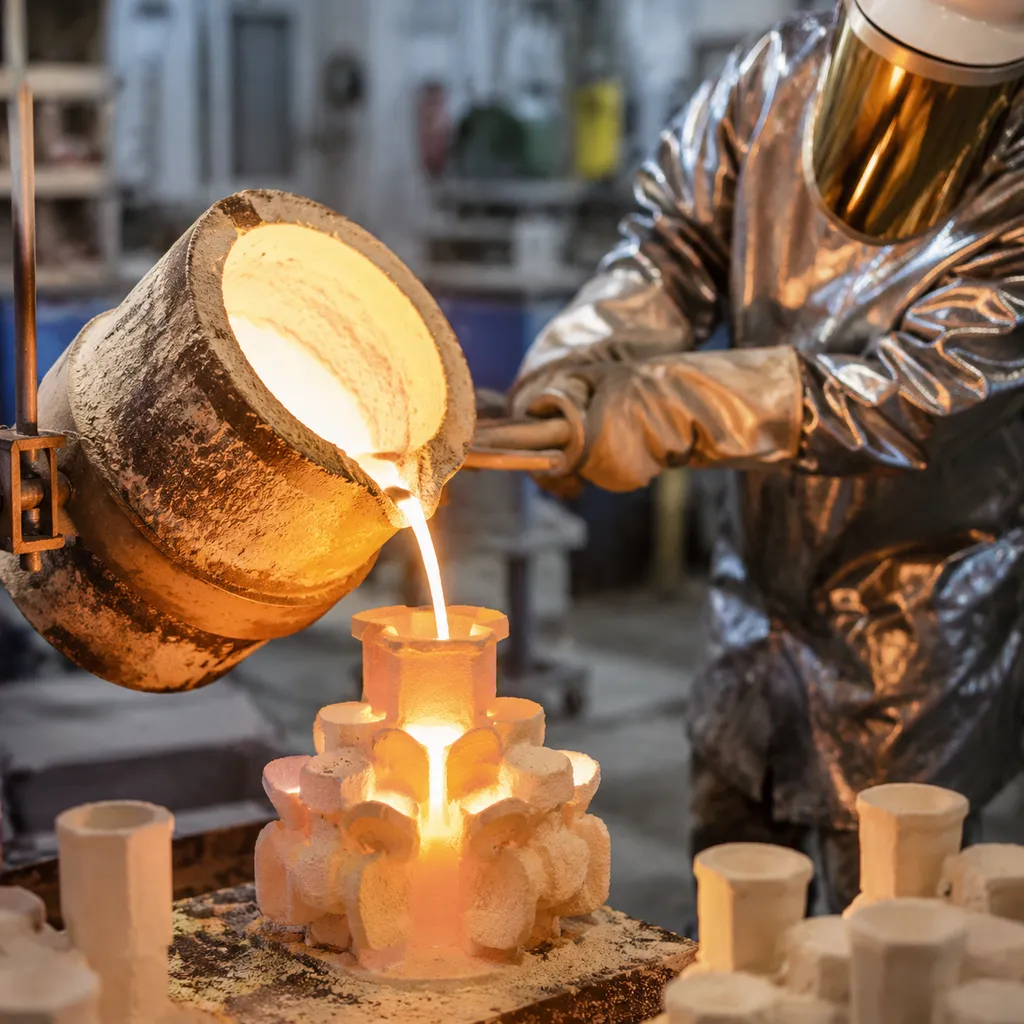
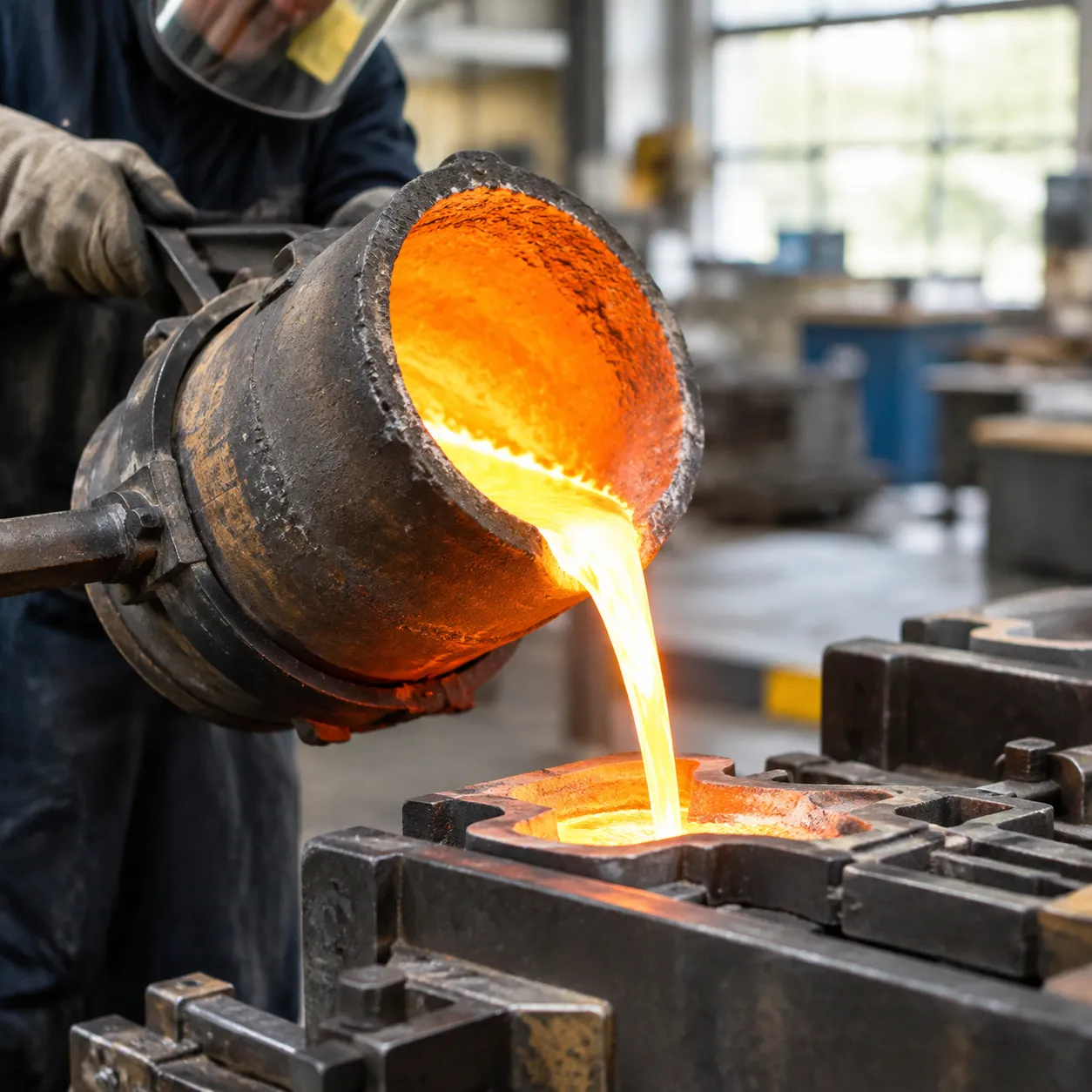
Austenitic stainless steel features a high thermal expansion coefficient and notable volumetric shrinkage during cooling. We mitigate hot tearing and shrinkage porosity by adjusting ceramic shell slurry compositions and strictly regulating cooling curves during liquid metal pouring.
Integrated Equipment Workflows for Austenitic Castings
To optimize metallurgical quality and unit repeatability, we implement fully integrated automation in casting process systems across our production lines: Precision Wax Injection: High-stability temperature molding maintains accurate pattern geometries for complex, thin-walled austenitic components. Automated Shell Coating & Marking: Continuous slurry and sand deposition delivers uniform ceramic shell strength, preventing shell cracking under high heat. High-Pressure Dewaxing Autoclaves: Fast steam dewaxing cycles clear mold cavities completely, preventing carbon pickup and protecting low-carbon grades. Robotic Integrators: Automated mold transfer in hot-pour zones eliminates manual variance and ensures stable pouring conditions.
Dimensional Tolerance and Surface Finish Standards
We maintain strict dimensional control across every production batch. For mission-critical aerospace, chemical, and medical hardware, our secondary processing works alongside high-spec precision machining components pipelines to reliably achieve tight tolerances within ≤ 5µm.
Industrial Applications of Austenitic Stainless Steel
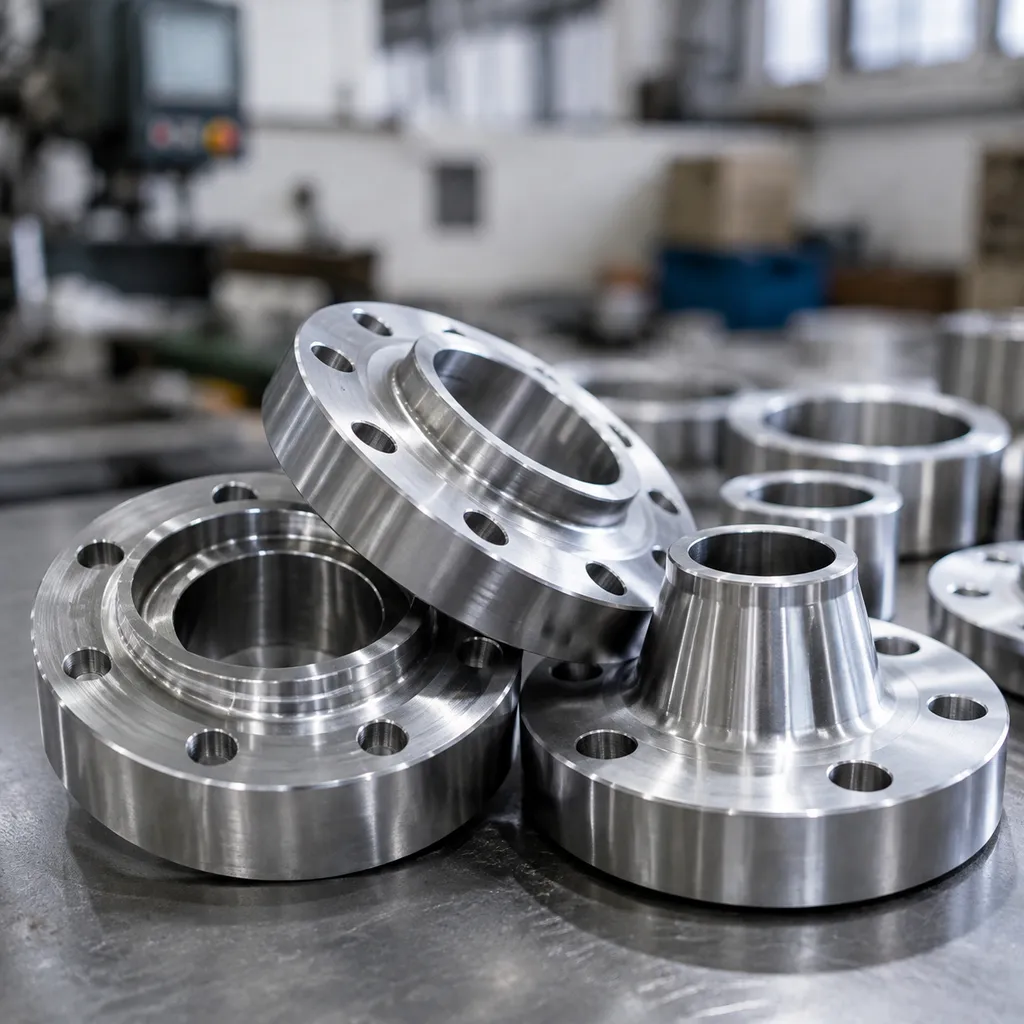
We supply precision investment castings engineered from austenitic stainless steel across high-demand industrial sectors. The inherent corrosion resistance, high-temperature stability, and mechanical strength of this material make it the benchmark alloy family for critical fluid handling, aerospace structural parts, and hygienic systems.
Chemical & Petrochemical Processing
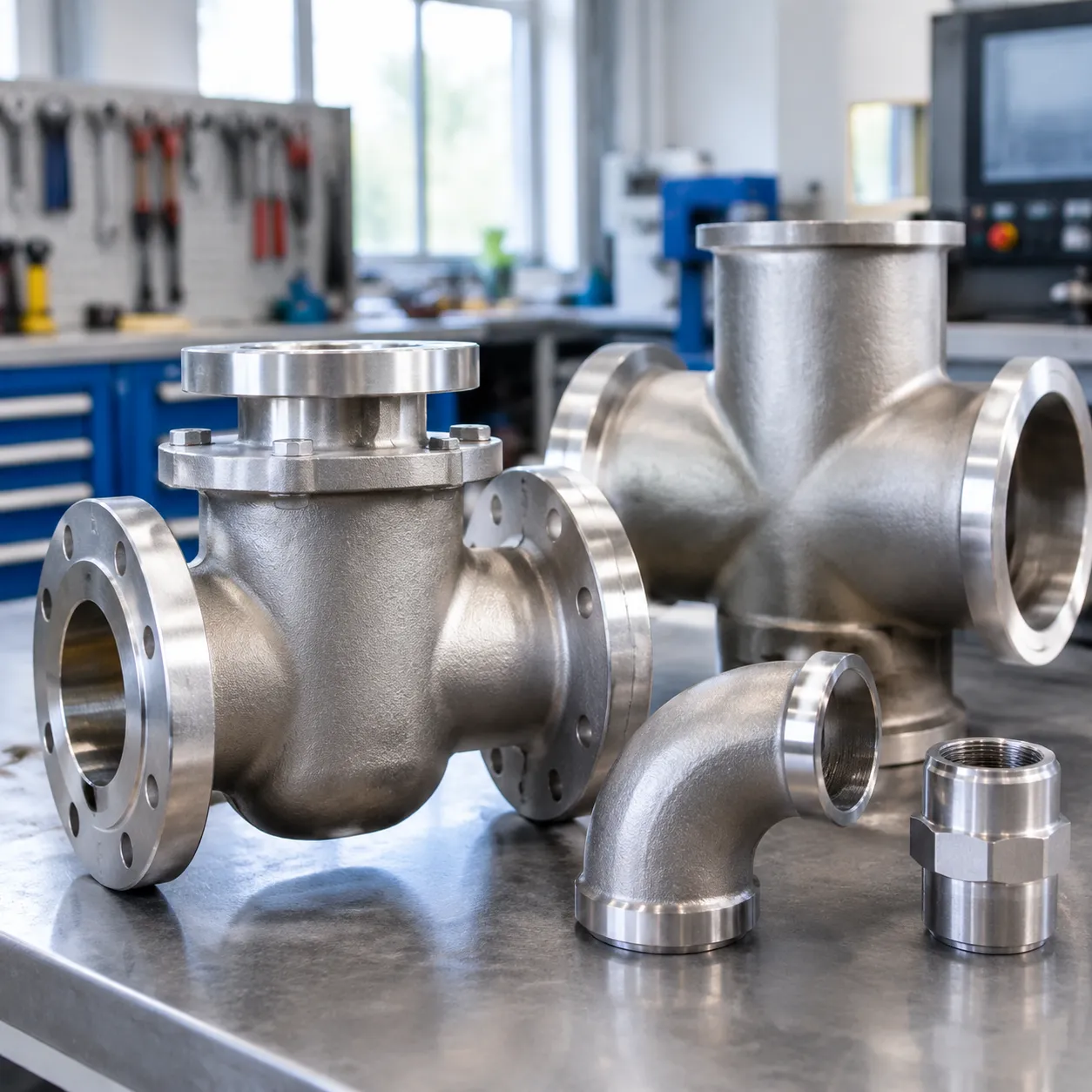
Severe chemical environments require alloys that resist pitting, crevice corrosion, and stress corrosion cracking under pressure. Key Components: Valve bodies, pump housings, impulse lines, and pressure vessel fittings. Alloy Grades: 316 and 316L (UNS S31600). Performance Factor: High molybdenum content ensures long service life in aggressive chloride and acidic environments. Evaluating the difference between 304 and 316 stainless steel helps engineers select the optimal chemistry for targeted chemical resistance.
Aerospace & Defense
High-stress aviation and defense platforms rely on 300-series stainless steel to withstand thermal cycling and mechanical fatigue without structural degradation. Key Components: Exhaust manifolds, high-temperature brackets, environmental control ducting systems, and engine mount fittings. Alloy Grades: Titanium-stabilized 321 and Niobium-stabilized 347. Performance Factor: Stabilized elements eliminate chromium carbide precipitation during welding and high-heat exposure, preventing intergranular failure.
Sanitary & Food Processing
Hygienic processing environments require smooth, non-porous surface finishes to eliminate bacterial traps and withstand aggressive cleaning regimens. Key Components: Clean-in-place (CIP) pump impellers, valve housings, manifold blocks, and sanitary piping connectors. Alloy Grades: 304 grade stainless steel and 316. Performance Factor: Exceptional washdown resistance against caustic cleaning agents, maintaining non-reactive contact with consumables.
Medical & Pharmaceutical
Medical equipment and pharmaceutical production demand high purity, biocompatibility, and resistance to repeated sterilization cycles. Key Components: Precision surgical tool handles, housing enclosures, fluid flow meters, and processing valve bodies. Alloy Grades: 316L marine grade alloy and specialized low-carbon austenitic steel grades. Performance Factor: High surface integrity and non-magnetic characteristics in solution-annealed states ensure zero interference with sensitive diagnostic tools.
Quality Assurance & Compliance in Austenitic Stainless Steel Castings
Solution Annealing & Sensitization Prevention
We strictly control heat treatment cycles to preserve corrosion resistance in every austenitic stainless steel casting we pour.
- Sensitization Control: Cooling too slowly through the 425°C–860°C temperature zone triggers chromium carbide precipitation along grain boundaries. This depletes local chromium levels and exposes parts to intergranular attack.
- Rapid Quenching: We heating castings above 1040°C to dissolve carbides into solid solution, followed by rapid water quenching to lock in the single-phase austenitic structure.
Non-Destructive Testing (NDT) & Inspection
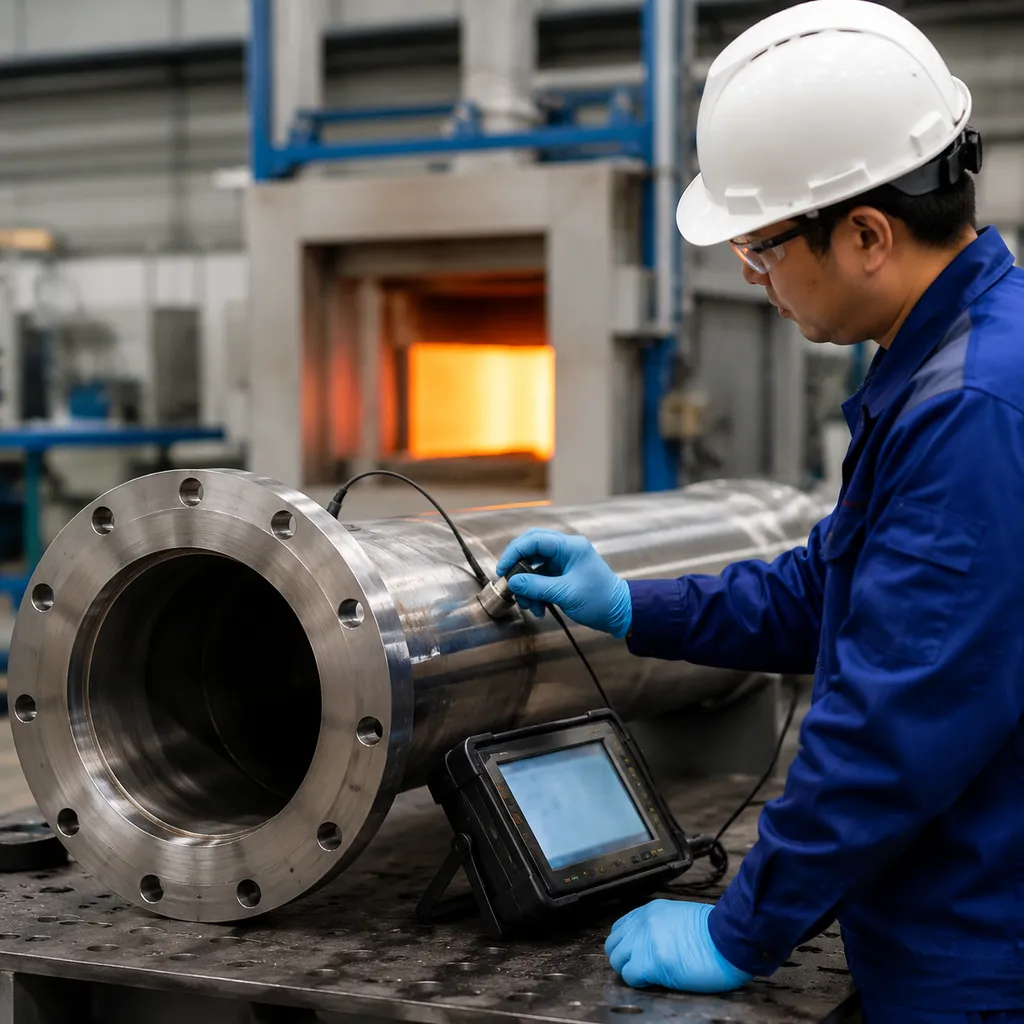
We deploy multi-stage testing to ensure defect-free austenitic steel components for critical fluid handling and structural systems:
- Radiographic Testing (X-ray): Inspects internal density to flag subsurface shrink voids and gas porosity.
- Dye Penetrant Testing (PT): Reveals micro-surface tears, cold shuts, and surface-connected cracks.
- Ultrasonic Testing (UT): Measures wall thickness consistency and checks deep internal sound structural integrity.
Our foundry maintains rigorous process control in investment casting for defect-free precision across every production run.
International Standards Compliance
Our casting processes and testing protocols meet global standards for high-performance austenitic stainless steel grade alloys:
- ASTM A351: Standard specification covering cast austenitic pressure-containing parts.
- ASTM A743: Standard specification for general application corrosion-resistant castings.
- ISO 9001: Certified quality control management guaranteeing dimensional accuracy and batch-to-batch repeatability.
Turnkey Engineering & Custom Foundry Integration
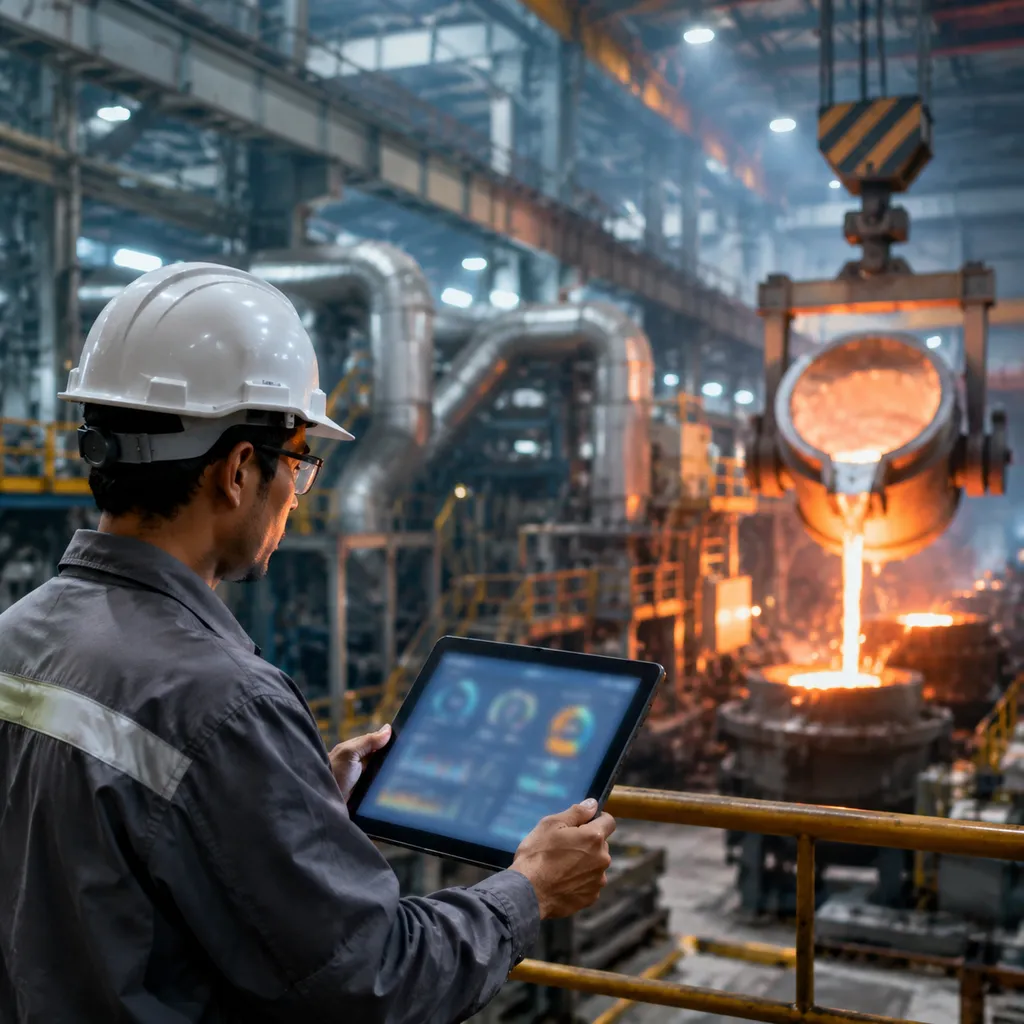
We deliver end-to-end engineering support, pairing custom tooling with state-of-the-art foundry automation. As a dedicated custom casting manufacturer, we streamline the entire manufacturing lifecycle of austenitic stainless steel components from pre-research to global delivery.
Custom Tooling & Process Pre-Research
Before cutting metal, our engineering team conducts rigorous pre-research to ensure optimal mold yield and tight dimensional control:
- CAD/CAM Mold Engineering: Custom die creation optimized for complex component geometries and uniform contraction.
- Solidification Simulation: Advanced thermal modeling to eliminate shrink porosity defects in high-alloy steel investment casting.
- Gating System Optimization: Engineered runner and riser layouts that maximize liquid metal flow and maintain clean melt delivery.
Industrial Internet IoT Integration
Our foundry lines leverage real-time telemetry to maintain strict control parameters across every melt cycle:
| IoT System Feature | Technical Function | Production Impact |
|---|---|---|
| Equipment Telemetry | Real-time tracking of slurry temperature, drying room humidity, and furnace power | Guarantees metallurgical consistency for austenitic stainless steel parts |
| Predictive Maintenance | Continuous vibration and thermal tracking on dewaxing autoclaves and pour arms | Prevents unscheduled equipment downtime and shell cracking risks |
| Fault Early Warnings | Automated alerts for cooling line variations and vacuum pressure drops | Drastically reduces scrap rates during liquid metal solidification |
By deploying precision investment casting services integrated with smart sensor networks, we provide transparent quality metrics throughout the manufacturing process.
Global Spare Parts & 24/7 Technical Support
We ensure long-term operational continuity for global industrial clients with dedicated post-production services:
- 24/7 Technical Assistance: Direct access to specialized foundry engineers for process troubleshooting, alloy selection, and design optimization.
- Global Logistics & Spare Parts: Rapid delivery of custom tooling inserts, core fixtures, and wear components to support high-volume manufacturing worldwide.
Frequently Asked Questions
What is the main difference between 304 and 316 austenitic stainless steel castings?
The primary distinction lies in molybdenum addition. Grade 316 contains 2%–3% Molybdenum, which drastically increases resistance to pitting and crevice corrosion in chloride-rich and marine environments compared to 304. For detailed alloy selection criteria, review our casting stainless steel guide for buyers and engineers.
| Property / Feature | 304 Austenitic Stainless Steel | 316 Austenitic Stainless Steel |
|---|---|---|
| Molybdenum Content | 0% | 2.0% – 3.0% |
| Corrosion Resistance | Excellent in standard atmospheric environments | Superior in chloride, saline, and chemical environments |
| Primary Applications | Food processing, architectural, general industrial | Marine hardware, chemical pumps, pharmaceutical |
How does Vastpcc equipment prevent hot tearing during austenitic alloy solidification?
We prevent hot tearing by using automated temperature-controlled shell preheating and precise thermal modeling. Our custom gating designs ensure uniform directional solidification, minimizing thermal contraction stress across complex geometries when pouring cast stainless steel custom alloys and grades.
Why is solution annealing necessary after investment casting austenitic stainless steel?
As-cast austenitic stainless steel forms chromium carbide precipitates along grain boundaries during slow cooling, causing sensitization and making the alloy vulnerable to intergranular corrosion. Solution annealing heats the casting to 1010°C–1150°C and rapidly quenches it in water, redissolving carbides back into the matrix and restoring full corrosion resistance and ductility.
Can austenitic stainless steel become magnetic after cold working or machining?
Yes. Heavy mechanical deformation or cold machining forces a partial phase transformation of the non-magnetic face-centered cubic (FCC) austenite structure into ferromagnetic strain-induced martensite. While fully solution-annealed austenitic stainless steel remains non-magnetic, localized cold working introduces a weak magnetic response.
 English
  Russian
  German