
2026年10月14日
OEM investment casting delivers precise custom metal parts with complex designs tight tolerances and reliable quality for industrial applications

Engineering Specifications & Manufacturing Envelopes
Our OEM investment casting operations deliver near-net-shape metal parts engineered to reduce machining allowances and lower total manufacturing costs. We maintain strict process controls across shell construction, temperature regulation, and mold drying to achieve tight dimensional accuracy on every production run.
Process Capability: Silica Sol vs. Water Glass
We operate two distinct lost-wax casting methods to match part geometry, cosmetic requirements, and production budgets:
| Parameter | Silica Sol Process | Water Glass Process |
|---|---|---|
| Primary Binder | Ethyl silicate / colloidal silica sol | Sodium silicate (water glass) |
| Surface Roughness | Ra 1.6 to 3.2 µm | Ra 6.3 to 12.5 µm |
| Linear Tolerance | ISO 8062-3 CT4 to CT5 | ISO 8062-3 CT6 to CT7 |
| Alloy Compatibility | Stainless steel, duplex, superalloys | Carbon steel, low-alloy steel |
| Typical Application | High-precision fluid handling, marine, medical | Heavy equipment, brackets, hardware |
Dimensional Tolerances per ISO 8062-3
For critical interfaces, our standard as-cast output achieves ISO 8062-3 CT4 to CT6 precision:
- Linear Dimensions: CT4 for small functional profiles; CT5 to CT6 for cross-sections over 100 mm.
- Angular Tolerances: Within ±0.5° to ±1.0° depending on feature orientation.
- Machining Allowance: As low as 0.8 mm to 1.5 mm, minimizing tool wear and post-process cycle times.
Physical Boundaries & Geometric Capabilities
We design tooling and pouring systems to satisfy complex, thin-walled, or heavy-section engineering demands:
- Wall Thickness: Minimum 1.5 mm for localized sections with silica sol; 3.0 mm standard minimum for water glass.
- Component Weight Range: 0.05 kg up to 120 kg per single piece.
- Surface Roughness: As-cast finishes reach Ra 3.2 µm standard, eliminating secondary surface prep for non-sealing faces.
- Maximum Envelope: Up to 800 mm × 600 mm × 500 mm bounding volume for complex single-piece geometries.
Supported OEM Investment Casting Alloys & Material Standards
We pour a broad spectrum of ferrous and non-ferrous metals to meet exact mechanical requirements, corrosion thresholds, and wear demands. Every heat undergoes spectrographic verification to match ASTM, DIN, EN, and JIS chemistry limits before pouring.
Stainless Steels & Duplex Grades
For fluid control, food machinery, and marine service, we cast austenitic, martensitic, precipitation-hardening, and duplex formulations. Our team pours standard grades including 304/304L, 316/316L, 410, and high-strength 17-4PH. When severe chloride pitting resistance is required, we deliver 2205 duplex and 2507 super duplex grades. Review our complete range of cast stainless steel custom casting alloys and grades to match your chemical and tensile criteria.
Carbon, Low-Alloy & Tool Steels
For structural strength and heavy wear resistance, we cast a full range of carbon and low-alloy steels: Carbon Steels: WCB, WCC, AISI 1020, 1045 for structural integrity and general machinery. Low-Alloy Steels: 4140, 4340, 8620 for quenched-and-tempered components requiring high toughness. Tool Steels: D2, H13, and S7 for high-abrasion tooling, shear blades, and impact-wear components.
Superalloys & Non-Ferrous Alloys
When operating conditions exceed the limits of standard steel, we cast specialty performance alloys: Nickel & Cobalt Base: Inconel 625, Inconel 718, Hastelloy C276, and wear-resistant cobalt-base alloys for extreme heat and abrasive environments. Aluminum Alloys: A356, A380, and 6061 equivalent chemistries for lightweight structural enclosures and brackets. Copper & Bronze Alloys: Aluminum bronze (C95400, C95800), manganese bronze, and tin bronze for marine hardware, bushings, and anti-galling components.
Material Grade Cross-Reference Guide
The table below outlines international standard equivalencies across our most frequently poured investment casting alloys:
| Material Category | ASTM Standard | DIN / EN Equivalent | JIS Equivalent | Primary Characteristics |
|---|---|---|---|---|
| Austenitic Stainless | CF8M (AISI 316) | 1.4408 / GX5CrNiMo19-11-2 | SCS14A | Acid & marine corrosion resistance |
| Precipitation Hardening | CB7Cu-1 (17-4PH) | 1.4542 / X5CrNiCuNb16-4 | SCS24 | High yield strength, moderate corrosion |
| Duplex Stainless | CD3MN (2205) | 1.4470 / GX2CrNiMoN22-5-3 | SCS21 | Pitting resistance, high stress tolerance |
| Low-Alloy Steel | AISI 4140 | 1.7225 / 42CrMo4 | SCM440 | High fatigue strength, Q&T response |
| Carbon Steel | WCB (ASTM A216) | 1.0619 / GP240GH | SCPH2 | High weldability, pressure boundary use |
| Nickel Superalloy | Inconel 625 | 2.4856 / NiCr22Mo9Nb | NCF 625 | High oxidation & creep strength to 980°C |
| Aluminum Bronze | C95800 | 2.0975 / CuAl10Fe5Ni5 | CAC703 | Cavitation and saltwater resistance |
All incoming raw materials and melted heats include complete melt-heat logs, chemical certificates, and mechanical test batches to ensure every OEM investment casting run meets global design criteria.
Precision CNC Machining & Secondary Services for OEM Investment Casting
Near-net-shape casting provides the foundation, but critical assemblies demand micro-inch finishes and tighter tolerances. We bridge the gap between raw castings and finished assemblies under one roof, delivering fully finished CNC machined metal castings ready for immediate production-line installation.
Multi-Axis Machining Capabilities
Cast components with critical sealing faces, tight bore locations, or threaded ports transition directly to our machining centers. Our multi-axis equipment eliminates multi-fixture setup errors and maintains true position on complex datums:
- Multi-Axis CNC Milling: 4-axis and 5-axis machining centers for complex contours, port surfaces, and multi-sided bolt patterns in a single clamp setup.
- CNC Turning & Live Tooling: High-precision turning for concentric diameters, seal grooves, and threaded internal/external bores.
- Wire EDM Finishing: Fine-wire electrical discharge machining for tight internal corners, splines, deep slots, and keyways that conventional tooling cannot reach.
When your prints demand micron-level alignment, we integrate our investment casting processes with dedicated precision machining parts and custom CNC components to hold critical bores and bearing journals to ±0.005 mm.
Secondary Finishing and Heat Treatment Matrix
| Process Category | Secondary Operation | Typical Capabilities & Specifications | Shop Floor Purpose |
|---|---|---|---|
| Heat Treatment | Solution Annealing | Controlled atmospheric furnaces for stainless grades | Restores corrosion resistance and homogenizes cast microstructures |
| Heat Treatment | Quench & Temper (Q&T) | Liquid quench with precision tempering cycles | Balances yield strength and impact toughness for structural steels |
| Heat Treatment | Case / Induction Hardening | High-frequency localized hardening up to 58–62 HRC | Maximizes surface wear resistance while retaining a ductile core |
| Surface Finishing | Chemical Passivation & Pickling | ASTM A967 and ASTM A380 acid-bath standards | Removes free iron and creates a passive oxide layer on stainless steel |
| Surface Finishing | Electropolishing | Ra down to 0.4 µm (16 µin) | Delivers ultra-clean, sanitary surfaces for food and medical hardware |
| Coating & Plating | Zinc, Nickel & Hard Chrome | Electrolytic and electroless plating baths | Adds galvanic protection and increases exterior sliding durability |
| Coating & Plating | Black Oxide & E-Coating | Standard immersion and cathodic electrodeposition | Provides uniform corrosion barriers and matte industrial finishes |
Every secondary operation runs under unified work instructions to protect key casting datums, prevent part distortion during thermal cycles, and eliminate hand-off delays between suppliers.
Quality Control, Testing & Metrology Protocols
Delivering mission-critical components requires strict verification at every stage of the oem investment casting run. We eliminate defects early, cross-checking raw melt chemistry before pouring and validating dimensional accuracy before shipment. Our foundry adheres to international benchmarks, maintaining complete transparency across every production batch under established casting quality standards for reliable metal parts.
Optical Emission Spectrometry (OES) Chemical Batch Testing
We verify alloy chemistry for every heat. Using high-precision optical emission spectrometry, our lab confirms elemental percentages against ASTM, DIN, and customer-specific compositions before metal enters the mold. Every heat receives a heat number mapped directly to production lots. Melt chemistry adjustments happen in real time before pouring. Eliminates out-of-spec chemical compositions across stainless steels, carbon alloys, and superalloys.
Coordinate Measuring Machine (CMM) and 3D Optical Scanning
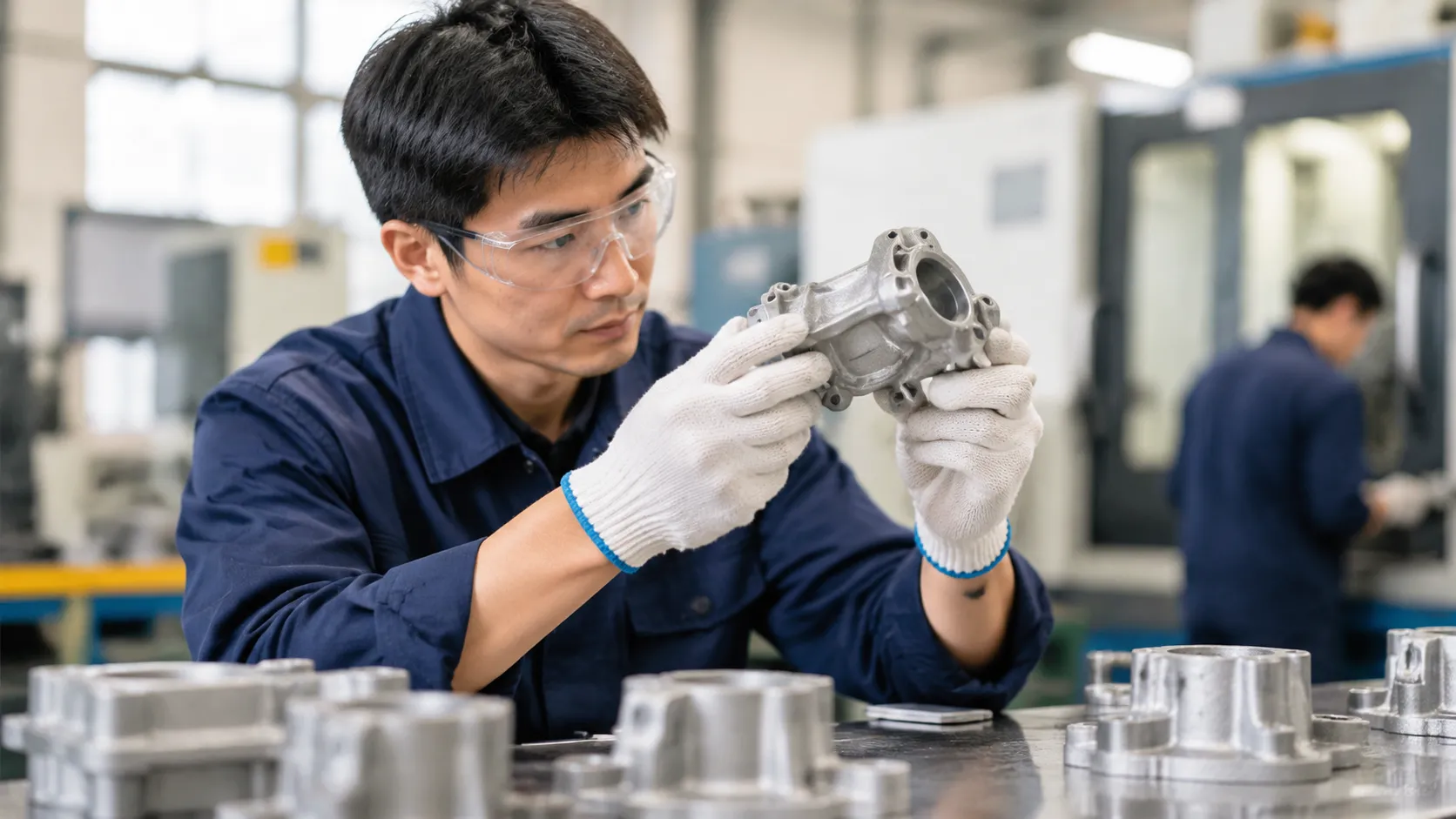
Complex cast geometries demand sub-millimeter precision. We use high-precision bridge CMMs alongside non-contact 3D optical scanners to confirm critical part profiles and GD&T callouts against your native 3D CAD models. Automated multi-axis probe inspection for critical bore alignments and true positions. Full-surface color map scanning to identify shrinkage, warpage, or profile variance. In-line dimensional validation on raw castings and post-machined features.
| Inspection Type | Primary Equipment / Standard | Target Verification Metric |
|---|---|---|
| Chemical Analysis | Optical Emission Spectrometer (OES) | Elemental composition & alloy heat control |
| Dimensional Metrology | 5-Axis CMM & 3D Blue-Light Scanner | GD&T, true position, ISO 8062 tolerance compliance |
| Mechanical Testing | Universal Tensile & Charpy Impact Rigs | Tensile, yield strength, elongation, impact toughness |
| Surface Flaw Detection | Dye Penetrant (PT) & Magnetic Particle (MPI) | Micro-cracks, surface porosity, cold shuts |
| Subsurface Integrity | Digital Industrial Radiography (X-ray) | Internal shrinkage, voids, gas inclusions |
Mechanical Properties Testing
Our testing lab pulls test bars from each production heat to prove physical strength under actual working stresses: Tensile & Yield Testing: Measures exact load capacities and plastic deformation thresholds. Elongation & Reduction of Area: Confirms core material ductility. Charpy V-Notch Impact Testing: Evaluates low-temperature toughness and crack resistance. Hardness Testing: Standardized Rockwell (HRC) and Brinell (HBW) checks after heat treatment.
Non-Destructive Testing (NDT)
Subsurface flaws compromise part integrity under operational pressure. We employ advanced non-destructive testing NDT casting methods to catch defects without altering the part: Digital X-Ray Inspection: Detects hidden internal shrinkage, gas porosity, and inclusions in thick sections. Magnetic Particle Inspection (MPI): Identifies surface and near-surface fissures on ferromagnetic alloys. Liquid Dye Penetrant Inspection (DPI/PT): Uncovers hairline surface cracks on non-magnetic stainless steels and specialty nickel alloys.
Material Traceability & PPAP Documentation
Every order leaves our facility backed by full quality documentation. We provide standard EN 10204 3.1 inspection certificates verifying chemical analysis, mechanical pull results, and non-destructive examination logs. For serial automotive and heavy equipment applications, our team supplies complete PPAP Level 3 packages, including control plans, Process FMEA, gauge R&R studies, and first-article inspection reports (FAIR).
OEM Applications & Custom Component Production
We manufacture mission-critical parts across global industries, delivering near-net shapes that cut down machining time and material waste. Our OEM investment casting production handles complex internal geometry, thin-wall sections, and tough mechanical demands for heavy-duty environments.
Fluid Handling & Flow Control
Liquid and gas infrastructure demands tight pressure containment and smooth internal flow channels. We cast precision parts designed to handle high pressures and corrosive media: Custom valve and pump castings: Gate, globe, check, and ball valve bodies, along with multi-stage pump casings. Flow components: Closed and open impellers, diffusers, metering flanges, and manifold bodies. Pressure integrity: Zero-leakage performance under standard hydrostatic and pneumatic pressure cycles.
Automotive & Powertrain Hardware
High-vibration road environments require consistent mechanical integrity and weight optimization. We supply tier-level and aftermarket automotive programs with: Structural brackets: Engine mounts, alternator brackets, and suspension pivot knuckles. Powertrain fittings: Turbocharger housings, EGR valve bodies, and transmission shift forks. Exhaust hardware: Manifold flanges, downpipe collectors, and high-temp balance arms.
Heavy Equipment & Structural Wear Hardware
Construction, mining, and agricultural machinery put cast components through severe impact and abrasive wear. Our production covers: Excavator bucket tooth adapters and ground-engaging tools. Heavy-duty track shoe components, clevis links, and pivot joints. Hydraulic cylinder end caps, rod eyes, and quick-coupler structural latches.
Marine, Food Processing & Sanitary Components
Hygienic and marine environments demand passivated surfaces, zero pitting, and strict alloy compliance. Through our dedicated cast stainless steel casting services, we supply clean, durable hardware built for washdown and salt-spray resistance: Marine hardware: Deck cleats, propeller struts, bow chocks, and seawater intake strainers. Food & beverage equipment: Sanitary pump bodies, sanitary tri-clamp fittings, and bottling line guides. Pharmaceutical mixers: High-finish impellers, homogenizer parts, and valve blocks free of micro-porosity.
OEM Investment Casting Production Workflow
Every project moves through a strict, repeatable foundry workflow to guarantee dimensional accuracy and structural integrity from day one. We control every stage of the oem investment casting sequence in-house to eliminate production bottlenecks and keep component costs down.
Step 1: DFM Review & CAD Assessment
We analyze your 2D prints and 3D STEP/IGES models to optimize geometries before cutting steel: Evaluate draft angles, parting lines, and section thickness transitions to prevent shrinkage defects. Identify opportunities for near-net shape casting to cut unnecessary machining cycles. Confirm material choices against operating pressures, temperatures, and mechanical load requirements.
Step 2: Tooling Fabrication & Wax Prototyping
Once design reviews pass: We machine precision aluminum or steel dies using high-speed CNC centers to maintain tight dimensional tooling tolerances. For rapid prototyping or low-volume verification, we utilize 3D-printed wax patterns to avoid initial hard tooling expenses. Our tooling designs feature optimized runner and gating designs engineered for smooth metal filling.
Step 3: Wax Injection, Shell Building & Metal Pouring
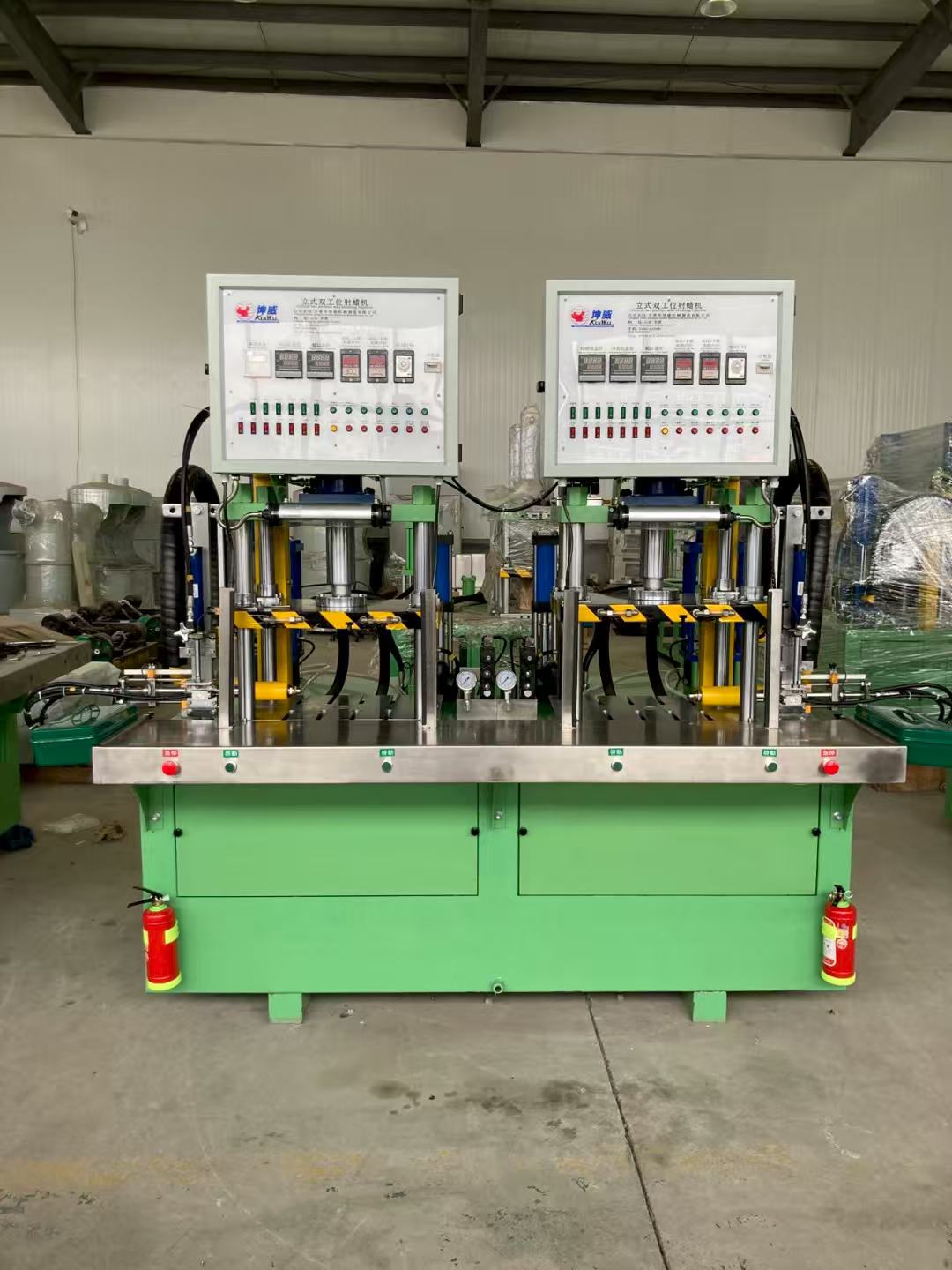
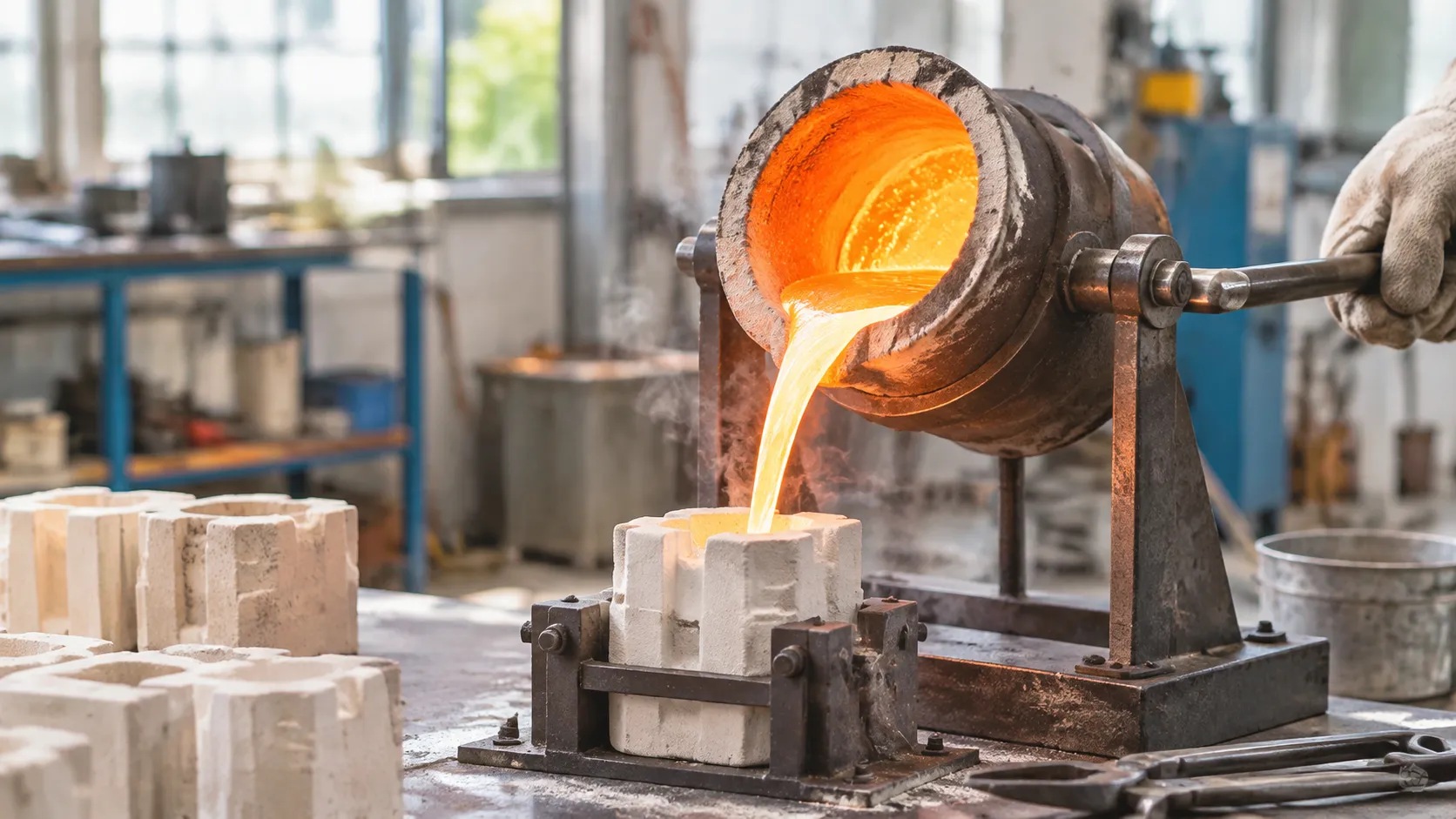
The core metal investment casting process delivers precise surface replication: Wax Injection: Virgin pattern wax is injected into the dies to create high-accuracy disposable patterns, which we assemble onto trees. Ceramic Shell Building: Trees undergo robotic dipping cycles in refractory slurries (silica sol) followed by stucco coatings, building a durable multi-layer ceramic shell. Dewaxing & Pre-Heating: Shells are fired in high-pressure autoclaves to remove all wax, then pre-heated to pouring temperatures. Metal Pouring: Induction-melted alloys are cast directly into the pre-heated shells under precise temperature control to ensure full mold fill.
Step 4: Knockout, Gate Trimming & Grinding
After solidification: Automated shakeout equipment strips away the ceramic shell material without damaging the cast metal surfaces. In-gate runners and risers are cut cleanly from the parts using cut-off saws or plasma torches. Technicians grind remaining gate stubs flush with nominal component profiles and shot-blast surfaces to achieve a uniform finish.
Step 5: CNC Machining, Metrology & Export Packaging
Final operations ensure every unit is ready for direct assembly: Multi-axis CNC mills and lathes machine tight-tolerance bore diameters, threads, and face seals. Metrology technicians run CMM inspections, optical scans, and material testing to confirm full compliance with print specifications. Cleaned parts receive rust-preventative oil coatings, custom protective caps, and vapor corrosion inhibitor (VCI) packaging inside reinforced export crates.
Frequently Asked Questions: OEM Investment Casting
What are the standard lead times for tooling and first-article samples?
Tooling fabrication typically takes 3 to 4 weeks depending on mold complexity and whether hydraulic cores are required. Once the mold is qualified, our team produces, inspects, and ships first-article sample (FAS) castings within 1 to 2 weeks alongside full dimensional inspection data and material test certs.
Which 2D and 3D CAD formats are required for an RFQ review?
To provide a fast, precise quotation, we recommend submitting: 3D Native/Neutral Models: STEP (.step, .stp) or IGES (.igs) files for volumetric and draft evaluation. 2D Engineering Prints: PDF or DWG formats highlighting critical tolerances, thread callouts, surface roughness requirements, and non-destructive testing (NDT) criteria.
How does OEM investment casting compare to sand casting or forgings for complex shapes?
Evaluating an investment casting vs sand casting process comparison highlights that precision lost-wax methods achieve much tighter linear tolerances (ISO 8062-3 CT4–CT6) and superior surface finishes (Ra 3.2–6.3 µm). While forgings offer directional grain strength for simple geometries, investment casting handles complex internal passages, thin walls, and undercut features that forgings cannot achieve without extensive multi-axis CNC hogging.
What are the minimum order quantities and annual volume thresholds?
Our OEM production setup is flexible across various production volumes: Pilot & Pre-Series Batches: 50 to 200 pieces to validate assembly and market fit. Serial OEM Production: 500 to 50,000+ pieces annually with scheduled blanket orders to optimize unit tooling amortizations.
Can welded fabrications be converted into a single-piece investment casting?
Yes. Converting multi-piece weldments into a unified investment casting is a proven way to eliminate assembly labor, remove failure-prone weld seams, and reduce part weight. We frequently work with engineering teams to merge stamped brackets, tubes, and machined fittings into a single cast component with uniform wall transitions and superior structural integrity.
 English
 Russian
 German