
2026年9月10日
Titanium investment casting for aerospace medical and industrial parts with vacuum melting precision thin walls near net shape accuracy
What Is Titanium Investment Casting?
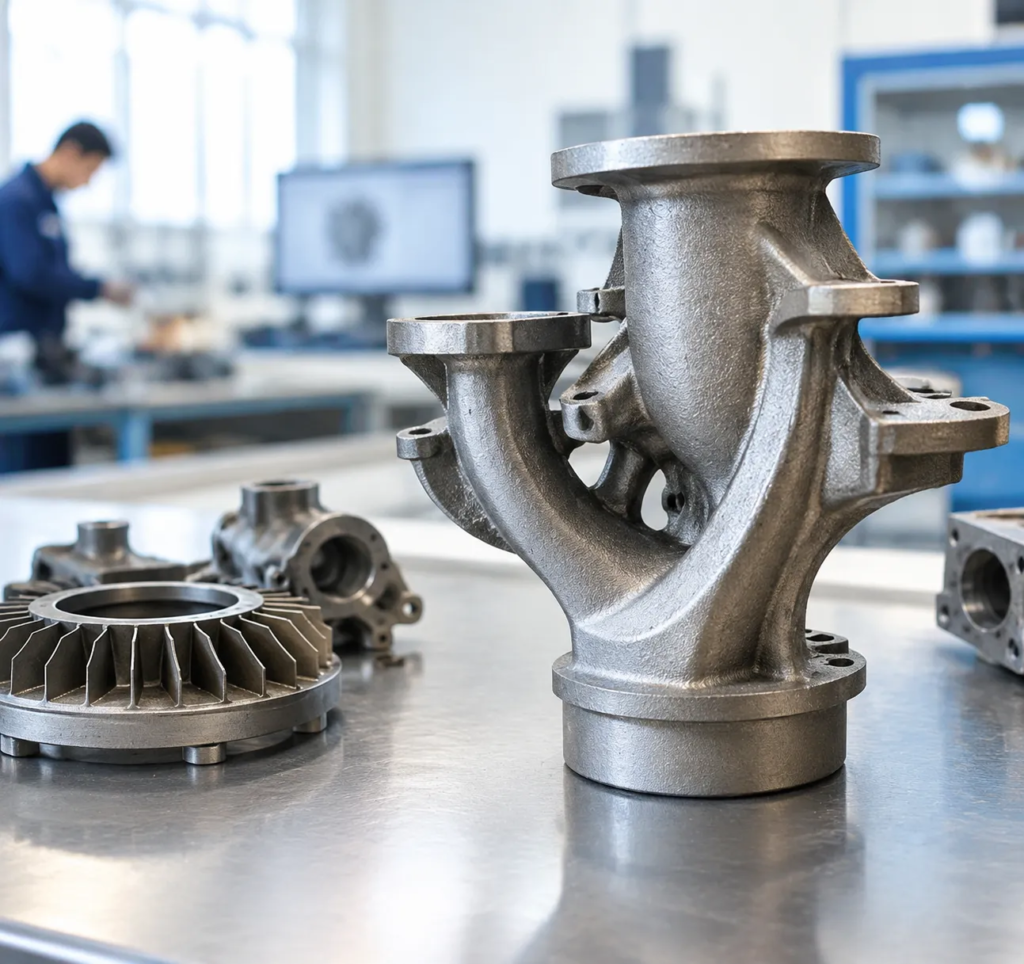
Titanium investment casting is a specialized manufacturing process designed to produce complex, near-net-shape metal components with tight dimensional tolerances and exceptional surface finishes. By combining the precision of the lost-wax technique with advanced vacuum metallurgy, we produce lightweight, high-integrity parts that significantly reduce material waste and secondary machining requirements.
Core Principles of the Titanium Lost-Wax Process
The process relies on sacrificial patterns to form intricate internal passages, thin walls, and complex contours that are difficult or cost-prohibitive to machine from solid titanium billet.
Unlike conventional steel or aluminum casting, titanium requires specialized, non-reactive refractory materials and controlled atmospheres to prevent metallurgical contamination during the pour.
Key Stages in the Casting Workflow
- Wax Pattern Creation: We inject precision wax into precision-machined metal tooling to create exact replicas of the target geometry, including assembly into runner and gating trees.
- Ceramic Shell Building: The wax tree is repeatedly dipped into engineered ceramic slurries and stuccoed with specialized refractory sands, creating a high-strength shell mold.
- Dewaxing and Firing: The wax is removed using a high-pressure steam autoclave, and the empty shell is fired at elevated temperatures to cure the ceramic structure.
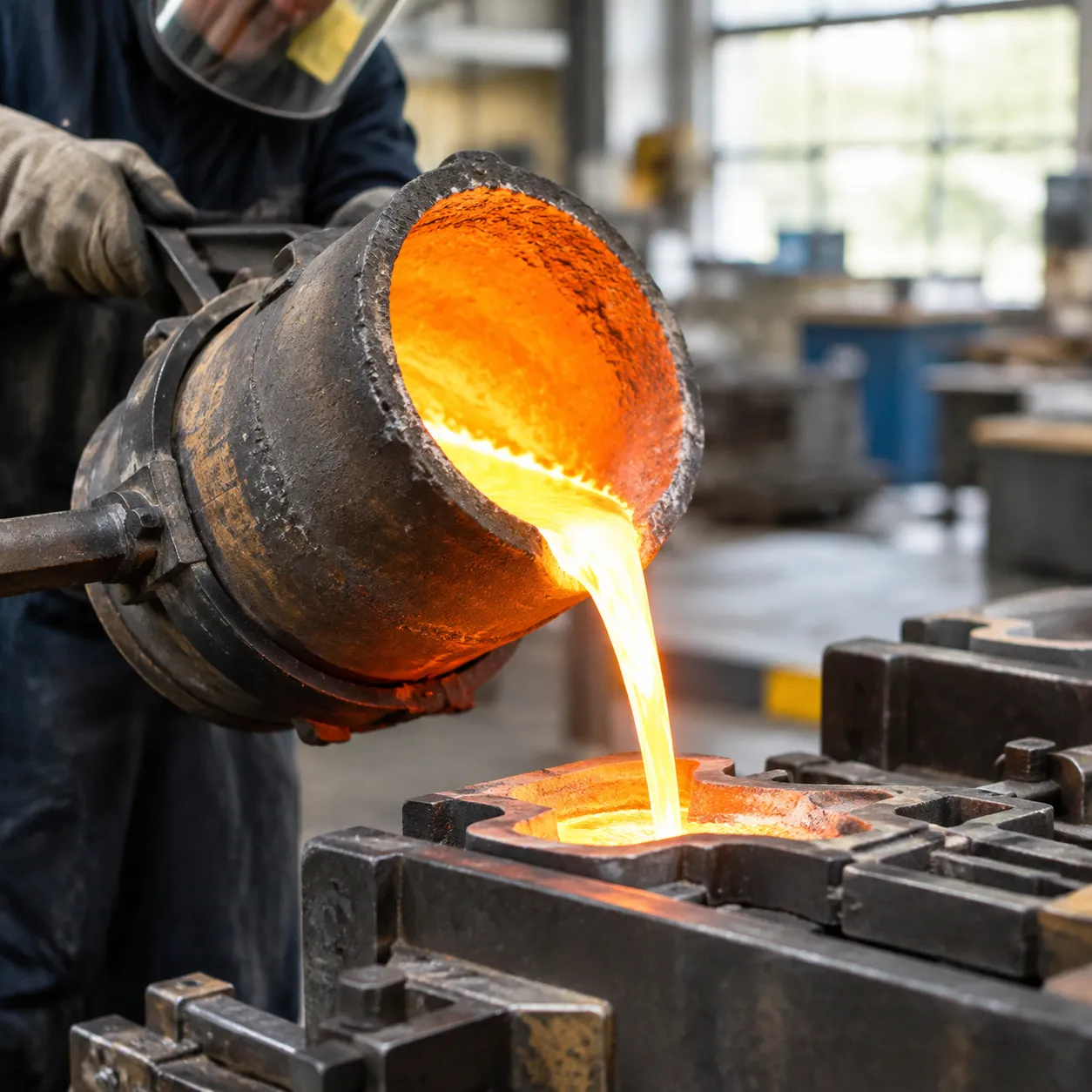
- Vacuum Skull Melting & Pouring: The titanium charge is melted in a cold-crucible vacuum induction furnace (or vacuum arc remelting system) to avoid refractory pickup, then poured under deep vacuum using gravity or centrifugal force.
- Shell Removal and Cut-Off: After solidifying under controlled vacuum conditions, the ceramic shell is broken away, and the parts are cut from the central gating structure for post-processing.
Why Vacuum Melting Is Critical for Titanium
Molten titanium is extremely reactive with atmospheric gases. At pouring temperatures exceeding 1,660°C (3,020°F), titanium acts as a universal solvent that rapidly absorbs oxygen, nitrogen, hydrogen, and carbon from standard ambient air.
Operating under a high-vacuum environment is strictly necessary because:
- Prevents Oxidation: Vacuum environments stop the immediate formation of hard, brittle interstitial compounds throughout the melt.
- Maintains Material Ductility: Uncontrolled gas absorption severely degrades elongation and fracture toughness, leading to premature structural failure.
- Ensures Alloy Purity: Vacuum melting eliminates standard slag formation and prevents chemical degradation, keeping the cast alloy strictly within chemistry specifications.
Common Titanium Alloys for Investment Casting
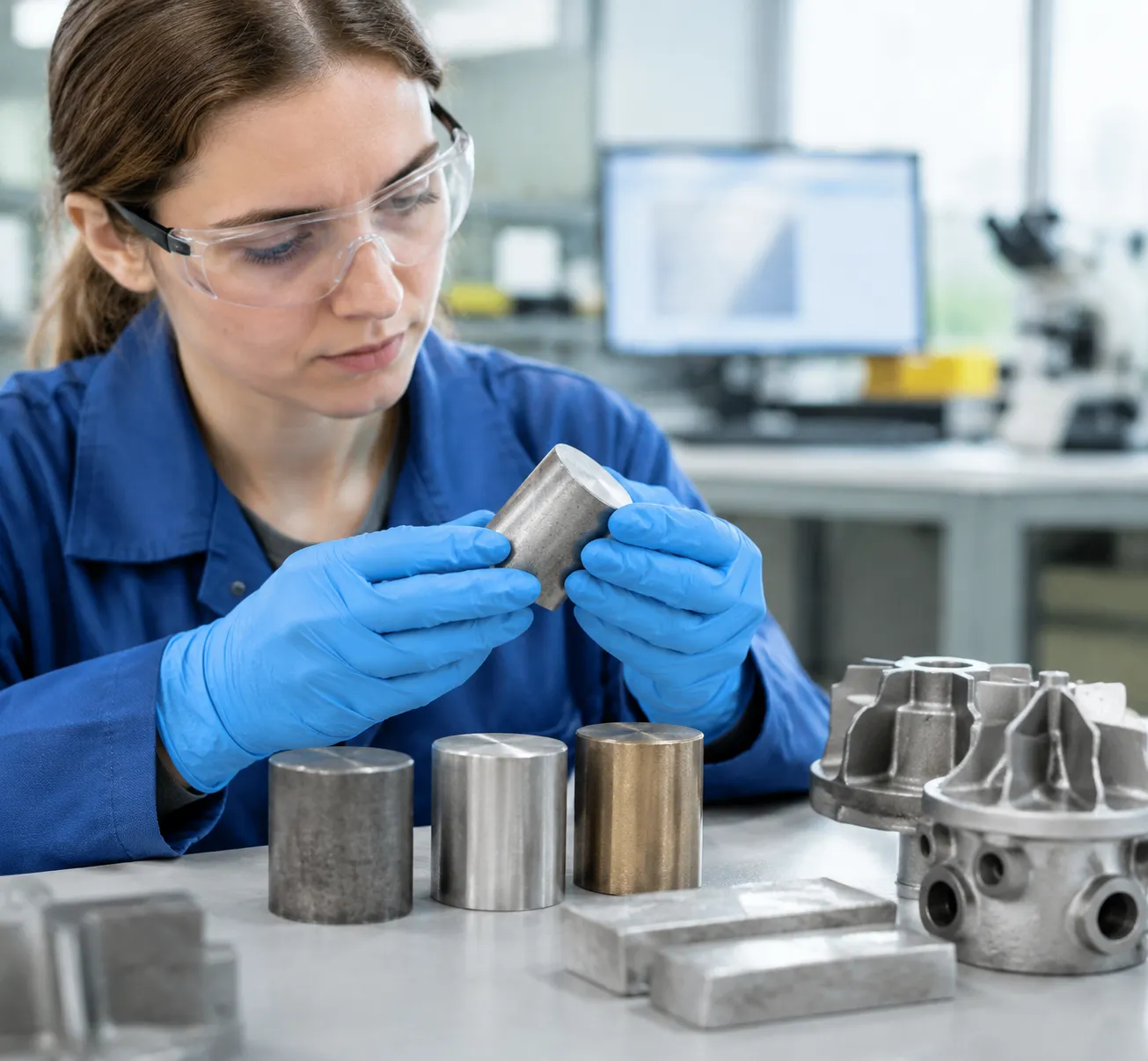
We select specific titanium alloys based on the mechanical and environmental demands of your project. Our expertise in cast stainless steel and custom casting alloys allows us to translate that metallurgical precision into high-performance titanium production.
- Ti-6Al-4V (Grade 5): This is the industry standard for titanium investment casting. It offers an excellent balance of mechanical strength, toughness, and fatigue resistance, making it our most requested alloy for general industrial applications.
- Ti-6Al-4V ELI (Grade 23): We provide this "Extra Low Interstitial" grade for critical medical and biomedical implants. Its high purity and improved ductility are essential for components requiring superior fracture toughness.
- Commercially Pure (CP) Titanium (Grade 2): When your application prioritizes corrosion resistance over high tensile strength, we utilize Grade 2. It is the preferred choice for chemical processing equipment, heat exchangers, and fluid handling systems.
- Specialty Alloys: For extreme environments, we work with Beta alloys and Gamma Titanium Aluminides. These materials are engineered to maintain structural integrity and oxidation resistance in high-heat applications, such as aerospace engine components.
Key Advantages of Titanium Investment Casting
Machining titanium from solid billets often results in excessive material waste, rapid tool wear, and high production costs. Through precision titanium investment casting, we deliver complex, high-performance parts that minimize secondary operations while maximizing material efficiency.
Core Benefits for Industrial Applications
- Near-Net-Shape Accuracy: We produce intricate geometries, internal passages, and contoured profiles in a single casting run, drastically cutting down post-process cycle times.
- Drastic Material Cost Reductions: Solid-block 5-axis CNC milling can generate a scrap rate above 70%. Our near-net-shape process significantly lowers the buy-to-fly ratio, saving costly titanium raw stock.
- Superior Strength-to-Weight Performance: Cast titanium components deliver the structural strength of high-grade steels at nearly half the weight, paired with natural resistance to harsh marine and chemical environments.
- Thin-Wall and Integrated Design Freedom: Our ceramic mold process allows us to cast thin-wall cross sections and merge multi-piece assemblies into unified, lightweight structural components.
| Engineering Factor | Solid Billet CNC Machining | Titanium Investment Casting |
|---|---|---|
| Material Scrap Rate | High (up to 70–90%) | Minimal (near-net shape) |
| Tooling & Cutter Wear | Severe on complex geometries | Limited to critical mating surfaces |
| Design Complexity | Constrained by tool access | High freedom for organic contours |
| Component Consolidation | Requires multi-part assembly | Cast as a single integrated part |
For projects requiring complex load-bearing profiles, understanding the trade-offs between forging and casting strength, cost, and tolerance ensures you select the most economical route without compromising structural performance.
Engineering Specifications and Design Rules for Titanium Investment Casting
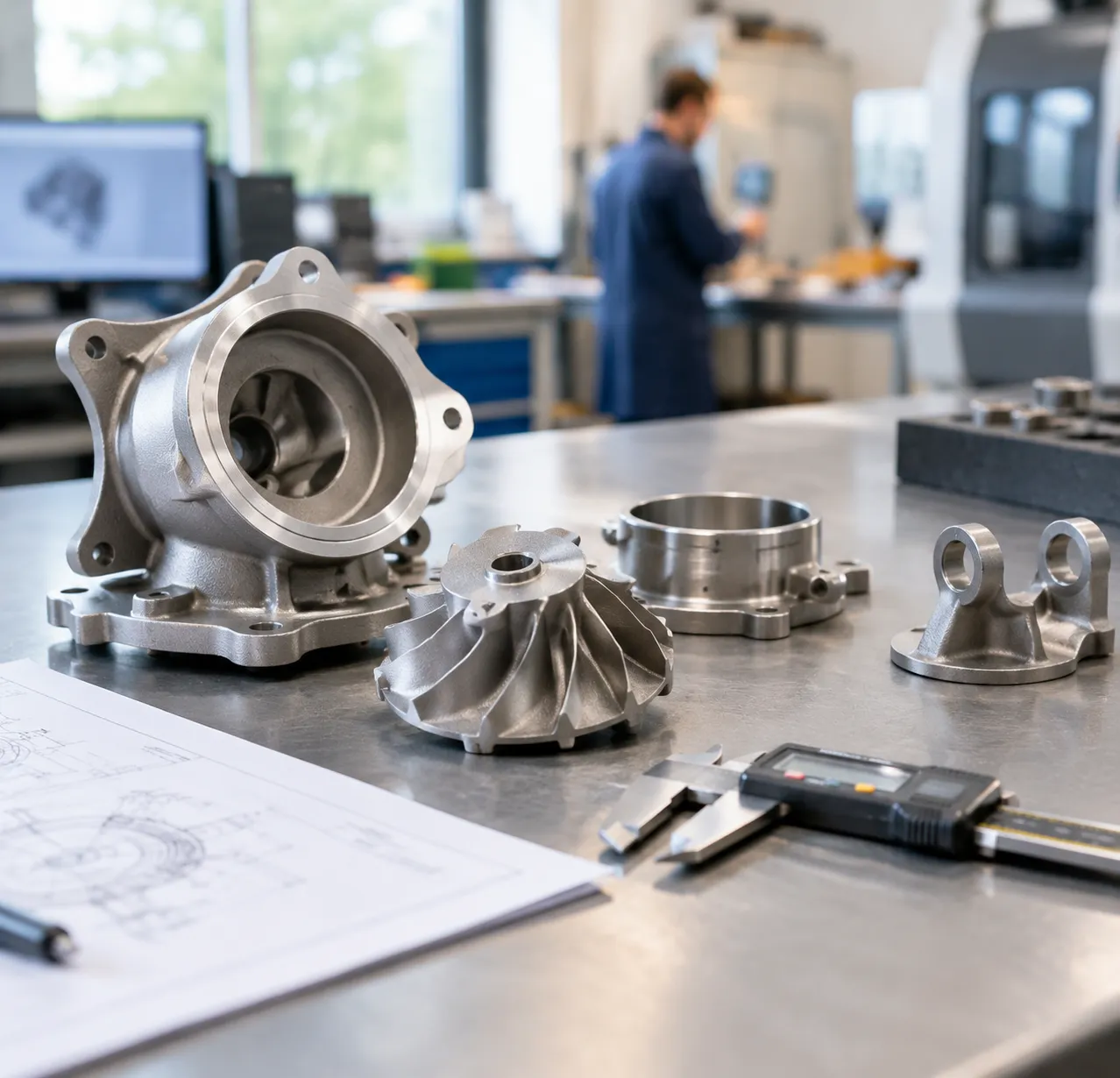
When designing for titanium investment casting, we prioritize near-net-shape accuracy to minimize material waste and secondary processing. We adhere to rigorous industry standards to ensure every component meets your specific design intent.
Standardized Tolerances and Design Parameters
We typically achieve dimensional accuracy within ISO 8062 CT4 to CT6 standards. By utilizing metal investment casting process tolerances and materials as a baseline, we help engineers optimize their designs for structural efficiency and cost-effectiveness.
| Feature | Specification Guideline |
|---|---|
| Dimensional Tolerance | ISO 8062 CT4 – CT6 |
| Min. Wall Thickness | 1.5mm – 2.0mm (depending on geometry) |
| Draft Angles | 1° to 2° minimum for tool release |
| Fillet Radii | Minimum 0.5mm to reduce stress concentrations |
| Surface Finish (Ra) | 3.2μm – 6.4μm (as-cast) |
Design Considerations for Success
- Wall Thickness: Maintaining uniform wall thickness prevents cooling stresses. We recommend gradual transitions rather than abrupt changes in section thickness.
- Gating Systems: Our team strategically places gating to ensure proper metal flow and gas venting, which is critical for the integrity of high-strength titanium alloys.
- Secondary Finishing: While casting provides excellent surface detail, we account for additional stock allowance on mating surfaces or threaded holes requiring precision CNC machining.
- Draft Angles: Incorporating sufficient draft angles is essential for the clean removal of patterns from molds, ensuring the geometric fidelity of the final titanium part.
Essential Post-Casting Treatments for Titanium
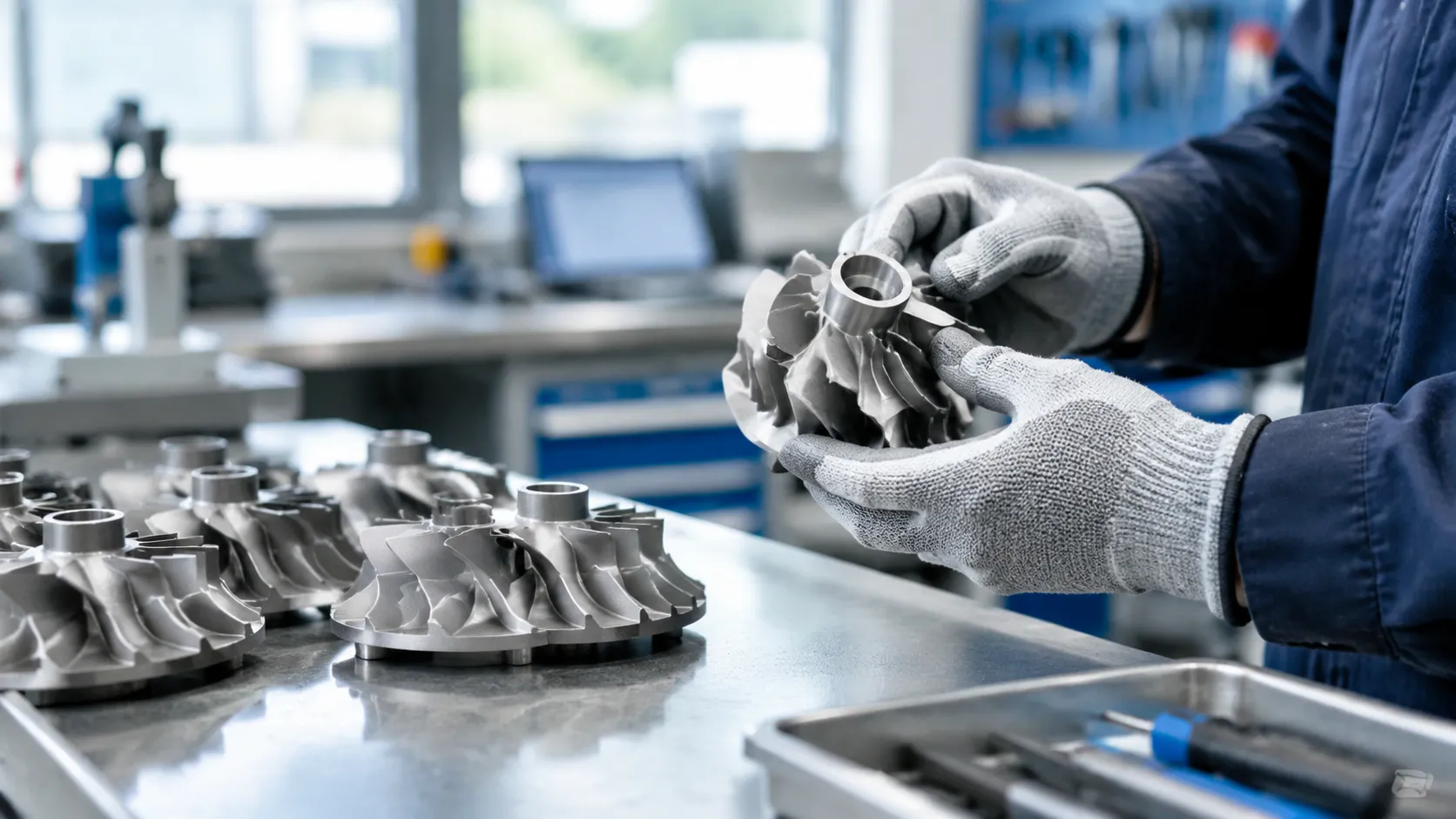
To ensure our titanium components meet the rigorous demands of industrial applications, we apply a series of critical post-casting treatments. These processes are vital for achieving the structural integrity and surface quality required for high-performance parts.
- Hot Isostatic Pressing (HIP): We utilize HIP to subject castings to high pressure and temperature, effectively eliminating internal micro-porosity. This step is essential for guaranteeing that the metal maintains maximum structural integrity under stress.
- Alpha-Case Removal: During the casting process, a brittle surface layer known as the "alpha-case" can form. We use precise chemical milling and pickling techniques to remove this layer, ensuring the component retains its intended ductility and fatigue resistance.
- Vacuum Heat Treatment: To stabilize the material, we perform stress relief annealing and vacuum heat treatment cycles. This prevents oxidation and ensures the internal grain structure is consistent throughout the part.
- Precision CNC Finishing: While our investment casting process achieves near-net-shape accuracy, we provide precision CNC machining to finalize critical mating surfaces, tight-tolerance bores, and threaded holes.
By combining these specialized treatments, we ensure that every titanium investment casting we produce is ready for the most demanding environments.
Quality Assurance and Testing for Titanium Investment Casting
We prioritize structural integrity and precision in every titanium project. Because titanium is highly reactive, our quality assurance protocols are designed to detect even the smallest internal or surface irregularities. We utilize high-quality investment casting materials to ensure that our processes meet the rigorous demands of global industrial applications.
Our comprehensive testing suite includes:
- Radiographic Testing (X-ray/CT Scan): Essential for non-destructive detection of internal porosity, inclusions, or voids within the titanium structure.
- Fluorescent Penetrant Inspection (FPI): A sensitive method used to identify microscopic surface cracks or discontinuities.
- CMM Dimensional Verification: We use Coordinate Measuring Machines to ensure every part adheres to precise engineering tolerances.
- Material Analysis: Spectroscopic analysis confirms the chemical composition matches the required alloy specifications.
We operate under strict quality management systems to support high-stakes sectors. Our facilities maintain compliance with ISO 9001:2015 standards, providing the reliability required for aerospace, medical, and high-performance industrial components. Whether your project requires adherence to AS9100 for aerospace or ISO 13485 for medical-grade titanium implants, we provide the documentation and testing rigor necessary for full certification.
Primary Industrial Applications of Titanium Investment Casting
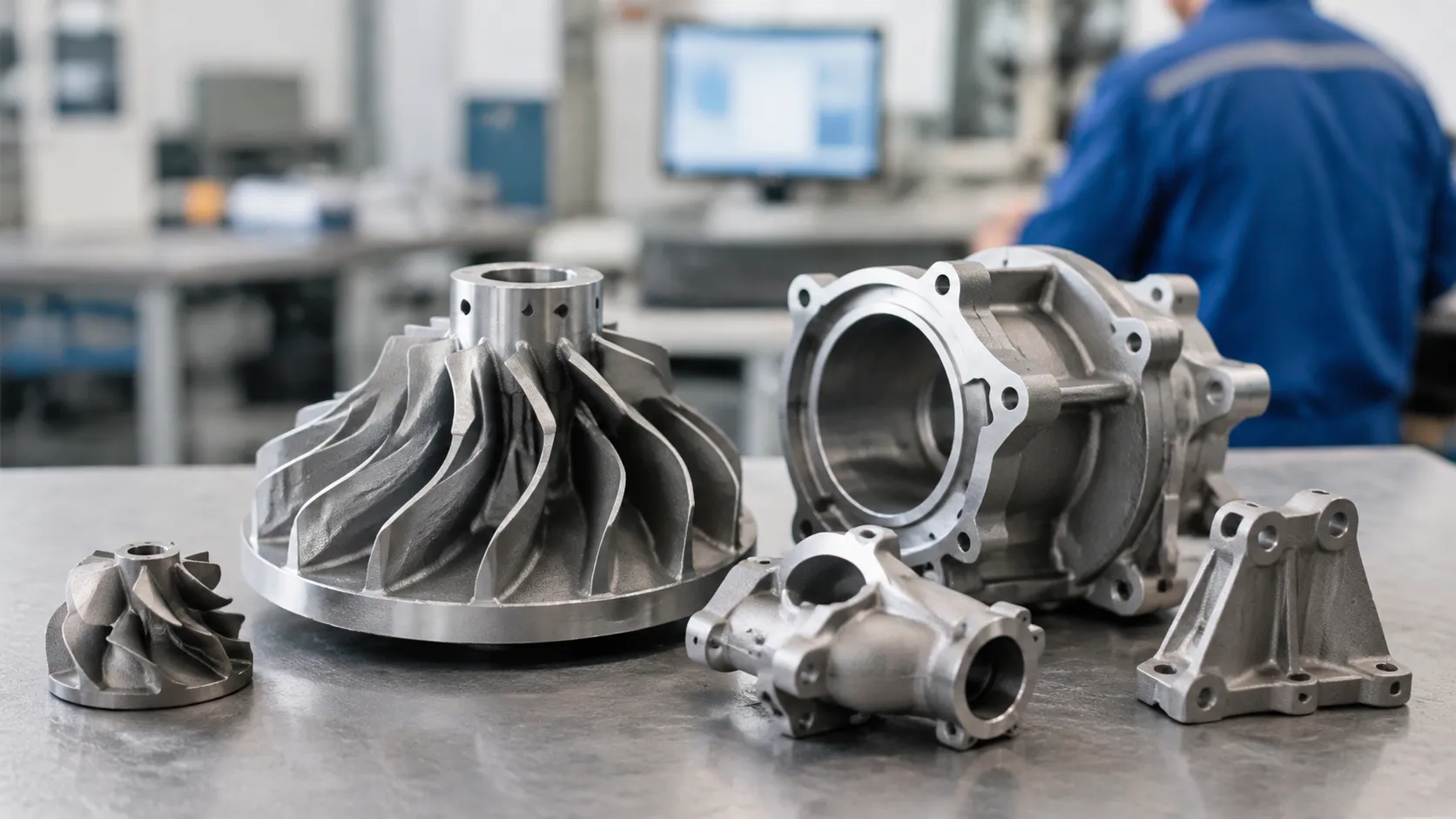
When mission-critical hardware demands extreme strength-to-weight performance, thermal stability, and total corrosion resistance, our precision titanium investment casting processes deliver where conventional alloys fall short. By transforming complex CAD geometries directly into near-net-shape components, we supply critical cast parts across four major sectors.
Aerospace & Flight Systems
Every gram saved in aerospace structural design translates directly to payload capacity and fuel efficiency. We cast high-integrity titanium components built to withstand extreme mechanical vibration and high thermal cycling: Structural airframe fittings: Wing-root brackets, flap tracks, and cargo floor tie-down points. Turbomachinery & propulsion: Compressor impellers, bleed air ducting, swirlers, and stator vanes. Engine nacelle hardware: High-temperature exhaust brackets and pylon attachment links.
Medical & Orthopedic Technology
Titanium is the benchmark material for bio-compatibility and osseointegration. Lost-wax casting allows us to manufacture complex, organic contours for biomedical hardware without the severe material waste of billet subtractive machining: Implantable devices: Hip stems, knee femoral components, and spinal fusion cages. Surgical instrumentation: Ergonomic tool handles, forcep bodies, and sterilization-tolerant surgical guides. Prosthetic frameworks: Custom lightweight limb connectors and load-bearing articulation joints.
For development teams testing functional fit before full production tooling, our precise cast prototypes and engineering rapid metal casting services streamline early verification phases.
Marine & Chemical Processing
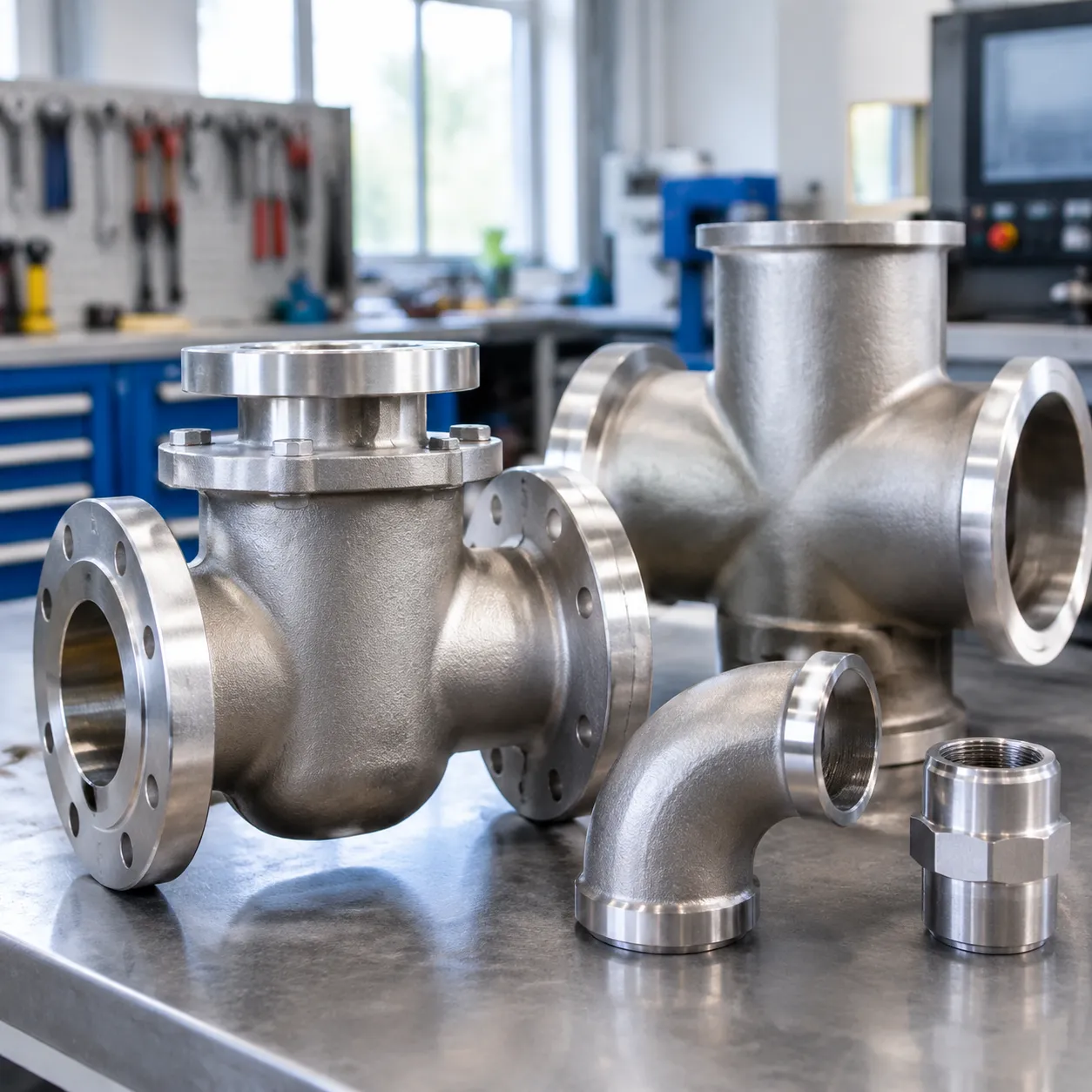
Pitting and stress-corrosion cracking from saltwater and aggressive chemical media destroy standard stainless steels. Cast titanium offers indefinite service life in severe chloride and marine environments: Subsea fluid management: Deepwater valve bodies, manifold connectors, and downhole instrumentation housings. Industrial fluid movement: Chemical pump impellers, mixer blades, and flowmeter bodies. Desalination & offshore hardware: Heat exchanger tube sheets and splash-zone structural brackets.
High-Performance Automotive & Defense
Motorsport and defense engineering rely on cast titanium to maximize structural stiffness while shedding parasitic mass under tight packaging constraints: Motorsport powertrain: Turbocharger turbine housings, wastegate components, and high-flow exhaust manifolds. Chassis & suspension: Lightweight suspension uprights, bell cranks, and steering knuckle nodes. Tactical defense systems: Unmanned aerial vehicle (UAV) structural nodes, optical sensor mounts, and lightweight armor attachment hardware.
Titanium Investment Casting vs. Alternative Manufacturing Processes
Choosing the right production route for titanium parts directly affects component performance, lead times, and unit economics. Understanding how titanium investment casting stacks up against CNC machining, 3D printing, and forging helps clarify when the lost-wax method offers the best return on investment.
Titanium Casting vs. 5-Axis CNC Machining
Milling parts directly from solid titanium billets creates massive material waste and rapid tool wear.
- Buy-to-Fly Ratio: Machining complex geometries from solid blocks often yields buy-to-fly ratios as high as 10:1 or 20:1. Precision titanium casting drops this ratio close to 1.1:1 by creating near-net-shape components.
- Tool Wear and Cycle Time: Titanium’s low thermal conductivity concentrates heat at the cutting edge, destroying carbide end mills quickly. Casting bypasses bulk material removal, leaving only critical mating faces for finish machining.
- Production Volume: While CNC machining is ideal for 1 to 5 prototype pieces, titanium investment casting significantly reduces per-part costs once batch sizes scale.
Titanium Casting vs. Metal 3D Printing (DMLS/SLM)
Direct Metal Laser Sintering (DMLS) and Selective Laser Melting (SLM) have gained traction for low-volume aerospace components, but casting remains the benchmark for scalable production.
- Batch Scalability: Metal additive manufacturing prints one layer at a time, making unit build times linear and expensive. Casting ceramic shell trees allows our foundry to pour multiple complex components in a single vacuum cycle.
- Unit Cost at Scale: 3D printing powder costs remain high. Casting utilizes standard ingot stock, delivering much lower unit costs for mid-to-high production runs.
- Surface Integrity: While 3D printing often leaves internal residual stresses and rough staircase textures, reviewing what is investment casting process benefits and tolerances shows how lost-wax molds consistently produce smooth, uniform surfaces across large batches.
Titanium Casting vs. Forging
Forging delivers directional grain flow and high fatigue strength, but it imposes severe geometric limits.
- Geometric Freedom: Forging cannot produce thin internal walls, deep undercuts, or hollow internal passages without expensive multi-piece assemblies. Casting delivers single-piece structural integration.
- Tooling Investment: High-tonnage titanium forging dies carry steep tooling investments. Investment casting tooling is significantly more economical and faster to modify during design iterations.
- Mechanical Properties: When combined with Hot Isostatic Pressing (HIP), cast titanium components achieve density and mechanical properties that closely rival forged equivalents.
Process Comparison Overview
| Parameter | Titanium Investment Casting | 5-Axis CNC Machining | Metal 3D Printing (DMLS) | Closed-Die Forging |
|---|---|---|---|---|
| Buy-to-Fly Ratio | Low (~1.1:1 to 1.3:1) | High (~5:1 to 20:1) | Very Low (~1.05:1) | Moderate (~2:1 to 4:1) |
| Tooling Cost | Moderate | None / Low | None | Very High |
| Geometric Complexity | Exceptional | Moderate to High | Unlimited | Low to Moderate |
| Best Production Volume | 50 to 10,000+ pcs | 1 to 50 pcs | 1 to 100 pcs | 5,000+ pcs |
| Internal Cavity Capability | High (via ceramic cores) | Limited | High | Not Possible |
| Unit Cost at Scale | Low to Moderate | High | High | Low |
Cost Factors and Lead Time Management for Titanium Investment Casting
Managing costs and lead times for titanium components requires a clear understanding of the production lifecycle. We focus on balancing upfront investment with long-term efficiency to help you streamline your project.
Key Drivers of Project Cost
- Tooling Investment: Initial costs are primarily driven by the fabrication of wax injection molds. For complex geometries, precision tooling is essential to ensure dimensional accuracy.
- Process Complexity: Unit pricing reflects the rigorous nature of titanium production, including vacuum melting cycle times, the necessity of Hot Isostatic Pressing (HIP) for structural integrity, and specialized surface treatments.
- Scrap Rate Management: Our technical expertise in vacuum investment casting helps minimize material waste, which is critical given the high cost of titanium alloys.
Optimizing Lead Times and Batch Sizes
- Prototype vs. Production: We assist in balancing the cost of rapid prototyping against the economies of scale found in high-volume production.
- Batch Optimization: Aligning your production volume with our casting cycles helps reduce unit costs and improves overall turnaround time.
- Design for Manufacturability: You can significantly lower costs by simplifying part geometry early in the design phase. We recommend:
- Standardizing wall thicknesses to avoid uneven cooling.
- Incorporating generous radii at transitions to reduce stress concentrations.
- Consulting our engineering team during the design stage to ensure the part is optimized for the investment casting process.
By focusing on these factors, we help you achieve a balance between high-performance material requirements and budget constraints, ensuring your titanium components are delivered efficiently.
Frequently Asked Questions About Titanium Investment Casting
Is Hot Isostatic Pressing (HIP) mandatory for all titanium castings?
No, HIP is not mandatory for every single project, but it is standard for fatigue-critical, aerospace, and medical implant components. The process uses high temperatures and inert gas pressure to eliminate internal micro-porosity and bring the material to 100% theoretical density. For non-critical industrial fittings or static brackets where cyclic stress is minimal, skipping HIP helps lower total unit costs.
What is the typical lead time from wax mold tooling to finished casting?
For most custom projects, the typical timeline breaks down into two phases: Tooling design and mold fabrication: Usually takes 3 to 5 weeks depending on geometric complexity and parting-line requirements. To understand the mold development process, review our investment casting mold guide for precision parts. Casting and post-processing: First article samples and production batches typically take 3 to 4 weeks following mold approval, including vacuum pouring, heat treatment, chemical milling, and non-destructive testing (NDT).
How does the alpha-case layer form and why must it be eliminated?
Molten titanium reacts aggressively with oxygen and oxides in the ceramic shell mold during pouring. This creates a brittle, oxygen-enriched surface zone called the alpha-case layer. If left untreated, this brittle layer causes micro-cracking and drastically reduces the fatigue life of the component. We routinely eliminate this layer using controlled chemical milling and acid pickling to restore optimal ductile properties.
Can titanium investment cast parts be welded or repaired?
Yes. Titanium castings can be repaired using Tungsten Inert Gas (TIG/GTAW) or electron beam welding. All welding operations must occur under a strict inert argon purge or vacuum environment to avoid atmospheric contamination. Minor casting defects identified through radiographic or liquid penetrant inspection are carefully blended, welded with matching filler metal (such as Ti-6Al-4V), and re-inspected to verify structural integrity.
What are the maximum and minimum part size limits for titanium lost-wax casting?
Our titanium lost-wax casting capabilities cover a broad operational envelope: Minimum size: Parts as small as 5 mm with weights starting at just a few grams and wall thicknesses down to 1.0–1.5 mm. Maximum size: Envelopes up to roughly 600 mm × 600 mm with weights up to 50–100 kg, constrained primarily by vacuum skull melting furnace chamber capacities.
 English
  Russian
  German