
2026年9月8日
Vacuum investment casting for high precision parts with smooth finish and excellent material performance
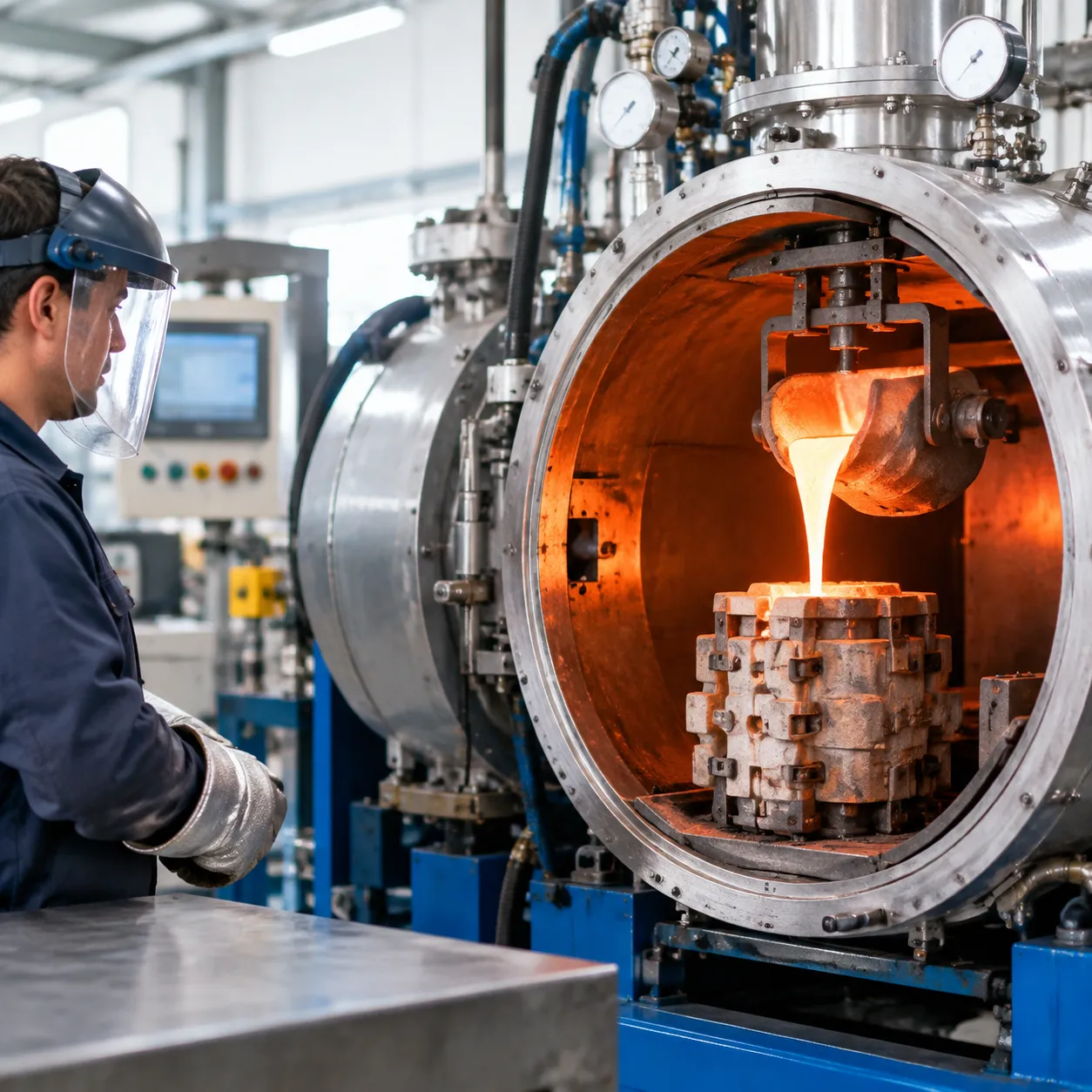
What Is Vacuum Investment Casting?
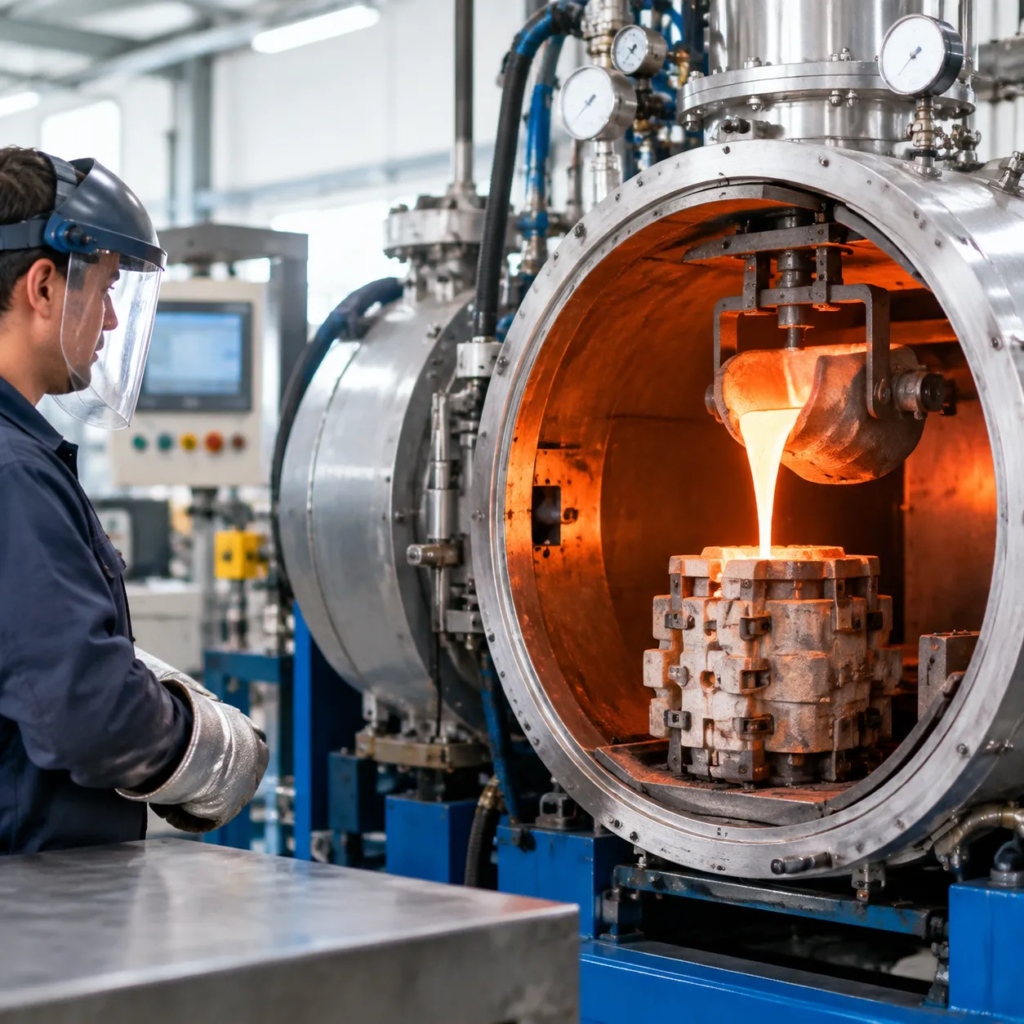
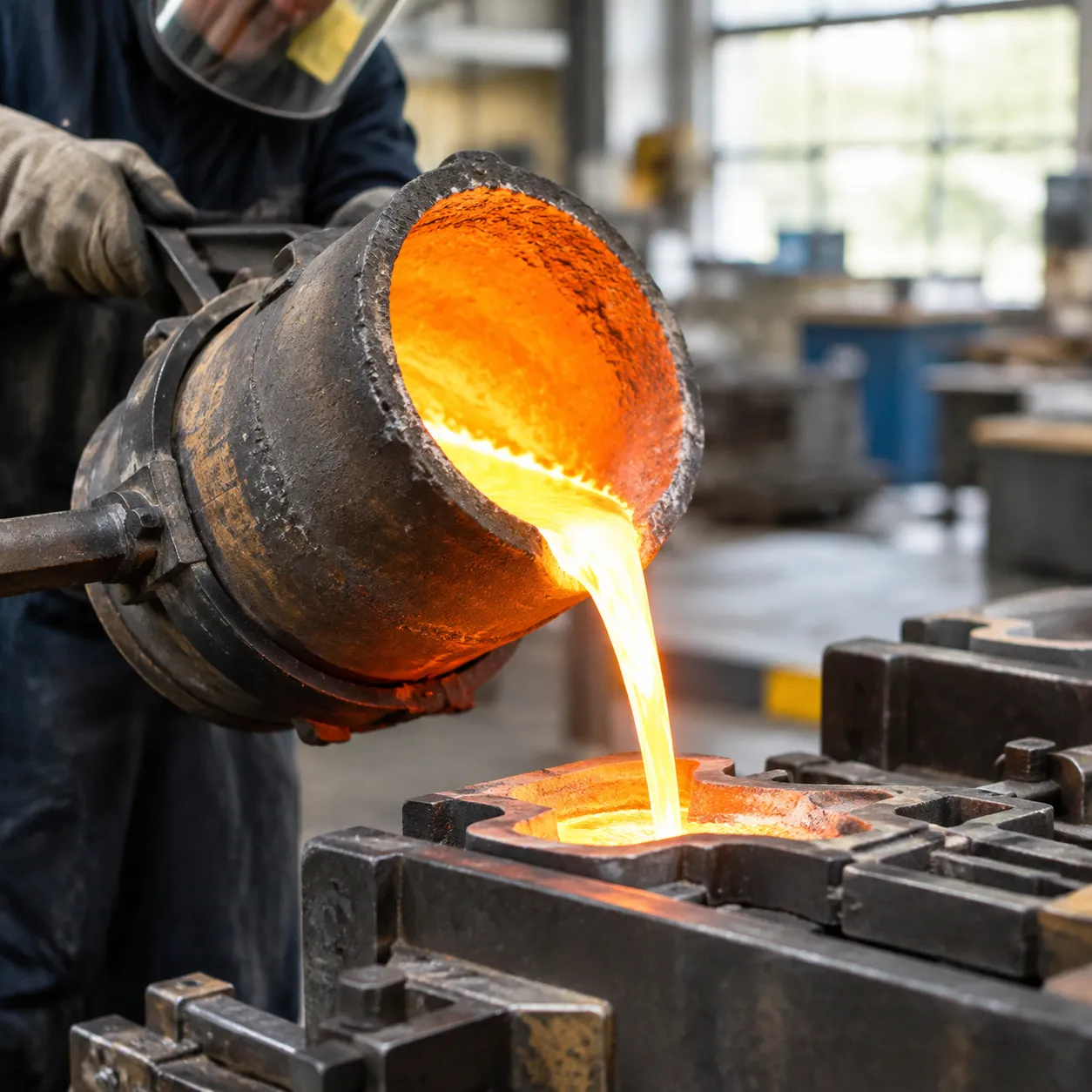
Vacuum investment casting is an advanced manufacturing technique that combines traditional lost-wax precision casting with a fully controlled vacuum environment. By melting and pouring metal alloys inside an evacuated chamber, we eliminate atmospheric contamination, air entrapment, and oxidation.
For mission-critical components that demand absolute structural integrity, tight dimensional accuracy, and flawless surface finishes, this process delivers results that standard air-melt casting cannot match.
+-------------------------------------------------------------------------+ | Vacuum Investment Casting Core Loop | | | | [Wax Pattern] -> [Ceramic Shell] -> [Vacuum Melt & Pour] -> [Clean Part] | +-------------------------------------------------------------------------+
How the Process Works
We engineer every casting through a tightly controlled cycle designed to preserve alloy purity and capture intricate geometric details:
- Pattern Production: We inject dimensionally precise wax into dedicated tooling to create an exact replica of the target component.
- Ceramic Shell Building: The wax assembly is repeatedly dipped in ceramic slurries and coated with refractory grains to build a robust mold.
- Dewaxing and Firing: The wax is melted out, and the hollow ceramic mold is fired at high temperatures to maximize structural strength.
- Vacuum Induction Melting and Pouring: The preheated ceramic mold is placed inside the vacuum furnace chamber. The alloy is induction-melted and poured under high vacuum or inert gas conditions.
- Solidification and Knockout: The metal solidifies in a clean environment, after which we remove the ceramic shell, cut the gates, and finish the part.
Why Vacuum Matters in Precision Casting
Operating under vacuum directly addresses the primary causes of metal casting rejection and mechanical failure:
- Zero Oxidation: Prevents reactive elements (such as titanium, aluminum, and chromium) from forming weak oxide films and dross inclusions.
- Elimination of Gas Porosity: Without ambient air or trapped humidity, molten metal solidifies into a dense, non-porous structure.
- Superior Thin-Wall Filling: The vacuum differential helps draw molten alloy smoothly into micro-features and ultra-thin walls without premature freezing.
- Consistent Mechanical Properties: Parts achieve optimal tensile strength, fatigue resistance, and fracture toughness right out of the mold.
Where It Fits in Manufacturing
Vacuum investment casting serves as the primary production route for complex metal parts operating in extreme environments.
| Application Sector | Typical Components Cast Under Vacuum | Key Material Used |
|---|---|---|
| Aerospace & Defense | Turbine blades, fuel nozzles, structural airframe fittings | Nickel- and cobalt-based superalloys, titanium |
| Medical Devices | Orthopedic implants, surgical instruments, prosthetic joints | Biocompatible stainless steels, CoCr alloys |
| Motorsport & Automotive | Turbocharger impellers, exhaust manifolds, lightweight brackets | High-nickel alloys, stainless steel |
| Energy & Power Gen | Gas turbine vanes, subsea valves, pump impellers | Corrosion-resistant alloys, duplex steels |
Vacuum Investment Casting Process
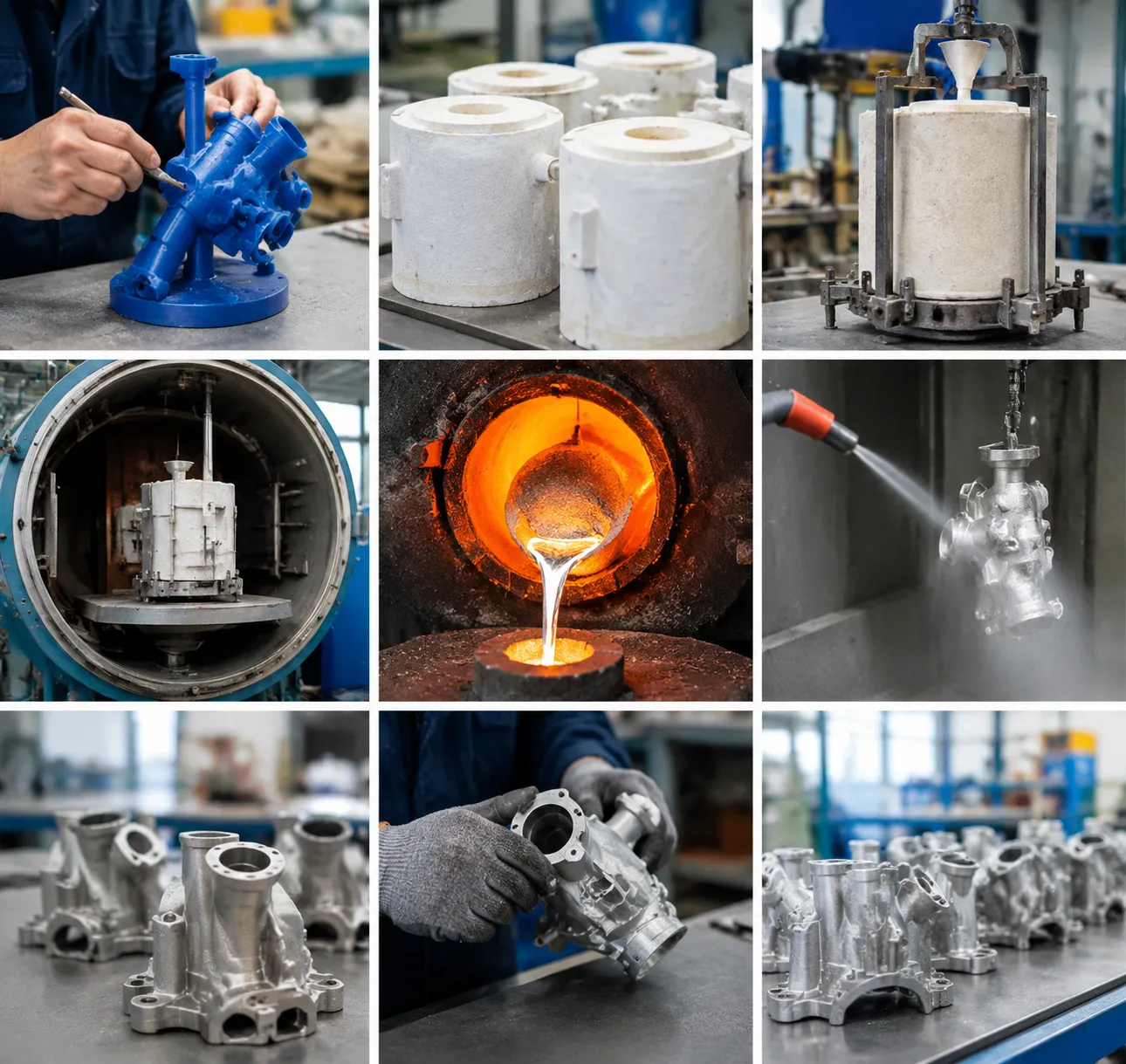
We manufacture mission-critical parts by combining traditional lost wax techniques with advanced vacuum environments. Here is a breakdown of how the entire workflow transforms raw CAD models into high-integrity components.
Pattern Making and Wax Assembly
Every production cycle begins with an exact replica of the target part: Wax Injection: We inject specialized pattern wax into precision aluminum tooling to form accurate wax patterns. Tree Assembly: We attach multiple wax patterns to a central sprue, creating a "casting tree" that guides fluid metal pathways. Inspection: Every wax pattern undergoes dimensional checks to eliminate surface imperfections before shell building.
Shell Building and Coating
To contain molten metal at extreme temperatures, we build a robust ceramic mold around the wax assembly: Slurry Dipping: The wax assembly is submerged into a liquid ceramic refractory slurry. Stuccoing: We coat the wet slurry with fine-to-coarse zircon or silica sand layers. Layering & Drying: This dip-and-dry cycle repeats 5 to 8 times under controlled humidity until a rigid shell mold is fully cured.
Dewaxing and Mold Prep
- Autoclave Dewaxing: We place the ceramic assembly into a high-pressure steam autoclave to melt out the wax pattern cleanly without cracking the shell.
- Firing & Sintering: The empty shell is baked at 900°C to 1100°C. This burns away residual wax, drives out moisture, and preheats the mold to handle thermal shock during pouring, matching the rigorous standards of our metal investment casting process.
| Step | Core Action | Key Benefit |
|---|---|---|
| Wax Assembly | Precision injection & gating | Ensures uniform flow and part geometry |
| Shell Layering | Multi-coat ceramic dipping | High thermal shock resistance |
| Dewaxing/Firing | High-temp autoclave bake | Eliminates volatile impurities |
| Vacuum Pouring | Melt & fill in chamber | Zero gas entrapment and oxidation |
Vacuum Melting and Pouring
This is the core phase of vacuum investment casting: Vacuum Induction Melting (VIM): We melt master alloy ingots inside an evacuated chamber, preventing molten metal from reacting with oxygen, hydrogen, and atmospheric nitrogen. Controlled Vacuum Pouring: The preheated ceramic mold enters the vacuum chamber. Molten alloy fills the cavity directly under negative pressure, ensuring uniform fill across complex shapes, thin walls, and fine profiles.
Cooling, Knockout, and Cleanup
- Controlled Solidification: Castings cool inside a controlled atmosphere to prevent surface scaling and thermal stresses.
- Mechanical Knockout: Vibratory hammers, high-pressure water jets, and chemical leaching dissolve the ceramic shell completely.
- Cut-Off & Finishing: We separate parts from the central runner using abrasive saws, followed by grinding, shot blasting, and heat treatment to bring every piece to final drawing specifications.
Key Benefits of Vacuum Investment Casting
When manufacturing mission-critical components, standard open-air pours often fall short due to gas entrapment and oxidation. Vacuum investment casting solves these issues by melting and pouring metal in a controlled, oxygen-free environment, delivering cleaner, stronger, and more accurate parts.
Cleaner Metal with Fewer Defects
Melting and pouring under negative pressure prevents the molten alloy from reacting with ambient oxygen, nitrogen, and hydrogen. This process eliminates slag, non-metallic inclusions, and gas bubbles before the metal enters the mold. The result is pure, dense structural metal with superior fatigue strength and mechanical integrity.
Better Surface Finish and Fine Detail
The vacuum assist pulls molten metal evenly into the finest contours of the ceramic shell without turbulence or air resistance. Smooth Surfaces: Consistently achieves surface finishes between Ra 1.6 µm and Ra 3.2 µm straight from the mold. Intricate Features: Sharp edges, fine text, micro-channels, and complex cross-sections reproduce with extreme fidelity. Reduced Secondary Machining: Near-net-shape output drastically cuts down on post-cast grinding and CNC finishing.
Tighter Tolerances for Complex Parts
Air pressure variations and thermal shock cause uneven shrinkage during standard casting. Vacuum pouring delivers consistent filling rates and uniform thermal gradients. We regularly maintain linear casting tolerances within ±0.1 mm to ±0.3 mm across complex geometries. For high-spec aluminum projects, combining this method with our aluminum investment casting services for precision parts enables ultrathin wall sections down to 0.8 mm without misruns or cold shuts.
Lower Porosity and Oxide Formation
Oxidation weakens internal metal grain structures and causes micro-cracking under stress. By maintaining an oxide-free casting chamber, vacuum processing provides critical advantages: Zero Gas Porosity: Eliminates dissolved gas voids, making parts reliably pressure-tight for hydraulic and fluid systems. No Oxide Inclusions: Prevents dross formation that causes tool wear during CNC machining and premature component failure. Higher X-Ray Yields: Delivers high pass rates under ASTM E192 and Class 1 NDT radiographic testing.
| Casting Characteristic | Standard Investment Casting | Vacuum Investment Casting |
|---|---|---|
| Internal Porosity | Moderate (risk of gas pickup) | Near-zero (dense, defect-free structure) |
| Oxide Inclusions | Possible surface and internal dross | Fully oxide-free melt and pour |
| Surface Finish (Ra) | 3.2 – 6.3 µm | 1.6 – 3.2 µm |
| Min. Wall Thickness | ~1.5 mm to 2.0 mm | Down to 0.8 mm (reliable thin-wall fill) |
| Dimensional Accuracy | Standard ISO 8062 CT5–CT7 | High-precision ISO 8062 CT4–CT6 |
Materials Used in Vacuum Investment Casting
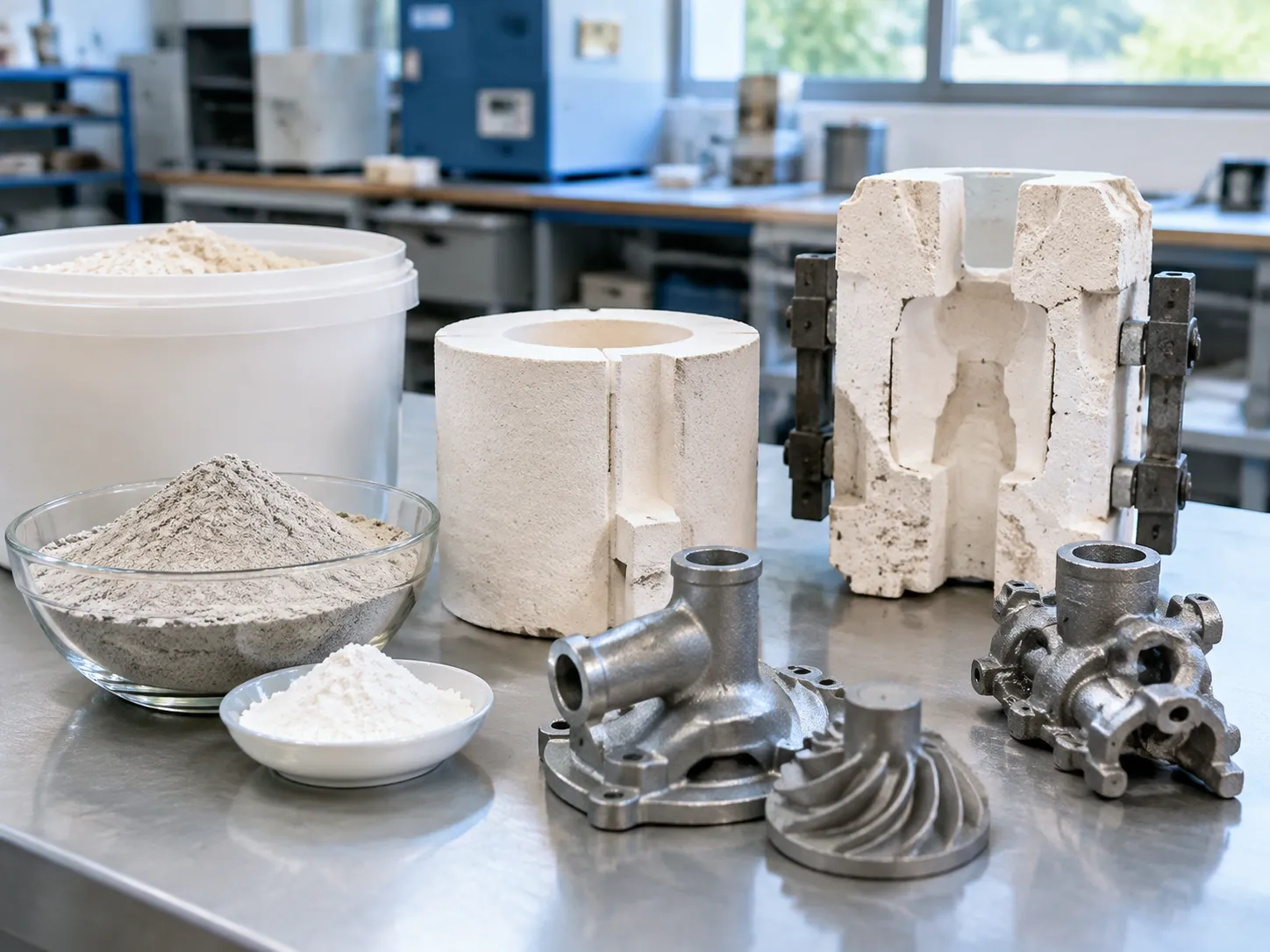
Choosing the right alloy determines how your component performs under stress, heat, and corrosive environments. In vacuum investment casting, we melt and pour alloys in a vacuum environment to stop reactive gases from degrading the metal, giving you cleaner chemistry and superior mechanical properties.
Stainless Steel Alloys
Vacuum casting eliminates atmospheric oxygen, preventing chrome depletion and oxide inclusions in corrosion-resistant grades. We regularly cast: Austenitic Grades (304, 316, 316L): Outstanding corrosion resistance for marine, food processing, and chemical hardware. Martensitic Grades (410, 420): High strength and wear resistance, ideal for valves, shafts, and cutting tools. Precipitation-Hardening Grades (17-4 PH, 15-5 PH): Combines high tensile strength with excellent fracture toughness.
Explore our full range of cast stainless steel custom casting alloys and grades to match your exact application requirements.
Carbon Steel and Low-Alloy Steel
When your priority is mechanical toughness, wear resistance, and cost efficiency, we process a broad selection of standard and medium-carbon steels: Plain Carbon Steels (1020, 1045): General engineering components requiring predictable machinability and weldability. Low-Alloy Steels (4130, 4140, 8620): High fatigue strength and deep hardenability for gears, brackets, and structural mounts. Review our technical guide on 4140 alloy steel properties and specs for detailed strength data.
Superalloys and Heat-Resistant Metals
Superalloys contain reactive strengthening elements like aluminum and titanium that rapidly oxidize in open air. Pouring under vacuum is mandatory to maintain alloy purity and prevent micro-cracking: Nickel-Based Superalloys (Inconel 625, Inconel 718, Hastelloy): Extreme resistance to thermal fatigue, oxidation, and creep up to 1000°C+. Cobalt-Based Alloys (Stellite series): Unmatched resistance to severe wear, galling, and high-temperature erosion.
Aluminum, Titanium, and Specialty Metals
For lightweight and mission-critical designs, vacuum processing prevents gas pickup and hydrogen porosity: Titanium Alloys (Ti-6Al-4V, Grade 5): High strength-to-weight ratio and biological inertness for aerospace airframes and medical implants. High-Purity Aluminum Alloys (A356, 6061 equivalent): Thin-wall housings and electronic enclosures requiring maximum thermal conductivity and pressure tightness. Specialty Copper & Bronze Alloys: High electrical conductivity and spark-free performance for hazardous industrial settings.
Parts Made with Vacuum Investment Casting
When parts cannot afford internal voids, gas pockets, or structural weaknesses, standard open-air casting falls short. We use vacuum investment casting to pour dense, intricate, and high-integrity parts across high-stakes industries where failure is not an option.
Aerospace Components
Flight hardware demands extreme heat resistance and clean microstructure. Operating in a vacuum prevents reactive metals from forming oxides, ensuring critical structural integrity. Turbine blades and vanes: Cast from nickel and cobalt superalloys with internal cooling passages. Fuel system housings: Thin-walled, leak-proof components designed to withstand high pressure. Structural brackets and mounts: Lightweight custom A356 investment casting and titanium fittings that maximize strength-to-weight ratios.
Medical and Surgical Parts
Biocompatible implants and surgical tools require sterile alloy purity and zero surface defects. Orthopedic implants: Knee joints, hip stems, and spinal cages cast from titanium and cobalt-chrome. Surgical instrumentation: Scalpel handles, forceps, and endoscopic housings requiring corrosion resistance, often utilizing 17-4 investment casting for high hardness and yield strength. Dental fixtures: Custom bridges, bases, and high-detail prosthetics.
Automotive and Motorsport Parts
High-performance automotive applications require components that survive intense thermal and mechanical stress without adding unnecessary weight. Turbocharger wheels and housings: Heat-resistant superalloy castings engineered for high rotational speeds. Exhaust manifolds and collectors: Thin-wall stainless steel and inconel sections that resist thermal cracking. Suspension knuckles and uprights: Lightweight, highly stressed chassis components requiring total metallurgical soundness.
Industrial and Energy Components
Heavy industry, power generation, and chemical processing rely on vacuum-cast hardware to combat severe wear, corrosion, and extreme working pressures.
| Industry Sector | Common Vacuum-Cast Parts | Key Material Requirements |
|---|---|---|
| Power Generation | Gas turbine nozzles, stator segments | High-temp creep resistance |
| Oil & Gas | Downhole valve bodies, pump impellers | High-pressure integrity, zero porosity |
| Chemical Processing | Mixer blades, specialized fluid fittings | Resistance to aggressive corrosion |
| Marine | High-load propeller components, thruster parts | Pitting and cavitation resistance |
Design Considerations for Vacuum Investment Casting
Designing parts for vacuum investment casting requires balancing geometry with thermal dynamics. Because the metal fills the ceramic shell in a vacuum, we can capture finer features and thinner profiles than atmospheric methods allow. However, following sound design practices ensures high yield rates, dimensional accuracy, and lower post-processing costs.
Wall Thickness and Geometry
Uniform wall thickness is critical for predictable cooling. Sudden changes in thickness cause uneven solidification, leading to internal stress and distortion.
- Minimum Wall Thickness: Vacuum assist enables reliable filling down to 0.5 mm to 1.0 mm for small sections, depending on the alloy flow characteristics.
- Gradual Transitions: When joining thick and thin sections, we use a gradual taper (3:1 ratio) rather than abrupt steps to maintain uniform thermal mass.
- Isolated Heavy Sections: Thick bosses or sections should be avoided or cored out to prevent sink marks and localized shrink defects.
Draft, Fillets, and Sharp Corners
Proper radii and angles streamline the flow of molten metal and prevent stress points in both the wax pattern and the final metal component.
- Draft Angles: While lost wax casting allows for zero-draft designs on many external surfaces, a nominal draft of 0.5° to 1.5° helps with clean wax pattern removal from tooling.
- Fillet Radii: Replace sharp 90-degree internal edges with generous fillets (minimum 1.0 mm to 1.5 mm). This reduces turbulence during vacuum pouring and prevents ceramic shell breakage.
- Corner Blending: Rounded exterior corners eliminate stress concentrations and reduce cracking risks during alloy cooling.
Shrinkage and Dimensional Control
Every alloy shrinks as it transitions from liquid to solid. We apply specific volumetric shrinkage factors to the tooling design to hit tight casting tolerances without unnecessary secondary machining.
| Design Parameter | Recommended Value | Why It Matters |
|---|---|---|
| Linear Tolerance | ±0.1 mm to ±0.2 mm per 25 mm | Controls net-shape dimensions across the part |
| Flatness | 0.1 mm to 0.2 mm per 25 mm | Prevents warping during thermal contraction |
| Hole Diameter | Min 1.5 mm (cored) | Ensures ceramic core integrity without metal penetration |
| Surface Finish | Ra 1.6 to 3.2 µm | Achieves smooth, near-net surfaces directly from the mold |
Different metals exhibit unique shrinkage rates. For high-temp applications like cobalt-based casting or superalloys, tooling must account for distinct volumetric contraction rates to hold precision tolerances.
Features That Improve Castability
Smart design adjustments make complex parts easier and more affordable to cast under vacuum:
- Internal Coring: Use through-holes and self-draining internal passages so wax and ceramic slurries flow out cleanly during dewaxing.
- Ribs and Gussets: Use structural ribs rather than solid blocks of metal to increase rigidity while maintaining thin wall sections.
- Gating and Parting Placement: Provide accessible flat or low-tolerance zones where we can attach gates and easily grind them flush after knockout.
Vacuum Investment Casting vs Other Casting Methods
Selecting the right metal casting method comes down to part geometry, material reactivity, internal integrity requirements, and overall project budget. Here is how vacuum investment casting stacks up against traditional manufacturing alternatives.
Vacuum Casting vs Standard Investment Casting
Standard air-melt investment casting is a proven, economical approach for everyday carbon steel and standard stainless parts. However, molten metal exposed to air naturally absorbs oxygen and nitrogen, leading to micro-porosity, dross, and oxide inclusions.
Vacuum investment casting takes the exact same lost wax ceramic mold approach but performs the induction melting and pouring inside a sealed vacuum chamber. This isolates the molten bath entirely from atmospheric contamination. It allows us to cast reactive metals like titanium, nickel superalloys, and cobalt alloys without the risk of oxidation or gas entrapment.
Vacuum Casting vs Die Casting
Die casting injects molten metal under extreme pressure into reusable steel molds. It excels at fast cycle times and high production volumes for low-melting-point alloys like zinc and aluminum.
When comparing die casting vs investment casting, die casting falls short when handling high-temperature alloys, stainless steels, and complex internal undercuts. Vacuum investment casting accommodates virtually any high-performance alloy, withstands extreme thermal loads, and produces parts free of the turbulent gas porosity common in high-pressure die casting.
Vacuum Casting vs Sand Casting
Sand casting remains a cost-effective solution for massive, heavy structural parts with loose tolerances. However, sand molds leave a rough surface finish, require draft angles, and demand significant secondary machining. Vacuum investment casting delivers near-net-shape accuracy, razor-sharp details, thin-wall capabilities down to 1.0 mm, and clean surfaces straight out of the ceramic shell.
Casting Methods Comparison
| Feature | Vacuum Investment Casting | Standard Investment Casting | High-Pressure Die Casting | Sand Casting |
|---|---|---|---|---|
| Porosity & Oxide Control | Lowest (Vacuum-sealed) | Moderate (Air melt) | Moderate to High (Trapped air) | High |
| Material Capability | Superalloys, Titanium, Steels | Steels, Aluminum, Copper | Aluminum, Zinc, Magnesium | Cast Iron, Bronze, Steels |
| Surface Finish (Ra) | 1.6 – 3.2 µm | 3.2 – 6.3 µm | 0.8 – 1.6 µm | 12.5 – 25 µm |
| Dimensional Accuracy | Ultra-tight (±0.1 mm) | High (±0.2 mm) | High (±0.1 mm) | Low (±0.5 to 1.5 mm) |
| Tooling Investment | Moderate (Wax dies) | Moderate (Wax dies) | High (Hardened steel dies) | Low (Pattern tooling) |
When to Choose Vacuum Casting
We recommend vacuum investment casting when your project involves any of the following requirements:
- Reactive & Superalloy Materials: Inconel, Hastelloy, pure titanium, and cobalt-chrome that oxidize rapidly in air.
- Mission-Critical Applications: Turbine blades, medical implants, and defense components requiring 100% X-ray and NDT compliance.
- Intricate, Thin-Walled Geometries: Aerodynamic profiles, internal cooling channels, and complex micro-details that need clean metal flow without air resistance.
- Zero-Porosity Requirements: Critical pressure-retaining or vacuum-sealed hardware where internal voids cause catastrophic failure.
Quality Control and Common Defects in Vacuum Investment Casting
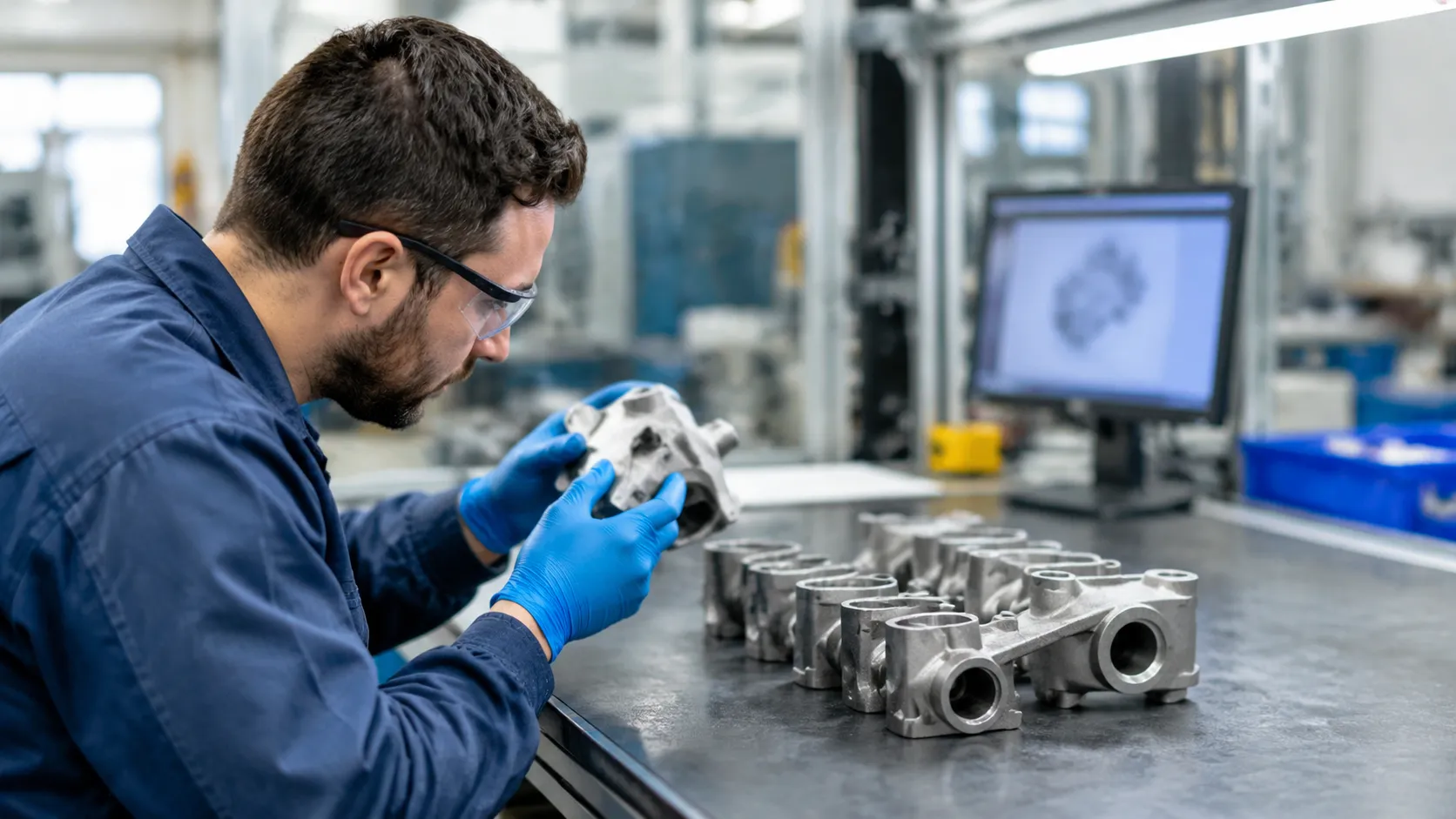
Even with high-end vacuum systems, maintaining high yields on complex components requires strict process controls. We inspect every stage from melt preparation to final finishing to catch imperfections before parts ship.
Knowing the common casting defects and how to identify them ensures your production runs meet exact metallurgical and structural standards.
Porosity and Gas Entrapment
Gas porosity is drastically minimized in vacuum investment casting compared to open-air pouring, but issues can still occur if parameters drift:
- Internal microporosity: Caused by dissolved hydrogen or trapped gases in molten metal during solidifying.
- Vacuum leaks: Incomplete furnace sealing allows trace atmosphere in, leading to tiny voids in thin walls.
- Solution: Precise vacuum melt control, degassed alloy charge stocks, and optimized pour speeds eliminate air turbulence.
Surface Inclusions and Oxidation
Because our process pulls a vacuum before melting and pouring, we produce virtually oxide-free castings. However, improper handling can still cause surface flaws:
- Ceramic shell erosion: High-velocity metal flow washing away loose ceramic particles from the shell interior.
- Slag inclusions: Residual dross entering the mold cavity due to improper skimming or gating.
- Prevention: High-integrity ceramic binders, pre-pour mold flushing, and specialized ceramic filters in the gating system.
Cracks, Warping, and Shrinkage Issues
Non-uniform cooling across varying cross-sections can introduce stress-related flaws:
- Hot tears and stress cracks: Occur when thin and thick sections cool at drastically different rates, pulling the metal apart.
- Warping: Results from uneven cooling across long, unsupported geometry.
- Solidification shrinkage: Happens when the feed path freezes before the heavy section fully solidifies.
- Prevention: Balanced gating designs, directional solidification planning, and controlled cooling cycles inside the vacuum chamber.
Inspection Methods and Testing
We utilize destructive and non-destructive testing (NDT) to verify internal integrity and dimensional accuracy against your CAD models:
| Inspection Method | Purpose | Common Use Case |
|---|---|---|
| X-Ray / CT Scanning (NDT) | Identifies internal voids, shrinkage, and subsurface porosity. | Critical aerospace and medical parts |
| Fluorescent Penetrant (FPI) | Detects fine surface cracks, cold shuts, and micro-fissures. | 100% surface check on high-stress parts |
| CMM & 3D Optical Scanning | Validates tight dimensional tolerances and geometric profiles. | First-article inspection and batch sampling |
| Spectrometric Analysis | Confirms alloy chemistry and trace element levels before pouring. | Raw melt chemistry verification |
| Tensile & Hardness Testing | Verifies mechanical properties after heat treatment. | Destructive test bar verification per lot |
Evaluating the advantages and disadvantages of lost wax casting methods shows that vacuum environments significantly lower scrap rates. Combining real-time process monitoring with comprehensive NDT inspection guarantees that every casting delivers the structural integrity your application demands.
Cost Factors and Lead Time in Vacuum Investment Casting
Understanding the cost drivers and schedule benchmarks for vacuum investment casting helps you optimize project budgets without sacrificing part integrity. We balance upfront tooling investments against unit costs to deliver custom metal parts that meet tight commercial and technical targets.
Tooling and Setup Costs
Tooling for precision casting requires dedicated wax injection dies, usually machined from high-grade aluminum or tool steel.
- Tooling Investment: Wax injection molds range from simple single-cavity dies for lower volumes to complex multi-slide tools for intricate geometries.
- Tool Life: Hardened aluminum or steel dies last for tens of thousands of wax cycles, amortizing the upfront expenditure across the entire production lifecycle.
- Process Setup: Initial setup involves gating design, mold assembly optimization, and vacuum chamber parameter configuration.
Material Choice and Alloy Cost
The raw metal selected directly affects unit pricing. Vacuum pouring allows for casting reactive and high-performance alloys that demand clean processing environments.
- Standard Steels: Stainless steel and carbon steel offer a balance between high strength and manageable raw material costs.
- Specialty & Superalloys: Titanium, nickel-base, and cobalt-base alloys cost more per pound and require strict vacuum melt controls. Reviewing a detailed casting alloy properties and material selection guide can help balance mechanical requirements against raw material expenses.
- Yield Rates: Vacuum casting delivers higher clean-metal recovery and fewer scrap parts, reducing total alloy waste on expensive pours.
Part Complexity and Production Volume
Geometry and order quantities determine both processing efficiency and final piece-part costs:
| Factor | Impact on Cost | Impact on Lead Time |
|---|---|---|
| Thin Walls & Tight Tolerances | Requires specialized gating, ceramic core work, and strict process controls. | Adds 1–2 weeks for shell build and inspection. |
| Low-Volume Production (10–100 pcs) | Higher unit cost due to setup distribution over fewer parts. | Shorter overall run times (typically 4–6 weeks). |
| High-Volume Production (1,000+ pcs) | Low unit cost; tooling expense is fully diluted across the batch. | Extended production planning (6–10 weeks for full batch delivery). |
Evaluating volume trade-offs is similar to assessing overall process economics in a die casting vs sand casting cost, volume, and tolerance comparison, where tooling amortization dictates scale efficiency.
Prototype vs. Production Pricing
We support both early-stage design validation and full-scale manufacturing runs:
- Prototype Casting: Uses 3D-printed patterns or soft tooling to eliminate hard mold fees upfront. This approach delivers testable parts in 2 to 4 weeks with higher individual piece costs.
- Production Casting: Utilizes precision-machined multi-cavity injection molds. While initial tooling requires capital outlay, it slashes piece-part costs and stabilizes production tolerances for recurring, high-volume orders.
Choosing a Vacuum Investment Casting Supplier
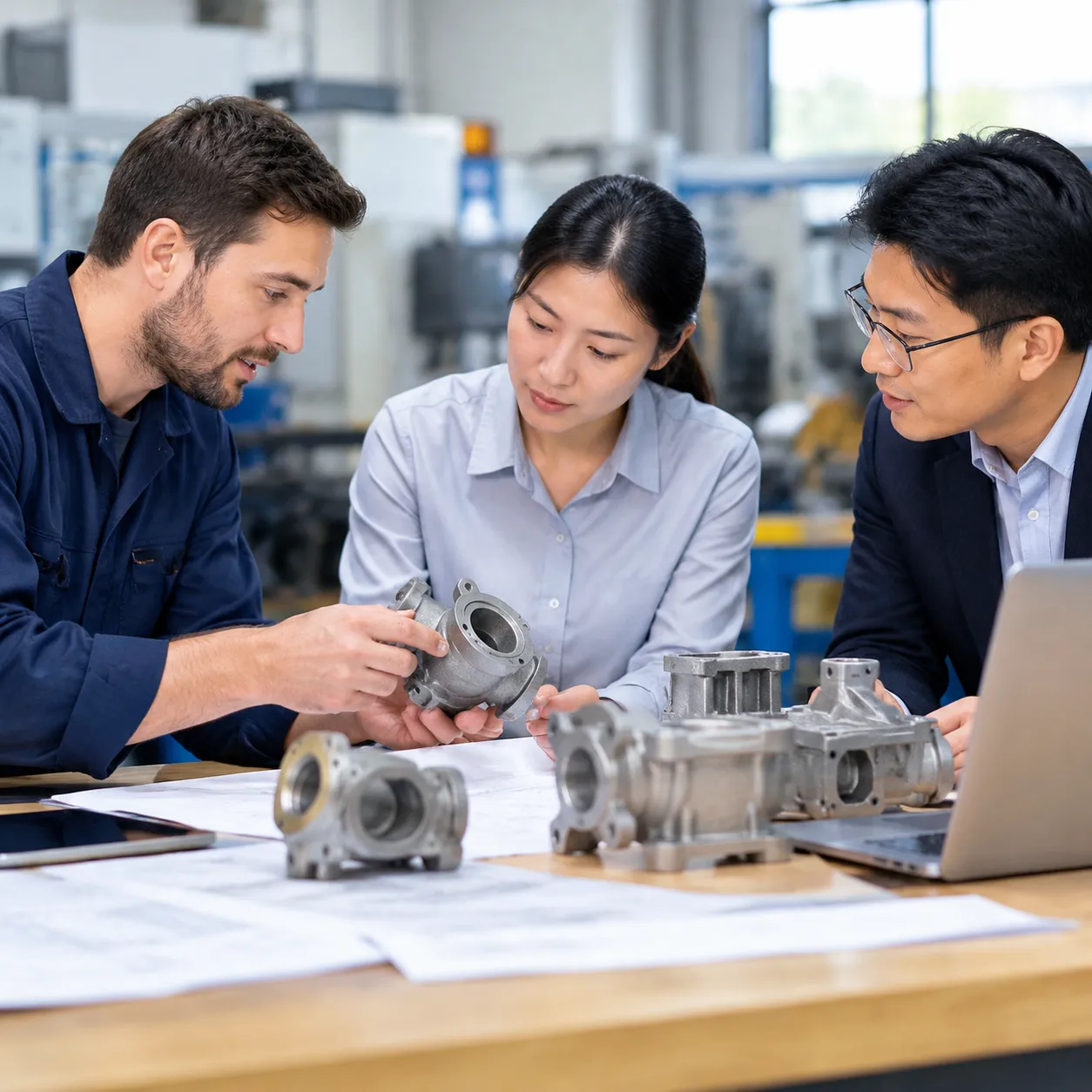
Finding the right manufacturing partner for vacuum investment casting determines whether your project succeeds on time or gets stalled by scrap rates and delays. When evaluating a supplier, we recommend looking at their production floor capabilities, quality controls, and material track record.
Technical Capability and Equipment
A reliable vacuum casting foundry needs dedicated vacuum induction melting (VIM) furnaces and computer-controlled pouring systems. We utilize advanced tooling and modern mold-building setups to prevent thermal shock and shell breakdown during high-temperature cycles.
Key equipment markers to look for include: Vacuum-assisted melting and pouring chambers Automated robotic dipping cells for consistent ceramic shells Temperature-controlled dewaxing autoclaves In-house heat treatment and metallurgical testing labs
Experience with Your Alloy and Part Type
Different metals behave differently in a vacuum environment. Titanium, superalloys, and stainless steels each present distinct shrinkage rates and pouring challenges. Look for a partner offering proven experience in pouring your exact alloy into complex geometries with thin walls. For high-precision requirements, working with a partner utilizing a precision casting solution with silica sol process and ISO 8062 accuracy ensures structural integrity and high surface finishes across demanding part designs.
Quality Standards and Traceability
High-integrity industries like aerospace, energy, and medical devices require strict material traceability. Every production run must be backed by standard testing protocols.
| Verification Area | Standards & Capabilities |
|---|---|
| Material Verification | Optical emission spectrometry (OES), raw ingot lot certifications |
| Non-Destructive Testing (NDT) | X-ray radiography, fluorescent penetrant inspection (FPI), ultrasonic testing |
| Dimensional Inspection | CMM reporting, 3D laser scanning, standard GD&T compliance |
| Certifications | ISO 9001, AS9100, IATF 16949 |
Prototyping, Quoting, and Production Support
The best supplier acts as an extension of your engineering team. We support your timeline from early development stages through to volume production. Fast turnaround on DFM (Design for Manufacturability) reviews, rapid tooling, and sampling help validate components before committing to heavy capital expenditure. Leveraging dedicated services for precision investment casting and prototypes allows you to test functional parts quickly, reduce revision lead times, and transition directly into scale production without quality loss.
Vacuum Investment Casting FAQs
Here are the direct answers to the most common questions we get about the vacuum investment casting process, design limits, and project timelines.
What industries use vacuum investment casting most?
Vacuum casting is essential for sectors where material integrity is non-negotiable and failure is not an option:
- Aerospace & Defense: Turbine blades, fuel system components, and structural brackets using titanium and superalloys.
- Medical Technology: Orthopedic implants, surgical instruments, and prosthetic housings requiring biocompatible, oxide-free alloys.
- Energy & Power Generation: Gas turbine nozzles, impellers, and high-temperature valve components.
- High-End Automotive & Motorsport: Turbocharger wheels, exhaust components, and lightweight suspension brackets.
How accurate can vacuum investment casting be?
We consistently achieve tight casting tolerances by combining stable ceramic molds with vacuum-assisted metal filling:
- Standard Linear Tolerance: Typically ±0.005 inches per inch (±0.13 mm per 25 mm).
- Surface Finish: Standard cast finishes reach 63 to 125 µin RMS (1.6 to 3.2 µm Ra), significantly reducing the need for secondary machining.
- Consistency: The absence of atmospheric pressure and air resistance delivers exceptionally repeatable geometry across production runs.
What part sizes work best?
Vacuum investment casting excels at small-to-medium parts with complex interior channels and fine exterior detail:
| Parameter | Optimal Range | Maximum Capability |
|---|---|---|
| Part Weight | 0.05 kg to 15 kg (0.1 lbs to 33 lbs) | Up to 50 kg (110 lbs) depending on alloy |
| Part Dimensions | 10 mm to 400 mm (0.4" to 16") | Envelopes up to 600 mm (24") |
| Geometry | Thin-walled, contoured, core-heavy shapes | Solid blocks or complex hollow sections |
Is vacuum investment casting good for thin-walled parts?
Yes. In conventional pouring, surface tension and back-pressure from trapped mold air prevent liquid metal from filling narrow cavities.
During our precision investment casting services for custom parts, the vacuum draws the melt smoothly into walls as thin as 0.8 mm to 1.2 mm (0.030" to 0.045") without cold shuts or misruns. This makes it the premier method for lightweight, high-strength applications.
How does it compare on cost and lead time?
While vacuum equipment requires a higher initial setup than atmospheric casting, it provides measurable cost savings downstream:
- Tooling & Setup: Wax injection tooling represents an upfront investment, but it delivers long tool life and identical repeatability.
- Machining Reduction: Castings come out near-net-shape with fine detail, cutting expensive CNC cycle times and scrap metal loss.
- Defect Reduction: Lower internal porosity translates to near-zero reject rates during final X-ray, NDT, or pressure testing.
- Lead Times: Rapid prototyping samples typically ship in 2 to 4 weeks, while full production runs average 6 to 10 weeks after tooling approval. For mission-critical parts, sourcing through a dedicated manufacturer of investment casting precision metal parts balances upfront mold development with superior overall part yield.
Order and Production Support for Vacuum Investment Casting
Getting started with our vacuum investment casting services is straightforward. We work closely with your engineering and procurement teams from initial design evaluation through final delivery, ensuring every custom metal part meets strict structural and dimensional targets.
Requesting a Quote
To deliver a fast, accurate quote, we review your core project specifications upfront: Target Alloy & Standards: Material grade specifications, such as superalloys, titanium, or corrosion-resistant austenitic stainless steel grades and uses. Production Volume: Initial prototype count, pilot batch size, and projected annual demand. Finishing & Post-Processing: Requirements for heat treatment, surface machining, polishing, or coating. Testing & Inspection: Specific non-destructive testing (NDT), X-ray, or chemical certification needs.
File and Drawing Requirements
We accept industry-standard 3D CAD files alongside 2D technical drawings to assess critical casting tolerances and mold flow characteristics:
| File Type | Preferred Formats | Key Information Needed |
|---|---|---|
| 3D CAD Models | STEP (.stp), IGES (.igs), Parasolid (.x_t) | Part volume, general geometry, draft angles |
| 2D Drawings | PDF, DWG, DXF | GD&T callouts, tight tolerances, surface finish (Ra), thread specs |
| Material Specs | ASTM, AMS, ISO, or DIN | Chemical composition, hardness, tensile strength targets |
Prototype Approval and Sample Runs
Before cutting hard tooling for full production, we validate the design: Rapid Prototyping: We use 3D-printed wax or PMMA patterns for fast-turnaround test parts without dedicated tooling costs. First Article Inspection (FAI): Complete dimensional validation via CMM reports, optical scanning, and material testing. Sample Sign-Off: We deliver physical production-grade samples for your fit-and-function testing and formal sign-off.
Scaling from Small Batches to Full Production
Once the pilot run is approved, we transition seamlessly into series production casting: Multi-Cavity Wax Tooling: Dedicated aluminum tooling for cost-effective, high-volume wax pattern creation. Consistent Vacuum Pouring: Automated process parameters ensure uniform density, low porosity, and zero oxidation from batch to batch. Flexible Capacity: Optimized to handle low-volume high-mix runs or high-volume aerospace and medical manufacturing schedules with reliable lead times.
 English
  Russian
  German