

2026年9月14日
Discover reliable casting auto solutions with durable materials precise engineering and dependable performance for automotive applications

Core Casting Auto Parts and Typical Vehicle Applications
We engineer and manufacture high-performance cast metal components that meet the rigorous durability, thermal, and mechanical demands of global automotive platforms. From internal combustion drivetrains to next-generation electric vehicles, our casting auto capabilities deliver structural integrity, tight dimensional tolerances, and optimal weight reduction.
Engine Blocks, Cylinder Heads, and Intake Manifolds
We produce high-strength engine block casting components, cylinder heads, and intake manifolds designed to withstand severe combustion pressures and rapid thermal cycling. Engine Blocks: Cast using high-density gray iron or lightweight A356 aluminum with integrated cast-in liners. Cylinder Heads: Complex internal coolant passages and combustion chambers formed via precision core-making to prevent thermal distortion. Intake Manifolds: Smooth internal air passages that boost volumetric efficiency and reduce airflow resistance.
Transmission Cases, Clutch Housings, and Differential Covers
Our drivetrain castings handle extreme torque loads and continuous vibration while ensuring leak-proof sealing: Transmission Cases: Thin-walled, rigid aluminum housings engineered to protect complex gear trains. Clutch Housings: High torsional rigidity to eliminate misalignment under abrupt load changes. Differential Covers: Ductile iron and aluminum covers offering impact protection and superior heat dissipation for gear oils.
Chassis, Suspension Knuckles, and Control Arms
For safety-critical suspension systems, we focus on fatigue life and impact resistance: Suspension Knuckles (Steering Knuckles): Ductile iron and high-ductility aluminum castings optimized to absorb road shocks. Control Arms: Monolithic cast structures replacing multi-piece stampings, reducing unsprung weight and assembly complexity. Subframes and Brackets: High-load structural nodes engineered for crash energy absorption.
Brake Calipers, Rotors, and Wheel Hubs
We deliver heavy-duty, wear-resistant safety components: Cast Iron Brake Calipers: Engineered with high hydraulic stiffness to maintain uniform pad pressure without flex. Brake Rotors: Gray cast iron blends with high thermal damping to resist thermal cracking and brake fade. Wheel Hubs: Fatigue-resistant ductile iron castings capable of carrying sustained radial and axial cornering loads.
EV Motor Housings, Inverter Boxes, and Battery Tray Enclosures
Our specialized EV motor housing casting solutions address the specific needs of electric drivetrains: Drive Motor Housings: Integrated spiral or jacketed cooling channels for continuous stator and rotor heat management. Inverter Boxes & Power Electronics Enclosures: Shielded, pressure-tight cast aluminum covers providing EMI/RFI protection. Battery Enclosure Components: Large-format, thin-wall castings delivering high torsional stiffness and battery pack intrusion resistance.
Vehicle Application Matrix
| Vehicle System | Key Cast Components | Typical Alloy | Key Performance Feature |
|---|---|---|---|
| Powertrain | Engine blocks, heads, manifolds | A356-T6, Gray Iron | Thermal cycling resistance, high burst strength |
| Drivetrain | Transmission cases, diff covers | ADC12, A380 Aluminum | High stiffness-to-weight, leak-tight oil seals |
| Chassis | Knuckles, control arms, links | Ductile Iron (QT450/QT500), A356 | High yield strength, fatigue endurance |
| Braking | Calipers, ventilated rotors | Class 30/35 Gray Iron, Ductile Iron | High thermal conductivity, low rotor wear |
| E-Mobility | Stator housings, inverter lids | AlSi10Mg, A380 | Integrated cooling jackets, IP67/IP69K sealing |
Primary Casting Auto Manufacturing Processes
Selecting the right casting auto production method depends directly on your component’s wall thickness, structural load requirements, and production volume. We utilize five primary casting methods to balance mechanical strength, dimensional precision, and unit cost. For a broader alloy comparison across these methods, review our aluminum alloy casting guide for die, sand, and investment methods.
High-Pressure Die Casting (HPDC) for Thin-Wall Aluminum Parts
High-pressure die casting forces molten metal into reusable steel molds under extreme pressure (typically between 30 and 100 MPa). Best applications: Thin-wall aluminum and magnesium components, such as transmission housings, EV battery trays, and inverter enclosures. Core benefits: Rapid cycle times, smooth surface finishes (Ra 1.6–3.2 µm), and thin wall capabilities down to 1.5 mm.
Low-Pressure Die Casting (LPDC) for High-Integrity Structural Components
LPDC uses low gas pressure (typically 0.02 to 0.1 MPa) to push molten aluminum upward into the mold cavity from below. Best applications: Aluminum automotive wheels, suspension knuckles, and control arms. Core benefits: Laminar, non-turbulent mold filling prevents gas entrapment and oxide formation, producing dense parts fully compatible with T6 heat treatment.
Green Sand and Resin Sand Casting for Heavy Iron Blocks
Sand casting remains the industry benchmark for heavy, complex iron components. As a dedicated sand casting manufacturer for custom metal parts, we handle high-volume iron casting runs with stable dimensional repeatability. Best applications: Engine cylinder blocks, diesel cylinder heads, differential carriers, and heavy-duty truck hubs. Core benefits: Low tooling investment, excellent vibration damping in cast iron, and practically unlimited maximum part sizes.
Investment Precision Casting for Complex Steel Brackets and Turbochargers
Investment casting (lost-wax process) provides exceptional dimensional repeatability and complex geometry for high-melting-point alloys. Best applications: Turbocharger turbine housings, exhaust manifolds, and high-strength suspension brackets. Core benefits: Near-net-shape capability eliminates heavy rough-machining on wear-resistant and heat-resistant stainless and alloy steels.
Gravity Die Casting (Permanent Mold) for Dense Hydraulic Parts
Molten metal fills reusable metallic molds solely under the force of gravity. Best applications: Brake master cylinders, ABS valve bodies, and hydraulic steering pump housings. Core benefits: Dense grain microstructure, minimal porosity, and superior pressure-tight performance without the high die-wear rates of HPDC tooling.
Process Comparison Overview
| Casting Process | Best Suited Component Types | Typical Materials Used | Key Advantage |
|---|---|---|---|
| HPDC | Thin-wall cases, EV covers | A380, ADC12, AlSi9Cu3 | High production speed & net-shape accuracy |
| LPDC | Structural knuckles, alloy wheels | A356, A357 (T6 treatable) | Low porosity & high tensile strength |
| Sand Casting | Heavy engine blocks, driveline housings | Gray iron (HT250), Ductile iron (QT500) | Low initial tooling cost & high mass capability |
| Investment Casting | Turbochargers, complex locking hinges | Stainless steel, 4140 steel, Inconel | High-temperature resistance & intricate detail |
| Gravity Die | Brake calipers, fluid manifolds | A356, brass, bronze | Excellent hydraulic pressure tightness |
Key Metal Alloys Used in Casting Auto Components
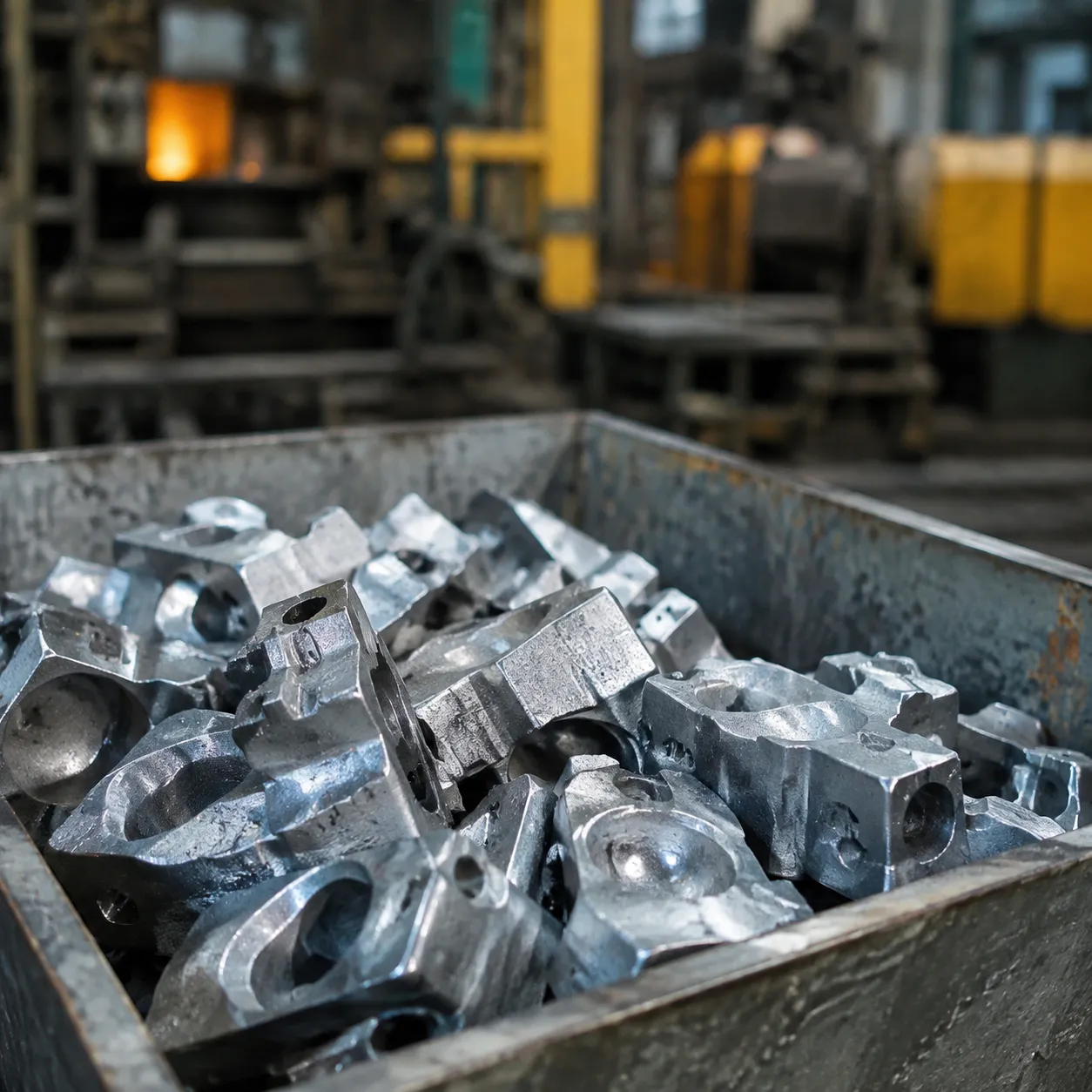
Selecting the right alloy is the most critical step in casting auto production. We balance mechanical strength, thermal performance, corrosion resistance, and total vehicle weight to deliver components that meet stringent automotive safety standards while keeping production costs optimized.
+------------------+-----------------------+------------------------------------------+ | Alloy Family | Common Grades | Primary Automotive Applications | +------------------+-----------------------+------------------------------------------+ | Aluminum | A380, A356-T6, ADC12 | Motor housings, battery trays, knuckles | | Cast Iron | Gray Iron, Ductile | Engine blocks, brake calipers, rotors | | Magnesium | AZ91D, AM60B | Cross-car beams, steering skeletons | | Cast Steel | Carbon & Alloy Steel | Drivetrain yokes, turbocharger housings | +------------------+-----------------------+------------------------------------------+
Aluminum Alloys (A380, A356, ADC12) for Vehicle Lightweighting
Aluminum remains our go-to material for automotive lightweight casting projects. A380 & ADC12: These high-fluidity alloys excel in high-pressure die casting, offering excellent dimensional stability and thermal conductivity for transmission housings, brackets, and inverter covers. A356 (A356 T6 casting): Heat-treated A356 provides superior tensile strength and elongation, making it ideal for safety-critical chassis structural parts, steering knuckles, and road wheels.
Ductile and Gray Cast Iron for Wear Resistance and Vibration Damping
When high wear resistance, thermal mass, and noise-damping are essential, cast iron delivers unmatched durability. Gray Cast Iron: Outstanding vibration dampening and thermal dissipation make it the standard choice for engine cylinder blocks and brake rotors. Ductile Iron Auto Parts: Spheroidal graphite structures give ductile iron higher tensile strength and fatigue resistance, perfect for heavy-duty suspension control arms, differential cases, and hydraulic brake calipers.
Magnesium Alloys (AZ91D, AM60B) for Ultra-Lightweight Cockpit Structures
For extreme weight reduction in interior and body applications, magnesium alloys offer the highest strength-to-weight ratio among structural metals. AZ91D: High rigidity and excellent castability for instrument panel beams and electronic control unit (ECU) enclosures. AM60B: Enhanced ductility and energy absorption, widely utilized for steering wheel armatures and seat frames to maximize occupant crash protection.
Cast Carbon and Alloy Steel for High-Stress Drivetrain Hardware
High-stress automotive zones require the high yield strength and impact resistance of cast steels. We engineer precision drivetrain components, suspension links, and turbo housings using carbon steel and tailored alloy formulations. For specialized high-temperature exhaust and corrosion-resistant assemblies, we deploy cast stainless steel custom casting alloys and grades to guarantee structural integrity under extreme operating cycles.
Why Casting Auto Solutions Drive EV and Lightweighting Innovation
The rapid transition to electric mobility demands smarter structural design and aggressive mass reduction. We design and deliver high-performance casting auto components that eliminate unnecessary vehicle mass, increase battery efficiency, and streamline assembly lines. Modern casting technologies allow us to build complex, lightweight structures that traditional metal forming cannot match.
Weight Reduction for Extended EV Driving Range
Every kilogram saved translates directly into extended battery mileage. Through automotive lightweight casting using high-grade aluminum and magnesium alloys, we strip out parasitic weight while preserving mechanical strength: Lower curb weight: Replacing heavy multi-piece steel stampings with unified cast aluminum structures lowers overall vehicle weight by up to 30% to 40%. Optimized wall thickness: High-pressure vacuum die casting auto parts allow for variable wall designs, putting strength exactly where loads concentrate and thinning non-critical areas. Higher payload & range: Reduced vehicle mass improves acceleration, shortens braking distance, and extracts more miles per kilowatt-hour.
Gigacasting and Mega-Casting to Replace Multi-Part Welded Assemblies
Mega casting gigacasting automotive technology is changing modern vehicle body architectures. By utilizing high-tonnage die casting machines (6,000T to 12,000T+), we consolidate entire underbody sections into single, monolithic cast structures: Assembly simplification: Replaces 70+ individually stamped and welded sheet-metal components with a single rear or front underbody casting. Tooling and labor savings: Drastically cuts assembly robot counts, eliminates spot welds, and reduces factory floor footprint. Dimensional repeatability: Eliminates cumulative welding tolerance stack-ups for consistent chassis alignment.
Thermal Conductivity Optimization for Battery and Motor Cooling Jackets
Electric powertrains demand precise thermal regulation to avoid degradation and maintain peak performance. Our EV motor housing casting solutions feature thin-walled, integrated water jackets and stator cooling channels: Superior heat dissipation: Using casting alloys engineered for high thermal conductivity quickly draws heat away from stators and inverter electronics. Seamless fluid paths: Cast-in cooling channels eliminate external hoses, fittings, and potential leak points in liquid cooling circuits. Compact packaging: Integrates mounting brackets, wire harness bosses, and coolant ports into one cast envelope.
Enhanced Structural Crashworthiness and Torsional Rigidity
Safety in EV architectures depends on how well structural castings manage crash energy. When analyzing the forging and casting comparison for strength and cost, modern high-integrity chassis structural castings deliver the ideal balance of yield strength, elongation, and rapid scalability.
| Performance Metric | Traditional Multi-Piece Welded Assembly | Single-Piece Cast Auto Structure |
|---|---|---|
| Torsional Rigidity | Lower (dependent on spot-weld integrity) | Up to 35% higher continuous stiffness |
| Crash Energy Absorption | Risk of weld seam separation under impact | Controlled deformation via ductile casting alloys |
| Part Count per Sub-assembly | 50 – 100 individual parts | 1 integrated structural component |
| Leak Risk (Cooling Circuits) | High (multiple sealed joints) | Zero (seamless cast channels) |
By leveraging vacuum-assisted high-pressure casting and specialized T6 heat treatments, we deliver high-ductility crash boxes, shock towers, and battery frame nodes that absorb severe collision forces without cracking.
Post-Casting Finishing and CNC Precision Machining for Casting Auto Parts
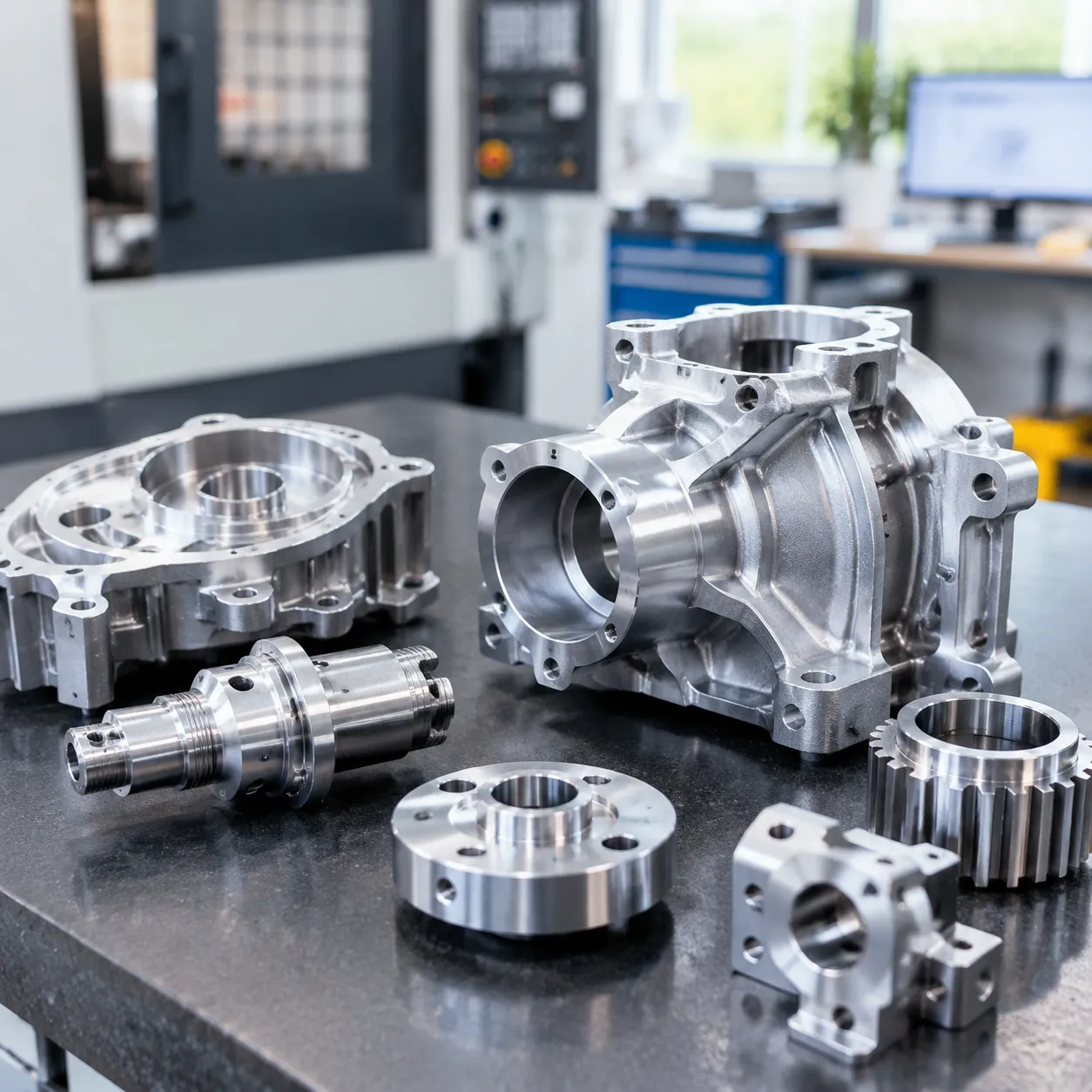
Raw cast components require dedicated post-processing to meet precise automotive dimensional and structural specifications. We combine high-speed automated secondary operations with strict process controls to turn raw castings into assembly-ready components.
Multi-Axis CNC Milling, Turning, and Boring
Critical mounting faces, bearing bores, and fluid ports require dimensional precision that casting alone cannot achieve. Tight Tolerances: We execute 4-axis and 5-axis CNC milling, precision boring, and turning down to ±0.005 mm tolerances. Complex Geometries: Multi-axis setups allow us to machine deep-pocket oil galleries, sensor ports, and O-ring grooves in a single clamping setup to maintain true geometric alignment. Integrated Workflows: Combining precision casting and CNC machining reduces cycle times and eliminates part-handling variation.
Heat Treatment Processes for Mechanical Strength
We apply specialized thermal treatments to modify the internal microstructure of our cast auto components, optimizing the balance between hardness and ductility: T6 Solution & Artificial Aging: Dramatically increases yield strength and fatigue resistance for structural parts like suspension arms and steering knuckles. T5 Treatment: Delivers dimensional stability and moderate strength improvements directly after mold release without water quenching distortion. Stress Relieving: Removes internal residual stresses from cast iron blocks and high-pressure aluminum castings to prevent warping during heavy CNC cutting.
Surface Treatment and Anti-Corrosion Finishing
Exterior surfaces must withstand stone chipping, road salts, and extreme under-hood temperatures. Blasting: Automated steel shot blasting and fine sand blasting remove parting lines, strip residual oxidation, and provide a uniform matte surface texture. Protective Coatings: We apply electrophoretic deposition (E-coating), powder coating, and anodizing to exceed OEM 1,000-hour neutral salt spray corrosion standards.
Vacuum Resin Impregnation for Pressure Tightness
Micro-porosity can compromise fluid-carrying and pressure-retaining auto parts. We use deep vacuum and high-pressure resin impregnation to seal micro-voids in engine blocks, EV motor water jackets, and brake calipers. This clean, thermoset polymer process guarantees absolute pressure tightness up to rated hydraulic levels without affecting critical machining tolerances.
Quality Assurance and Defect Prevention in Casting Auto Production
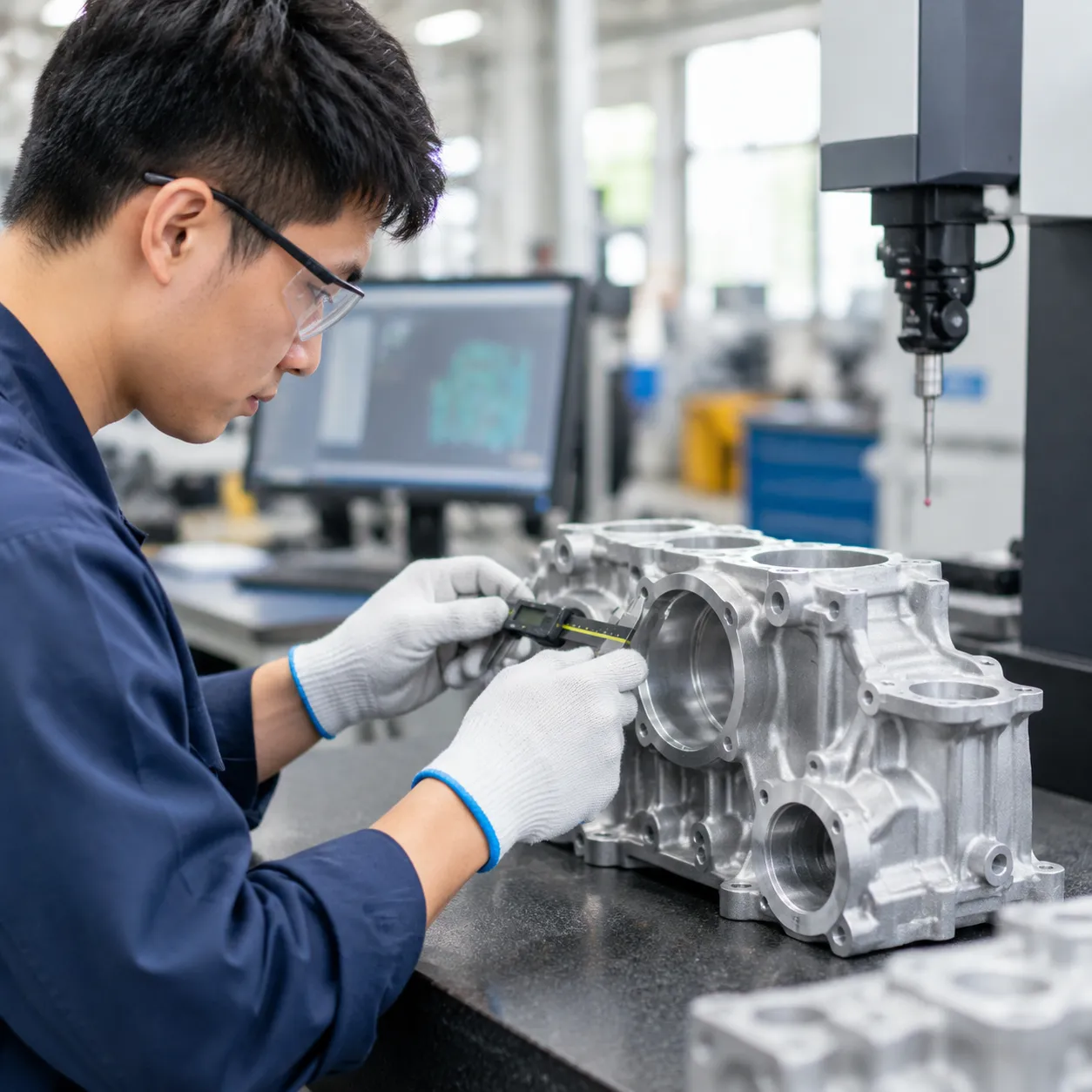
Consistent vehicle safety depends entirely on strict quality control at every stage of casting auto manufacturing. We eliminate internal flaws and dimensional drift before any part reaches the assembly line, combining full traceability with advanced testing protocols.
IATF 16949 Automotive Quality Management Compliance
We build our entire casting production workflow around strict IATF 16949 auto casting standards. From raw melt spectrometry to final packaging, every batch is fully documented. PPAP Level 3 documentation and control plans for all production runs. Real-time process parameter monitoring (melt temperature, injection speed, mold pressure). Complete lot traceability tied directly to raw material heats.
X-Ray, Industrial CT Scanning, and NDT
Subsurface integrity is critical for pressure-tight housings and structural knuckles. Our automotive casting defect inspection uses comprehensive Non-Destructive Testing (NDT) to verify interior soundness: Digital X-ray & 3D CT scanning: Identifies hidden air pockets, inclusions, and internal wall thinning. Ultrasonic testing (UT): Validates wall thickness and bond integrity on heavy iron and steel castings. Fluorescent penetrant inspection (FPI): Detects micro-cracks on critical stress zones and sealing surfaces.
CMM 3D Dimensional Verification
Complex engine brackets and EV housings require micron-level repeatability. We utilize multi-axis bridge Coordinate Measuring Machines (CMM) and laser optical scanners to cross-check real-time parts against 3D CAD models. For thin-wall geometries and complex geometries, achieving tight geometric dimensioning and tolerancing (GD&T) mirrors our approach in aluminum investment casting tight tolerances.
| Inspection Method | Target Defect / Metric | Automotive Application |
|---|---|---|
| Industrial CT Scanning | Internal gas porosity & shrinkage | EV motor housings, brake calipers |
| 3D CMM Probing | True position, flatness, concentricity | Transmission cases, engine blocks |
| Spectrometric Analysis | Alloy composition & impurities | A380, A356, and ductile iron melts |
| Hydrostatic Leak Testing | Pressure tightness & micro-porosity | Coolant jackets, battery trays |
Porosity, Cold Shut, and Shrinkage Defect Analysis
We do not just catch defects; we eliminate their root causes through flow simulation and active mold adjustments: Gas Porosity: Controlled by using vacuum-assisted die casting, rotary degassing, and optimized gating vents. Cold Shuts & Misruns: Resolved by optimizing metal flow rates, mold pre-heating, and thermal balance. Shrinkage Cavities: Prevented via directional solidification modeling, optimized chill placement, and balanced intensification pressure.
How to Choose the Right Casting Auto Manufacturing Partner
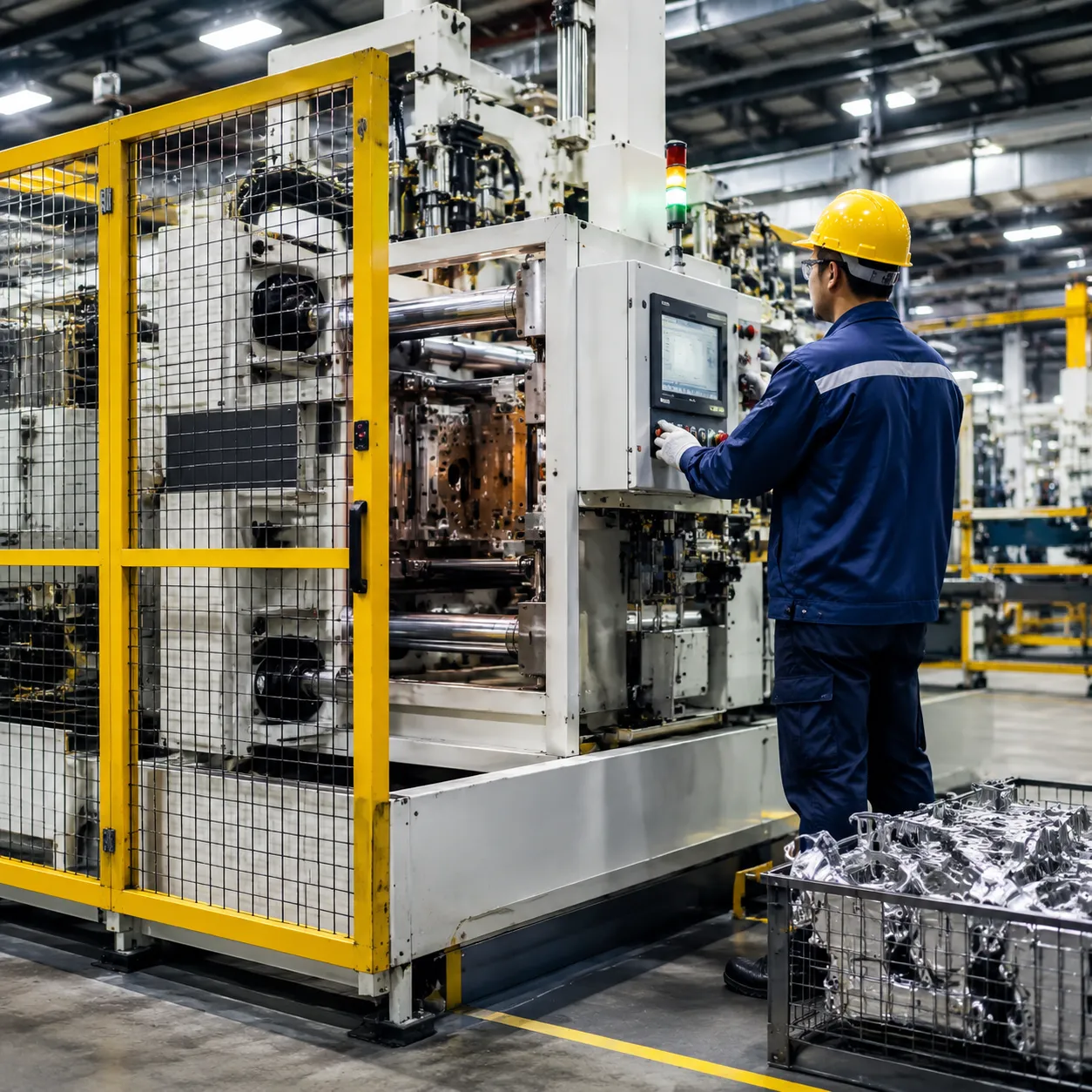
Selecting a manufacturing partner for automotive casting directly impacts your production timeline, part integrity, and final unit costs. We evaluate casting auto partners based on their direct engineering capabilities, machine fleet range, material controls, and total supply-chain reliability.
In-House Mold Design and Rapid Prototype Sampling Capabilities
A capable casting partner handles tool design, mold flow simulation (MAGMA/AnyCasting), and tooling fabrication under one roof. In-house mold building reduces engineering revision loops and prevents costly die modifications later.
- Mold Flow Simulation: Identifies gating issues, cold shuts, and air traps before steel is cut.
- Fast-Turn Tooling: Dedicated sampling cells deliver precise cast prototypes and engineering validation units in weeks rather than months.
- Design for Manufacturability (DFM): Direct feedback on draft angles, wall thickness transitions, and parting lines to optimize high-volume casting development.
High-Tonnage Die Casting Machine Capacity and Scalability
Automotive components vary from small sensor brackets to massive structural battery trays. We match your part geometry to the correct machine clamping force to ensure dimensional stability and prevent flash:
- Medium Tonnage (500T – 1,600T): Ideal for brackets, oil pans, transmission covers, and water pump housings.
- Large Tonnage (2,000T – 4,500T+): Engineered for EV motor frames, shock towers, subframes, and integrated structural castings.
- Automated Cells: Integrated robotic extraction, automated die spraying, and inline trimming guarantee cycle-to-cycle repeatability during casting production.
Full Material Test Reports (MTR) and Chemical Spectrometry Validation
Material composition directly dictates structural performance and crash resistance. Reliable casting auto suppliers verify every heat:
- Optical Emission Spectrometry (OES): Verifies chemical alloy chemistry (e.g., Silicon, Magnesium, Iron ratios) prior to pouring.
- MTR Documentation: Certified batch-level traceability showing tensile strength, yield strength, and elongation percentages.
- Degassing & Melt Cleanliness: Continuous rotary degassing and flux treatments to minimize internal oxide inclusions.
Automotive Partner Evaluation Matrix
| Evaluation Factor | Minimum Requirement | Ideal Partner Benchmark |
|---|---|---|
| Tooling & Sampling | Outsourced mold making | In-house tooling shop with 3-week rapid prototype delivery |
| Equipment Fleet | Standard manual/semi-auto cells | Fully automated 500T to 4,500T HPDC and LPDC cells |
| Quality Validation | Visual and CMM inspection | In-house 3D CT scan, real-time X-ray, OES spectrometry |
| Quality Systems | ISO 9001 certification | Full IATF 16949 automotive certification with PPAP Level 3 |
| Logistics & Delivery | Standard regional shipping | Global warehousing, safety stock management, and JIT delivery |
Total Cost of Ownership, Lead Times, and Global Logistics Support
Unit price is only one part of the equation. We assess total cost of ownership (TCO) across tool life expectancy, machining cycle times, scrap rates, and shipping schedules:
- Die Longevity: High-grade die steels (H13, Dievar) with premium surface coatings extend mold life past 100,000 shots.
- Secondary Operations: Fully integrated CNC machining, washing, and leak testing reduce transit touchpoints and handling damage.
- Supply Chain Continuity: Clear inventory buffering, export-compliant packaging, and established logistics routes prevent factory floor stoppages.
Frequently Asked Questions About Casting Auto Components
What is the most cost-effective casting auto method for mass production?
For large-scale vehicle manufacturing (exceeding 20,000 units annually), high-pressure die casting (HPDC) offers the lowest per-part cost. It delivers rapid cycle times (30 to 90 seconds), tight dimensional repeatability, and minimal scrap. For complex geometries, thin-walled brackets, or lower-volume custom runs where tooling expenses must stay lean, utilizing professional aluminum investment casting services for precision parts delivers near-net shapes with minimal secondary tooling costs.
How do you prevent gas porosity in aluminum auto castings?
We eliminate gas and shrinkage porosity through four primary production controls: Rotary Degassing: Injecting high-purity nitrogen or argon into the molten melt removes trapped hydrogen and non-metallic inclusions before pouring. Vacuum-Assisted Die Casting: Evacuating air from the die cavity down to under 50 mbar prior to metal injection stops gas entrapment during high-speed filling. Flow Simulation Optimization: Using advanced mold-flow software allows us to position gates, overflows, and chill vents in non-critical load zones. Squeeze Pin & Local Pressurization: Applying targeted hydraulic squeeze pins during solidification feeds shrink-prone heavy sections.
What is the standard tolerance range for precision machined auto castings?
As-cast dimensions follow standard international casting grades, while post-casting CNC machining brings critical interfaces to aerospace-grade fits:
| Process Phase | Standard Tolerance Range | Typical Application |
|---|---|---|
| Raw Die Cast (As-Cast) | ISO 8062-3 DGT Grade CT4 – CT6 (±0.15 mm to ±0.35 mm) | Non-critical outer walls, heat sinks, bracket tabs |
| Raw Sand Cast (As-Cast) | ISO 8062-3 DGT Grade CT8 – CT10 (±0.80 mm to ±1.50 mm) | Heavy engine iron blocks, rough suspension housings |
| Precision CNC Machined Castings | ±0.005 mm to ±0.025 mm | Bearing bores, O-ring seal grooves, mating faces |
For a complete breakdown of alloy tolerances and shrink rates, consult our aluminum investment casting guide for precision parts.
How does gigacasting compare to traditional multi-piece stamped automotive assemblies?
Gigacasting replaces 70 to 100 stamped sheet-metal components, rivets, and spot welds with a single, high-integrity aluminum structural casting.
- Weight & Rigidity: Lowers rear-floor body weight by 10% to 20% while increasing torsional rigidity by up to 30%.
- Factory Footprint: Eliminates hundreds of spot-welding robots, reducing body shop assembly line footprints by roughly 35%.
- Material Requirements: Demands specialized non-heat-treated structural aluminum alloys to avoid dimensional warping during demolding and quenching.
What surface treatments are best for under-chassis cast auto parts?
Under-chassis components face intense road gravel impingement, water splash, and corrosive de-icing salts. We apply industry-proven coatings based on base metallurgy: Cathodic Electrodeposition (E-Coat): Provides complete coverage inside complex cavities with a uniform 15–25 µm epoxy layer, surpassing 1,000 hours of ASTM B117 salt spray testing. Hard Anodizing (Type III): Ideal for aluminum knuckles and control arms requiring high surface hardness (up to 60 HRC equivalent) and wear resistance. Zinc-Nickel (Zn-Ni) Plating: Applied to cast ductile iron calipers and brackets to offer cathodic corrosion defense against high operating temperatures and salt exposure. Resin Impregnation: Seals micro-porosity in fluid-handling auto castings to guarantee 100% leak-proof performance under high hydraulic pressures.
 English
  Russian
  German