
2026年9月14日
Discover durable cast stainless steel solutions with excellent strength corrosion resistance and reliable performance for demanding applications
What is Cast Stainless Steel?
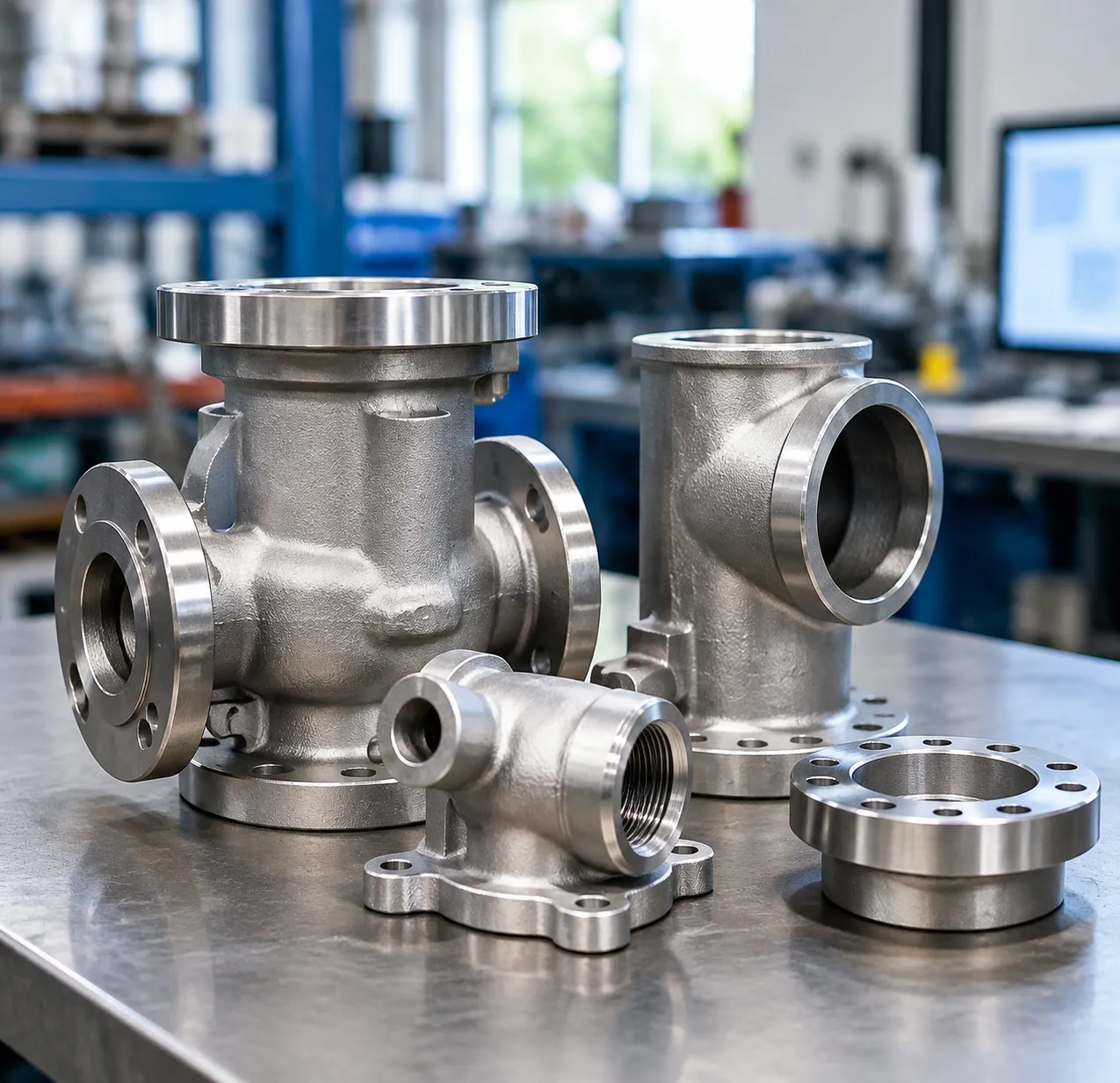
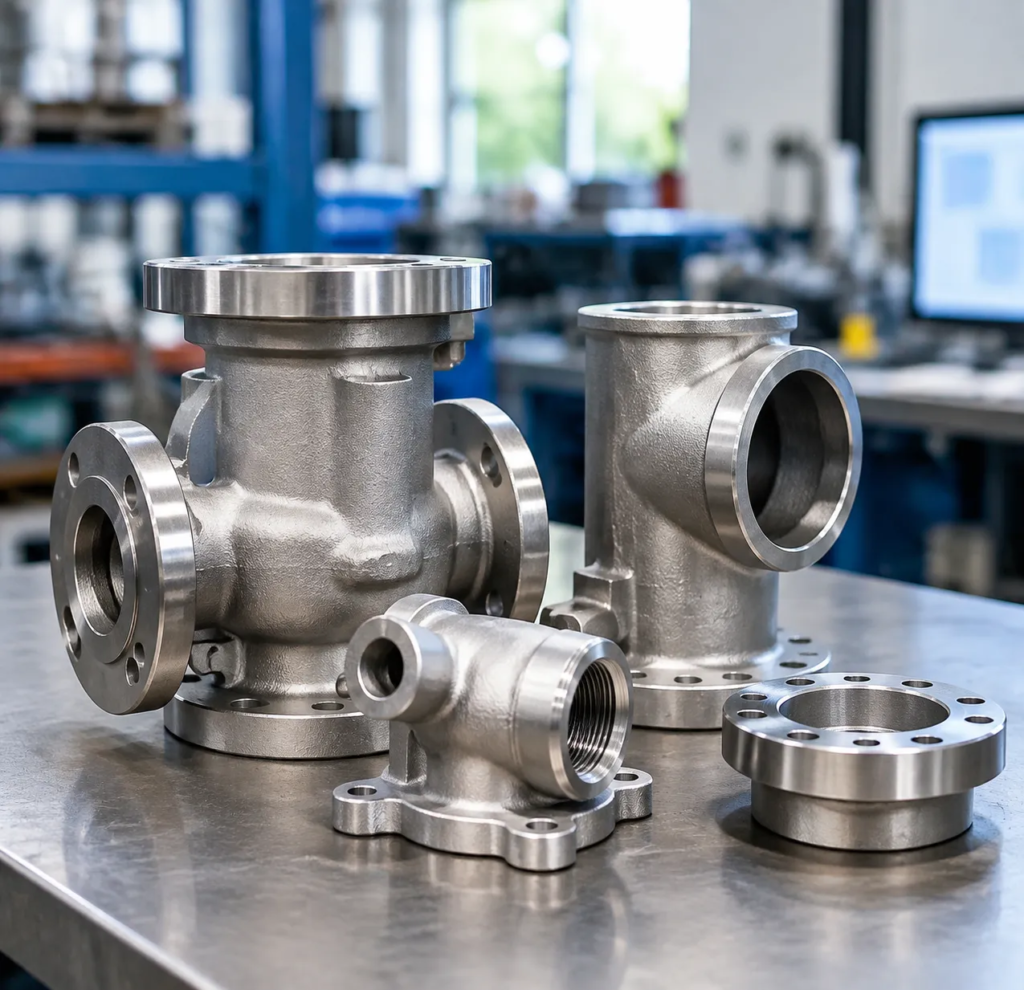
Cast stainless steel is an iron-base alloy containing a minimum of 10.5% chromium poured directly into molds in a molten state to achieve near-net-shape components. At our foundry, we rely on this process to produce complex, high-integrity parts that would be impossible or cost-prohibitive to machine from solid stock.
The metallurgy centers on the spontaneous formation of an adherent, chromium-rich oxide surface film (passivation layer) that self-heals in the presence of oxygen. By balancing chromium with nickel, molybdenum, nitrogen, and other stabilizing elements, we tailor the solidified microstructure into distinct metallurgical matrixes: Austenitic: High corrosion resistance, non-magnetic or slightly magnetic, exceptional impact toughness. Martensitic: Hardened through heat treatment, magnetic, optimized for high wear and moderate corrosion. Ferritic: Nickel-free, cost-effective, magnetic, resistant to stress-corrosion cracking. Duplex (Austenitic-Ferritic): Mixed 50/50 phase matrix providing double the yield strength of standard austenitic grades with high resistance to pitting and crevice corrosion.
Key Differences: Cast vs. Wrought Stainless Steel
While cast and wrought alloys share similar base chemistries, their structural behavior and chemical limits differ significantly due to their manufacturing routes:
- Grain Structure and Isotropy: Wrought steel undergoes directional rolling or forging, producing an anisotropic grain structure with distinct longitudinal and transverse mechanical limits. Cast stainless steel solidifies uniformly within the mold, yielding isotropic mechanical properties that perform consistently regardless of load direction.
- Delta Ferrite Content: We deliberately balance the chemistry of austenitic cast stainless (such as CF8 and CF8M) to retain 5% to 15% delta ferrite in the microstructural matrix. This controlled ferrite phase prevents hot cracking (micro-fissuring) during solidification and enhances weldability—a feature rarely present in fully austenitic wrought alloys like 304 or 316.
- Silicon for Fluidity: Cast formulations contain higher silicon levels (typically up to 1.5%–2.0%) compared to wrought equivalents (<1.0%). Elevated silicon reduces surface tension and improves fluidity during pouring, ensuring thin walls and intricate geometries fill without cold shuts.
Chemical Composition Standards and Alloy Designations
Global engineering projects specify cast stainless steel through established designation systems rather than wrought AISI numbers.
The Alloy Casting Institute (ACI) system—adopted by ASTM (primarily ASTM A351, ASTM A743, and ASTM A744)—classifies alloys based on operational purpose: First Letter: Indicates service condition. "C" stands for Corrosion-resistant service (temperatures typically up to 1200°F / 650°C); "H" stands for Heat-resistant service (temperatures exceeding 1200°F). Second Letter: Indicates the relative chromium-nickel ratio, moving alphabetically from A (lowest Ni) to Z (highest Ni). Numerals: Represent the maximum allowable carbon content in hundredths of a percent (e.g., "8" denotes max 0.08% carbon; "3" denotes max 0.03% carbon for low-carbon grades). Suffix Letters: Represent special alloying additions (e.g., "M" for Molybdenum, "C" for Columbium/Niobium, "Cu" for Copper).
| ACI Cast Grade | ASTM Specification | Wrought Equivalent | ISO / EN Equivalent | Key Alloying Chemistry |
|---|---|---|---|---|
| CF8 | ASTM A351 / A743 | AISI 304 | 1.4308 (GX5CrNi19-10) | 18–21% Cr, 8–11% Ni |
| CF8M | ASTM A351 / A743 | AISI 316 | 1.4408 (GX5CrNiMo19-11-2) | 18–21% Cr, 9–12% Ni, 2–3% Mo |
| CF3M | ASTM A351 / A743 | AISI 316L | 1.4409 (GX2CrNiMo19-11-2) | 17–21% Cr, 9–13% Ni, 2–3% Mo (C ≤ 0.03%) |
| CA15 | ASTM A217 / A743 | AISI 410 | 1.4008 (GX7CrNiMo12-1) | 11.5–14% Cr, 1% Ni max (Martensitic) |
| CD4MCu | ASTM A890 / A995 | 255 Duplex | 1.4517 (GX2CrNiMoCuN25-6-3-3) | 24–26% Cr, 4.7–6% Ni, 1.7–2.5% Mo, 2.7–3.3% Cu |
Common Cast Stainless Steel Grades and Specifications
We categorize cast stainless steel alloys primarily by their metallurgical microstructure. Each grade family balances corrosion resistance, mechanical strength, machinability, and thermal stability to handle specific operating environments.
Austenitic Cast Grades (CF8, CF8M, CF3, CF3M)
Austenitic alloys represent the bulk of our stainless casting production. Standard austenitic stainless steel grades provide excellent general corrosion resistance, non-magnetic properties in the annealed state, and impact toughness at cryogenic temperatures.
- CF8 (304 Equivalent): The general-purpose cast alloy. It delivers solid resistance to oxidizing media, organic acids, and atmospheric exposure.
- CF8M (316 Equivalent): Formulated with 2.0% to 3.0% molybdenum, CF8M resists pitting and crevice corrosion caused by chlorides, marine conditions, and sulfuric acids.
- CF3 & CF3M (304L & 316L Equivalents): Low-carbon versions (maximum 0.03% C) engineered to prevent intergranular carbide precipitation during welding, eliminating the need for post-weld heat treatment.
Martensitic Cast Grades (CA15, CA40)
Martensitic castings are hardenable through standard quench-and-temper heat treatments. When projects demand high yield strength, wear resistance, and moderate corrosion protection, we utilize these 400 series stainless steel grades.
- CA15 (410 Equivalent): Offers moderate corrosion resistance and can be heat-treated up to 300+ HBW hardness for pump shafts, turbine parts, and valve trim.
- CA40 (420 Equivalent): Features higher carbon content for increased edge retention, hardness, and abrasion resistance.
Ferritic and Duplex Cast Grades (CB30, CD4MCu)
- Ferritic CB30 (442 Equivalent): High-chromium, non-hardenable alloy offering good resistance to nitric acid, sulfurous gases, and high-temperature scaling.
- Duplex CD4MCu / 2205 Equivalent: Delivers a balanced 50/50 austenite-ferrite matrix. Duplex cast stainless steel provides roughly double the yield strength of CF8M along with superior resistance to stress corrosion cracking (SCC) and pitting in brackish water, chemical slurries, and offshore systems.
Precipitation Hardening Grades (CB7Cu-1 / 17-4 PH)
- CB7Cu-1: The casting equivalent of wrought 17-4 PH. By applying single-step aging heat treatments at varying temperatures (such as H900 or H1150), we achieve tensile strengths up to 1,000 MPa combined with the corrosion resistance comparable to standard 304 cast stainless steel.
Cast Stainless Steel Grade Reference Table
| ACI Cast Grade | Wrought Equivalent | Nominal Composition | Key Mechanical Properties | Primary Use Cases |
|---|---|---|---|---|
| CF8 | 304 | 19Cr - 9Ni | Tensile: ≥ 485 MPa, Yield: ≥ 205 MPa | Valve bodies, food processing machinery |
| CF8M | 316 | 19Cr - 10Ni - 2.5Mo | Tensile: ≥ 485 MPa, Yield: ≥ 205 MPa | Marine hardware, chemical pump impellers |
| CF3M | 316L | 19Cr - 10Ni - 2.5Mo (Low C) | Tensile: ≥ 485 MPa, Yield: ≥ 205 MPa | Welded fluid handling components, pharma |
| CA15 | 410 | 12Cr | Tensile: ≥ 620 MPa, Hardness: ~225 HB | Compressor impellers, valve trims, shafts |
| CD4MCu | 2205 (Duplex) | 25Cr - 5Ni - 2Mo - 3Cu | Tensile: ≥ 690 MPa, Yield: ≥ 485 MPa | Desalination pumps, offshore pipe fittings |
| CB7Cu-1 | 17-4 PH | 16Cr - 4Ni - 3Cu | Tensile: ≥ 965 MPa, Yield: ≥ 795 MPa | Aerospace structural parts, high-stress gears |
Primary Manufacturing Processes for Cast Stainless Steel
When we produce cast stainless steel components, selecting the right casting method comes down to part geometry, production volume, wall thickness, and required surface finish. Here are the four primary processes we rely on to pour high-integrity stainless castings.
Precision Investment Casting (Lost Wax Process)
Investment casting is our go-to method for intricate, near-net-shape components. We inject wax into precision tooling, coat the pattern in multiple ceramic slurry layers, melt out the wax, and pour molten stainless steel into the preheated shell.
- Best for: Complex internal channels, thin-walled sections, impellers, and valve internals.
- Tolerances: Typically ISO 8062-3 DCTG 4 to 6 (±0.1 mm to ±0.3 mm).
- Surface Finish: Smooth finish around Ra 3.2 µm, drastically cutting secondary machining.
- Quality factor: Maintaining strict process control in investment casting for defect-free precision prevents common issues like shrinkage porosity and gas inclusion in high-alloy melts.
Resin Sand Casting for Heavy Industrial Components
When part weights exceed the practical limits of investment casting, we turn to resin-bonded sand casting (no-bake sand). Chemical binders cure the sand mold at room temperature, providing high mold rigidity to support heavy pours without mold wall movement.
- Best for: Massive pump casings, marine structural brackets, large gate valves, and paper mill machinery weighing from 50 kg to several tons.
- Tooling Cost: Significantly lower pattern costs than metal dies used in investment casting.
- Surface Finish: Coarser texture (Ra 12.5 µm to 25 µm), requiring finish-machining allowances on mating faces and bearing bores.
Centrifugal Casting for Symmetrical Hollow Components
For cylindrical geometries, centrifugal casting eliminates the need for central cores. We pour liquid stainless steel into a rapidly spinning permanent metal mold (die). Centrifugal force pushes the dense metal against the outer wall while lighter impurities and gases migrate to the inner bore, which is later bored out.
- Best for: Thick-walled pipes, cylindrical rollers, bushings, and high-pressure ring blanks.
- Material Density: Exceptionally dense, directional solidification results in near-forging mechanical properties with zero central porosity.
- Defect Rate: Lowest inclusion rate among all stainless casting methods for hollow rounds.
Shell Mold Casting for Tight Dimensional Control
Shell molding bridges the gap between conventional sand casting and precision investment casting. We dump a resin-coated phenolic sand mix onto heated metal patterns to cure a rigid, thin "shell."
- Best for: Medium-volume production runs of small-to-medium parts requiring better dimensional consistency than traditional sand molds.
- Tolerances: Holds roughly ±0.4 mm to ±0.8 mm, with faster cycle times and lighter molds than standard flask sand casting.
- Surface Finish: Ra 6.3 µm to 12.5 µm, producing crisp lettering and well-defined parting lines.
| Casting Method | Typical Part Weight | Dimensional Tolerance | Best Use Case |
|---|---|---|---|
| Investment Casting | 0.05 kg – 50 kg | ±0.1 mm – ±0.3 mm | Intricate, net-shape valve bodies & impellers |
| Resin Sand Casting | 20 kg – 5,000+ kg | ±1.0 mm – ±3.0 mm | Large industrial housings & heavy structural bases |
| Centrifugal Casting | 10 kg – 3,000 kg | Direct OD control (Dense core) | Symmetrical tubes, sleeves, and ring forgings alternatives |
| Shell Mold Casting | 0.5 kg – 100 kg | ±0.4 mm – ±0.8 mm | Repetitive small-to-midsize industrial hardware |
Performance Advantages of Cast Stainless Steel Parts
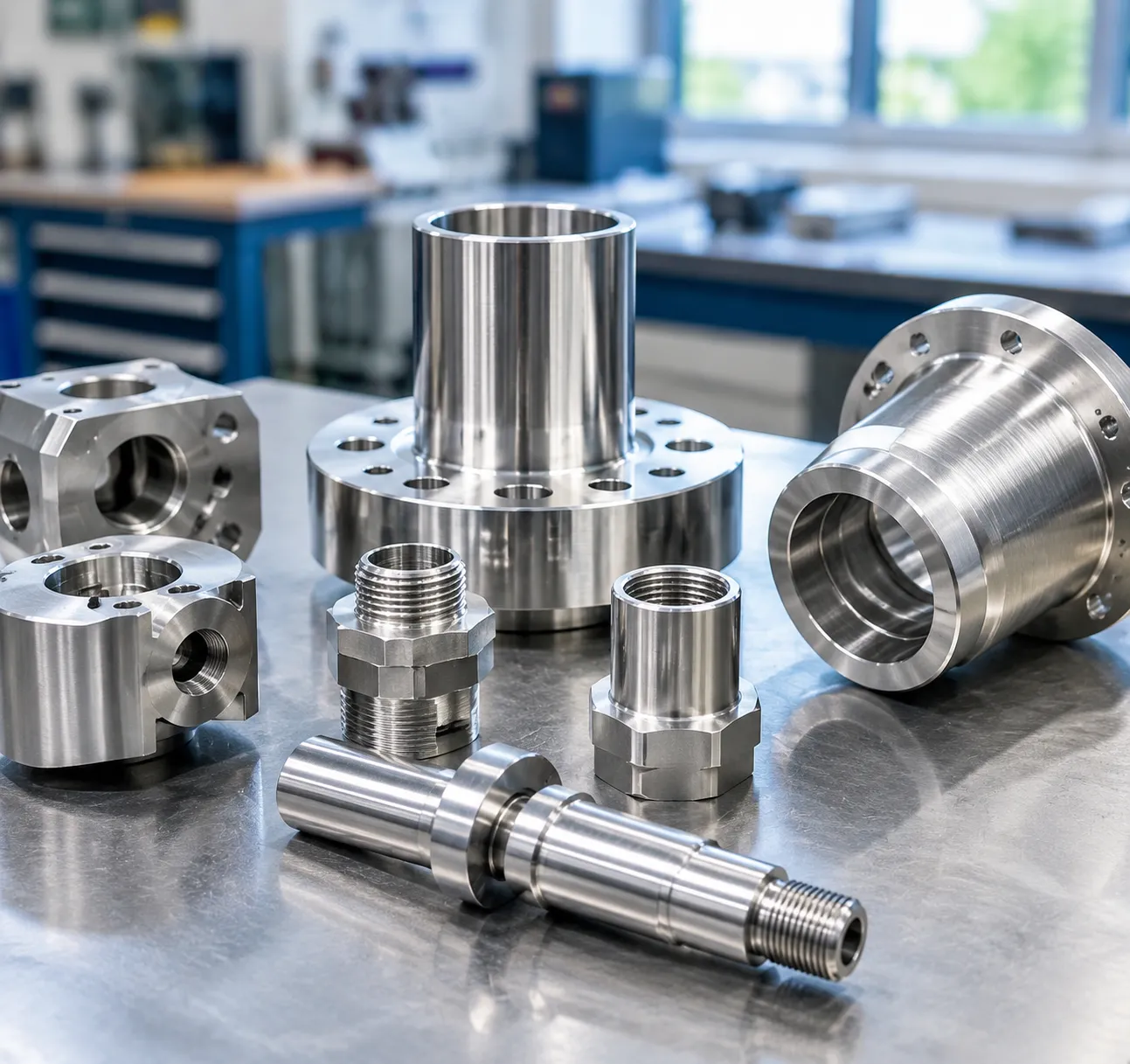
When we manufacture heavy-duty components for demanding industrial environments, cast stainless steel consistently outperforms alternative fabrication methods. Pouring molten metal directly into engineered molds allows us to solve severe operating challenges while keeping production runs lean and cost-effective.
Superior Corrosion and Oxidation Resistance
Our corrosion resistant steel castings naturally form a self-healing chromium oxide passive film that shields the underlying metal. This gives the components dependable durability against harsh chemicals, chlorides, and acids.
- Pitting and crevice protection: Grades like CF8M (cast 316) add molybdenum to block localized pitting in marine and chemical washdown environments.
- Oxidation barriers: High chromium levels prevent surface scaling and degradation under continuous atmospheric and chemical exposure.
- Uniform structural defense: The casting process eliminates welded seams that often serve as prime failure points for galvanic corrosion.
High-Temperature Strength and Thermal Fatigue Resistance
For elevated-temperature processing, we rely on specialized heat resistant casting alloys. These grades maintain their mechanical stability and load-bearing properties when subjected to aggressive thermal cycling.
- Creep resistance: Cast stainless microstructures resist permanent deformation under long-term mechanical stress at temperatures surpassing 800°C (1472°F).
- Thermal shock tolerance: High nickel and chromium additions prevent micro-cracking caused by rapid, repeated heating and cooling cycles.
- Structural stability: The alloy matrix preserves internal strength without embrittlement over extended operational lifespans.
Design Flexibility for Complex Near-Net-Shape Geometries
Casting allows us to produce complex external curves, cross-sectional transitions, and intricate internal channels that are impossible or cost-prohibitive to cut from solid wrought blocks.
Using advanced investment and precision casting services, we routinely cast smooth, contoured fluid passages directly into parts like pump impellers and valve bodies. This capability eliminates multi-piece assemblies, reduces mechanical joint failures, and delivers high-integrity parts straight from the mold.
Reduced Material Waste and Lower Post-Machining Costs
Machining high-alloy stainless steel from solid bar stock generates massive amounts of scrap metal and quickly wears down cutting tools. Casting solves this material loss right at the start.
| Production Factor | Traditional Billet Machining | Cast Stainless Steel Parts |
|---|---|---|
| Material Utilization | Often below 40% (high scrap rate) | Up to 90% near-net-shape efficiency |
| Machine Cycle Time | Heavy roughing and hogging required | Light finishing cuts on critical faces only |
| Tooling Wear | Severe tool breakdown on work-hardening alloys | Minimal tool engagement on pre-shaped features |
| Component Consolidation | Requires welding multiple machined parts | Cast as a single, seamless component |
By pouring parts to near-net shapes, we bypass heavy rough-machining operations entirely. Understanding these production differences through a clear forging and casting strength, cost, and tolerance breakdown highlights why casting remains the practical choice for reducing cycle times, cutting energy usage, and keeping final unit costs under control.
Key Industrial Applications of Cast Stainless Steel
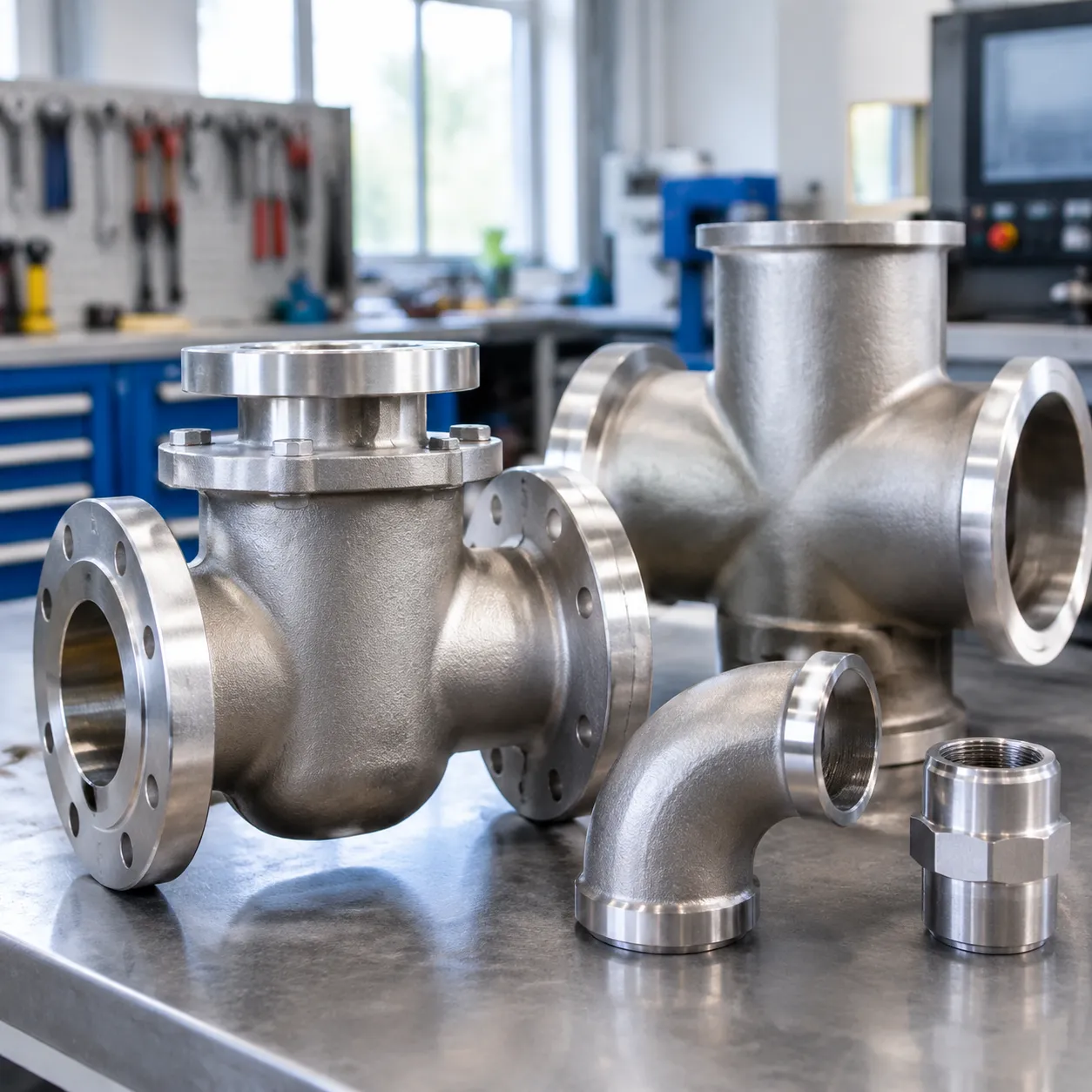
We rely on cast stainless steel whenever an application demands intricate internal geometries alongside relentless resistance to corrosion, pressure, and heat. Pouring molten metal into near-net shapes eliminates problematic weld joints and drastically cuts down CNC roughing time across heavy-duty industrial components.
Fluid Handling: Pumps, Impellers, and Valves
Pumps and flow systems rely on smooth, curved liquid passages to prevent turbulence and cavitation. Machining these internal hydraulic contours from solid bar stock is cost-prohibitive. We cast these parts to achieve optimized wall transitions and pressure-containing integrity. Core Components: Multi-stage split casings, cast stainless steel valve body components, check valves, and high-efficiency stainless steel pump impeller casting designs. Common Alloys: CF8 (304 equivalent) for fresh water; CF8M (316 equivalent) under ASTM A351 specification for industrial wastewater and process lines. Operating Value: Resists cavitation erosion, handles sudden pressure surges, and stops boundary-layer wall thinning.
Chemical and Petrochemical Processing
Aggressive acids, sour gas, and high operating pressures quickly destroy lower-grade metals. For critical containment vessels and fluid lines, we use corrosion resistant steel castings to ensure monolithic strength without weak heat-affected weld zones. When building heavy-wall processing bodies, our specialized stainless steel sand casting services produce dense, pressure-tight parts that pass strict volumetric testing. Core Components: Reactor vessel ports, pipeline strainers, heat exchanger manifolds, and flowmeter housings. Common Alloys: CF3M, high-nickel alloys (such as CN7M / Alloy 20), and Hastelloy-equivalent cast grades. Operating Value: Resists intergranular corrosion, nitric acid, and sulfuric exposure without wall degradation.
Marine Hardware and Seawater Exposure
Chloride-saturated splash zones and continuous immersion create severe pitting and crevice corrosion issues. We produce robust structural hardware capable of surviving decades in direct ocean environments. Core Components: Propeller struts, deck cleats, rudder stocks, underwater discharge nozzles, and reverse osmosis desalination manifolds. Common Alloys: Duplex cast stainless steel (like CD4MCu / 2205 equivalents) and molybdenum-stabilized austenitic alloys. Operating Value: Delivers double the mechanical yield strength of standard austenitic alloys while resisting chloride stress corrosion cracking (CSCC).
| Industry | Primary Cast Components | Standard Cast Grade | Main Operating Benefit |
|---|---|---|---|
| Fluid Handling | Valve bodies, pump volutes, impellers | CF8, CF8M (ASTM A351) | Cavitation resistance & hydraulic efficiency |
| Petrochemical | Manifolds, pipeline tees, filter housings | CF3M, CN7M (Alloy 20) | High-pressure chemical containment |
| Marine | Desalination heads, struts, thru-hulls | Duplex CD4MCu / 2205 | Extreme chloride pitting resistance |
| Sanitary / Pharma | Mixer impellers, separator bowls | CF3, CF3M (Low Carbon) | Non-porous, CIP chemical resistance |
| Aerospace / Auto | Turbocharger housings, exhaust flanges | Martensitic / HK Alloys | Thermal fatigue & oxidation resistance |
Food, Beverage, and Sanitary Machinery
Food safety standards leave zero room for metal contamination, surface pitting, or bacteria traps. Cast stainless steel provides the cleanability necessary to survive daily caustic washdowns and clean-in-place (CIP) steam sanitization. Core Components: Food processing pump volutes, sanitary homogenizer bodies, centrifugal separator bowls, and filling machine nozzles. Common Alloys: Low-carbon CF3 and CF3M to prevent carbide precipitation during post-cast fabrication. Operating Value: Fully compatible with surface passivation and electropolishing, resulting in clean, hygienic contact faces.
Automotive and Aerospace Structural Components
High mechanical loads combined with extreme temperature swings require structural parts that resist warping, creep, and oxidation. Core Components: Turbocharger turbine housings, exhaust downpipe collectors, flight control pivot brackets, and rocket fuel propellant fittings. Common Alloys: Martensitic CA15/CA40, precipitation-hardening CB7Cu-1 (17-4 PH equivalent), and heat resistant casting alloys (such as HK and HP series). Operating Value: Maintains dimensional stability and structural strength under cyclical thermal shocks exceeding 800°C (1472°F).
Cast Stainless Steel vs. Wrought Stainless Steel
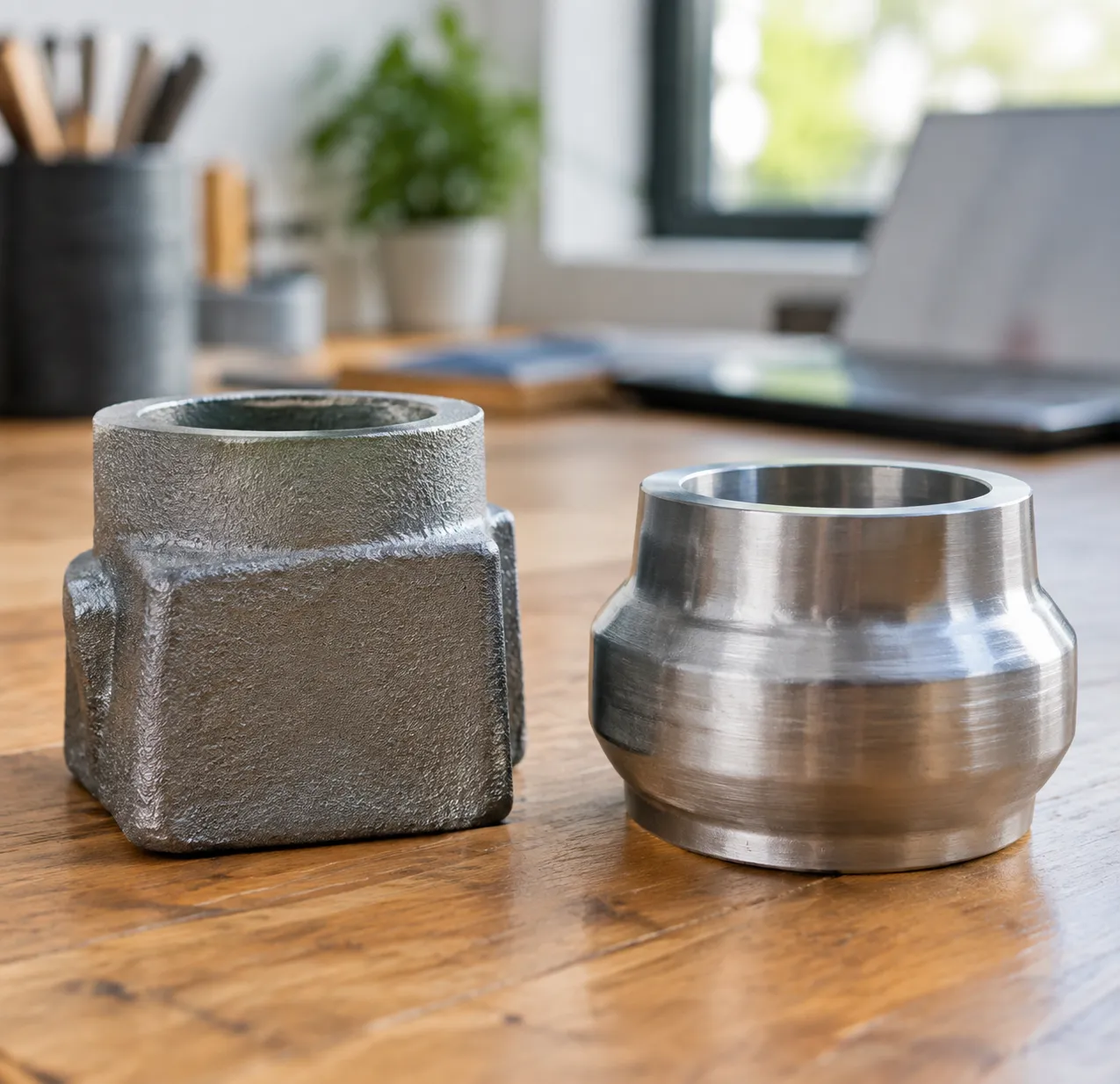
When choosing between cast stainless steel and wrought alloys (like forged, rolled, or extruded stock), the decision comes down to part geometry, mechanical demands, and overall production volume. Both forms deliver reliable corrosion resistance, but their manufacturing methods create distinct metallurgical and economic differences.
| Property / Parameter | Cast Stainless Steel | Wrought Stainless Steel |
|---|---|---|
| Material Structure | Isotropic (uniform strength in all directions) | Anisotropic (directional grain flow) |
| Tensile & Yield Strength | Slightly lower to comparable | Typically 5% to 15% higher |
| Elongation & Ductility | Moderate | Higher elongation and impact toughness |
| Internal Porosity Risk | Low to moderate (controlled by foundry practice) | Virtually zero porosity |
| Design Complexity | High (internal passages, complex contours) | Low to moderate (limited by CNC machining access) |
| Tooling & Setup Cost | Initial mold/pattern tooling required | Lower setup cost for simple bar/plate machining |
| Material Scrap Rate | Near-net shape (minimal scrap) | High scrap rate when machining complex shapes |
Mechanical Properties: Strength and Elongation
Wrought stainless steels undergo extensive rolling or forging, which compresses the grain structure and increases both tensile strength and fatigue resistance along the grain line. However, this creates directional properties—wrought parts are stronger along the rolling direction than across it.
In contrast, cast stainless steel provides isotropic mechanical properties. Its strength is uniform in every direction, making it ideal for multidirectional load components like pump impellers and pressure housings. While cast grades generally have slightly lower elongation values than their wrought counterparts, proper heat treatment brings their yield and tensile strengths to nearly identical levels.
Microstructure and Porosity
- Grain Structure: Wrought materials feature a fine, elongated grain structure resulting from mechanical deformation. Castings possess a dendritic, equiaxed grain structure formed during molten solidification.
- Internal Integrity: High-quality precision stainless steel castings utilize precise gating, risering, and degassing methods to minimize shrinkage porosity and gas inclusions, ensuring parts meet stringent pressure-vessel standards.
Surface Finish and Dimensional Tolerances
- Investment Casting: Yields tight dimensional tolerances (CT4–CT6 per ISO 8062) and smooth surface finishes (Ra 3.2–6.3 µm / 125–250 RMS), requiring only minimal final machining on critical mating surfaces.
- Wrought Bar/Plate Machining: Achieves ultra-tight dimensional tolerances straight off CNC mills, but requires extensive machining cycles and generates substantial material waste when shaping complex components.
Cost, Tooling, and Lead Times
For simple geometries or prototype runs under ten units, machining directly from wrought stock is often faster and avoids pattern costs.
For complex geometries, thin walls, or production volumes over 50 units, casting drastically reduces material waste and cutting time. Working with an experienced sand casting manufacturer for custom metal parts or investment foundry provides high near-net-shape accuracy, significantly lowering total part cost over the product lifecycle.
Secondary Operations and Quality Control for Cast Stainless Steel

Pouring molten metal into a mold is only the first step. To transform raw cast stainless steel into mission-critical components, we apply rigorous secondary processing and quality verification. These steps eliminate microstructural flaws, achieve exact dimensional tolerances, and ensure maximum corrosion resistance.
Heat Treatment: Restoring Metallurgical Integrity
As-cast stainless steel contains segregation and carbide precipitation at the grain boundaries, which lowers corrosion resistance and ductility. We use tailored thermal cycles to stabilize the material:
- Solution Annealing: Standard for austenitic alloys (CF8, CF8M). We heat parts to 1050°C–1150°C (1920°F–2100°F) and rapid-quench in water. This dissolves chromium carbides back into the matrix, restoring full corrosion resistance.
- Quenching and Tempering: Used for martensitic grades (CA15, CA40). Rapid cooling forms hard martensite, followed by controlled reheating to balance yield strength, toughness, and wear resistance.
- Stress Relieving: Low-temperature heating relieves residual stresses from rapid cooling or heavy section transitions without altering the microstructure.
Non-Destructive Testing (NDT) Methods
We verify the internal soundness and surface integrity of every critical cast without damaging the part.
| Inspection Method | Target Defects | Application |
|---|---|---|
| Dye Penetrant (PT) | Surface cracks, pinholes, cold shuts | 100% check on critical sealing faces and high-stress points |
| Radiographic Testing (RT) | Internal shrinkage, gas porosity, slag inclusions | Structural verification for pressure vessels and valve bodies |
| Ultrasonic Testing (UT) | Subsurface voids, laminar tears, wall thickness | Heavy-section sand castings and centrifugal cast tubes |
| Hydrostatic Testing | Through-wall leaks and structural porosity | Pressure-retaining fluid handling parts (pumps, valves) |
CNC Precision Machining Tolerances
While near-net-shape casting drastically cuts raw material waste, mating faces, threads, and seal grooves demand tighter boundaries. Combining our foundry work with high-capability precision casting and CNC machining allows us to bridge the gap between raw foundry outputs and sub-millimeter engineering demands:
- As-Cast Geometry: Typically holds general tolerances per ISO 8062 CT4–CT6 for investment castings.
- Post-Machined Features: We achieve tight tolerances down to ±0.01 mm (±0.0004 in) on critical bearing journals, flange faces, and internal threads.
- Tooling Strategy: Stainless steel work-hardens rapidly. We use rigid multi-axis machining centers, high-pressure coolant, and coated carbide tooling to maintain stable surface finishes (Ra 0.8 µm / 32 µin or better).
Chemical Surface Treatments: Pickling and Passivation
Machining, grinding, and thermal cycles leave free iron, heat tint, and scale on the surface. If left untreated, these particles cause localized pitting.
- Pickling: An acid bath (typically nitric-hydrofluoric acid) strips away high-temperature scale, weld discoloration, and the iron-depleted sub-layer.
- Chemical Passivation: Treating parts with nitric or citric acid formulations forces the rapid growth of an ultra-thin, chemically inert chromium oxide film across the entire surface.
- Electropolishing: An electrochemical process that smooths microscopic peaks. It reduces surface roughness, prevents bacterial buildup in sanitary applications, and maximizes pitting resistance in marine environments.
How to Select the Right Cast Stainless Steel Grade for Your Project
Selecting the proper cast stainless steel grade comes down to matching your operating environment with the right alloy chemistry. When we help engineers spec materials for industrial projects, we evaluate four core operating parameters to ensure the part delivers maximum service life without unnecessary raw material costs. For a broader metallurgical comparison, check our casting alloy properties and material selection guide to cross-reference mechanical limits across different alloy families.
Evaluating Chemical Exposure and Corrosion Risks
The primary driver for choosing corrosion resistant steel castings is the chemical profile of the working fluid or environment:
- Mild media and potable water: Standard austenitic grades like CF8 (304 cast equivalent) perform reliably in clean water, atmospheric exposure, and dilute organic acids.
- Chlorides, marine, and acidic environments: Specify CF8M cast grade (316 cast equivalent). The addition of 2% to 3% molybdenum prevents pitting and crevice corrosion caused by salt spray and harsh halides.
- Aggressive industrial acids and sour crude: Step up to duplex cast stainless steel (such as CD4MCu or 2205 cast equivalents). These alloys offer high Pitting Resistance Equivalent Numbers (PREN) alongside superior resistance to stress corrosion cracking.
Operating Temperature and Pressure Requirements
Temperature extremes dictate whether an alloy retains ductility or experiences catastrophic brittle fracture:
- Sub-zero and cryogenic temperatures: Austenitic grades under ASTM A351 (such as CF3 and CF8) maintain impact toughness without undergoing a ductile-to-brittle transition, even down to -196°C (-320°F).
- High-pressure, ambient services: Heavy-wall valve bodies and pressure vessels often run CF8M or martensitic grades to meet strict pressure-containment standards.
- High-temperature and thermal cycling: If your components run above 540°C (1000°F), we utilize specialized heat-resistant casting alloys like HK or HT grades, which resist scaling and retain creep-rupture strength.
Mechanical Load and Impact Resistance Demands
Corrosion resistance means nothing if the component deforms or cracks under operational stress:
- High tensile loads and wear: Martensitic grades like CA15 (410 equivalent) and CA40 can be heat-treated to high hardness levels, making them ideal for cutting edges, turbine runners, and wear plates.
- High strength combined with corrosion protection: Precipitation-hardening grades such as CB7Cu-1 (17-4 PH cast equivalent) deliver yield strengths exceeding 100 ksi while resisting corrosive fluids.
- Continuous shock loading and cyclic fatigue: Duplex alloys provide roughly double the yield strength of standard austenitic cast stainless steel, allowing for thinner part walls without compromising fatigue limits.
Grade Selection Matrix: Performance vs. Cost
| Casting Grade | Typical Equivalent | Primary Property Benefit | Target Industrial Application | Relative Raw Cost |
|---|---|---|---|---|
| CF8 | AISI 304 | General corrosion resistance | Food machinery, sanitary fittings | Standard |
| CF8M | AISI 316 | Chloride & pitting resistance | Pump casings, chemical valves | Moderate |
| CA15 | AISI 410 | High hardness, heat-treatable | Steam valves, turbine blades | Low-Moderate |
| CD4MCu | Duplex 2205 | Extreme yield & erosion resistance | Desalination pumps, slurry impellers | High |
| CB7Cu-1 | 17-4 PH | High strength-to-weight ratio | Aerospace actuators, structural links | Moderate-High |
Budget Balance: Initial Casting Costs vs. Component Lifespan
Upfront material prices represent only a fraction of total lifecycle costs. While standard carbon steel or basic ferritic castings cost less initially, premature failure in corrosive or abrasive conditions leads to unscheduled plant downtime, labor-intensive repairs, and lost production. Opting for a tailored cast stainless steel grade like CF8M or duplex steel amortizes the upfront tooling and material investment over years of maintenance-free service. Aligning the exact alloy chemistry to your system pressure, mechanical shock risks, and fluid makeup ensures an optimal balance between initial production budget and long-term operating efficiency.
Frequently Asked Questions About Cast Stainless Steel
Is cast stainless steel magnetic?
Yes, many cast stainless steel components show slight to strong magnetic responses. While wrought 300-series alloys are non-magnetic, our cast stainless steel foundry processes intentionally balance austenitic grades (like CF8 and CF8M) with 5% to 15% delta ferrite. This prevents hot cracking during solidification and improves weldability.
- Austenitic Castings (CF8, CF8M, CF3): Slightly to moderately magnetic due to residual delta ferrite.
- Martensitic & Ferritic Castings (CA15, CB30): Strongly magnetic.
- Duplex Castings (CD4MCu): Strongly magnetic due to their 50/50 austenite-ferrite structure.
What is the difference between Grade 316 and CF8M cast stainless steel?
While Grade 316 is a wrought specification, CF8M cast grade is its casting counterpart covered under the ASTM A351 specification.
| Feature | Wrought 316 | Cast CF8M |
|---|---|---|
| Manufacturing Method | Rolling, forging, extrusion | Precision investment or sand casting |
| Microstructure | 100% Fully Austenitic | Austenite with 5–15% Delta Ferrite |
| Silicon Content | Up to 0.75% max | Up to 1.5% or 2.0% (enhances molten flow) |
| Tensile Strength | Typically higher ductility | Equal or higher yield strength |
Can cast stainless steel parts be welded easily?
Yes. Austenitic stainless steel cast alloys weld exceptionally well using standard TIG (GTAW) and MIG (GMAW) processes.
- Low-carbon grades (CF3, CF3M): Ideal for welded assemblies because they prevent chromium carbide precipitation along grain boundaries.
- Heat treatment post-welding: We recommend a final solution annealing cycle for critical fluid-handling parts to dissolve carbides and restore full corrosion performance.
Why does cast stainless steel sometimes rust?
Cast parts corrode or develop surface discoloration under specific conditions:
- Surface Iron Contamination: Free iron particles left from machining tools or blast media trigger localized surface rust.
- Improper Passivation: Skipping the chemical pickling and passivation of stainless castings leaves raw surface areas unprotected.
- Chloride Pitting: Operating standard austenitic castings in high-chloride marine environments without sufficient molybdenum. For these aggressive environments, duplex stainless steel investment casting provides the pitting resistance required.
- Sensitization: Slow cooling through the 800°F–1500°F (425°C–815°C) range causes chromium depletion at the grain boundaries.
What are standard dimensional tolerances for investment cast stainless steel?
Our stainless steel casting services for precision parts follow international investment casting standards (such as ISO 8062 or ICMA standard tolerance grades).
- General Linear Tolerances: Typically ±0.005 inches per inch (±0.13 mm per 25 mm).
- Critical Dimensions: Can be held to ±0.003 inches (±0.075 mm) with dedicated tooling and straightening operations.
- Surface Roughness: As-cast finishes range from 125 to 250 RMS (3.2 to 6.3 µm Ra), reducing the need for primary CNC roughing.
 English
  Russian
  German