
2026年10月13日
Compare investment casting vs sand casting to discover key differences in tolerance surface finish cost and volume for your parts

What Is Investment Casting vs Sand Casting?
When our foundry team evaluates a new component drawing, the choice between investment casting vs sand casting comes down to geometry, volume, tolerance requirements, and total production cost. Both techniques form metal parts by pouring molten alloy into a mold cavity, but their mold materials, tooling approaches, and structural results differ significantly.
How the Lost-Wax Investment Casting Process Works
Investment casting, also known as the lost wax casting process, relies on expendable wax patterns to form precision parts:
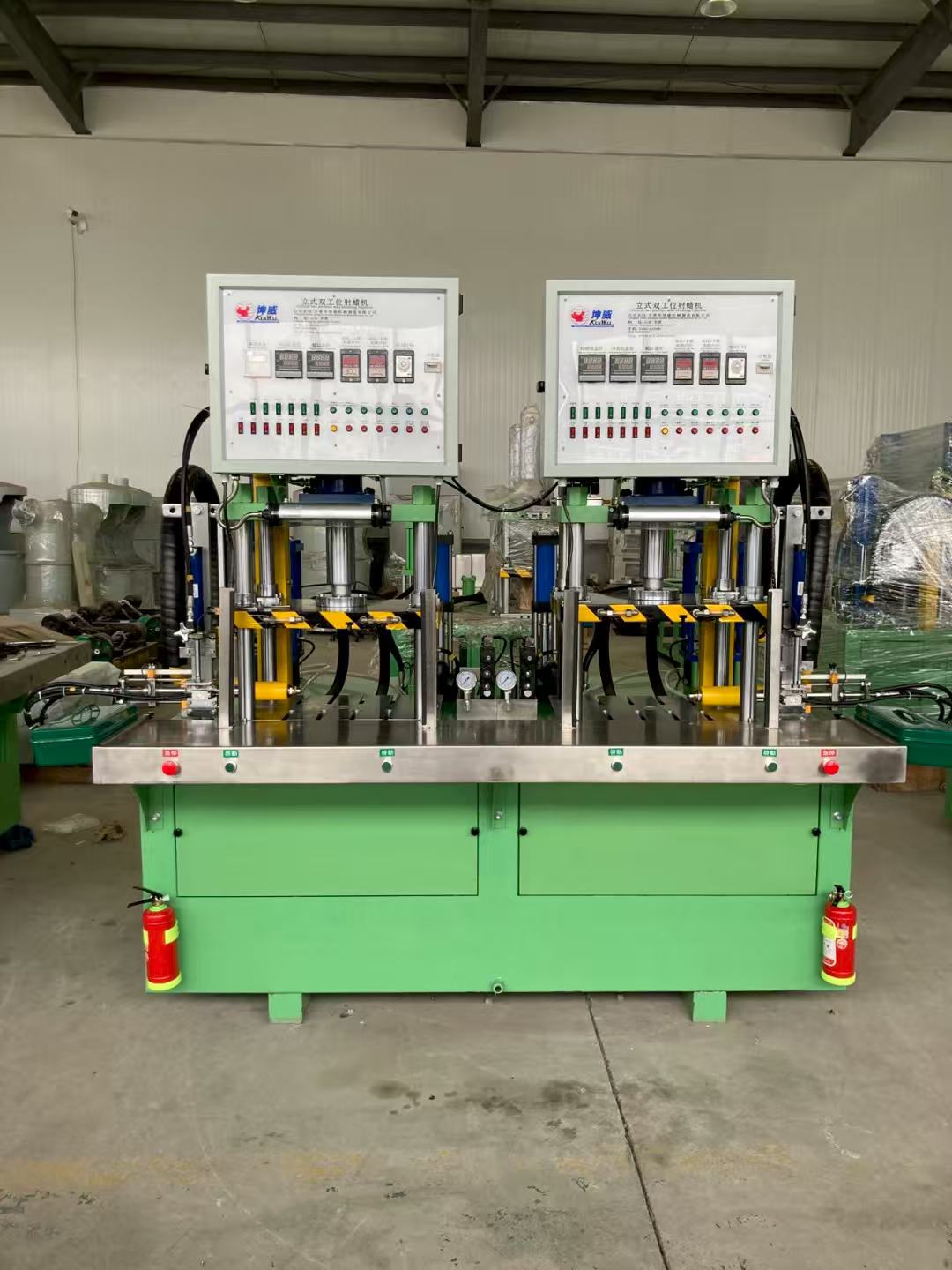
- Pattern Injection: We inject molten wax into a precision metal tooling die to create an exact replica of the part.
- Tree Assembly: Multiple wax patterns attach to a central wax runner system to form a casting tree.
- Ceramic Shell Mold: We repeatedly dip the assembly into liquid ceramic slurry and coat it with refractory stucco, allowing it to harden into a rigid shell.
- Dewaxing and Firing: We melt the wax out in an autoclave, then fire the hollow ceramic shell at high temperatures to burn off residual wax and cure the ceramic.
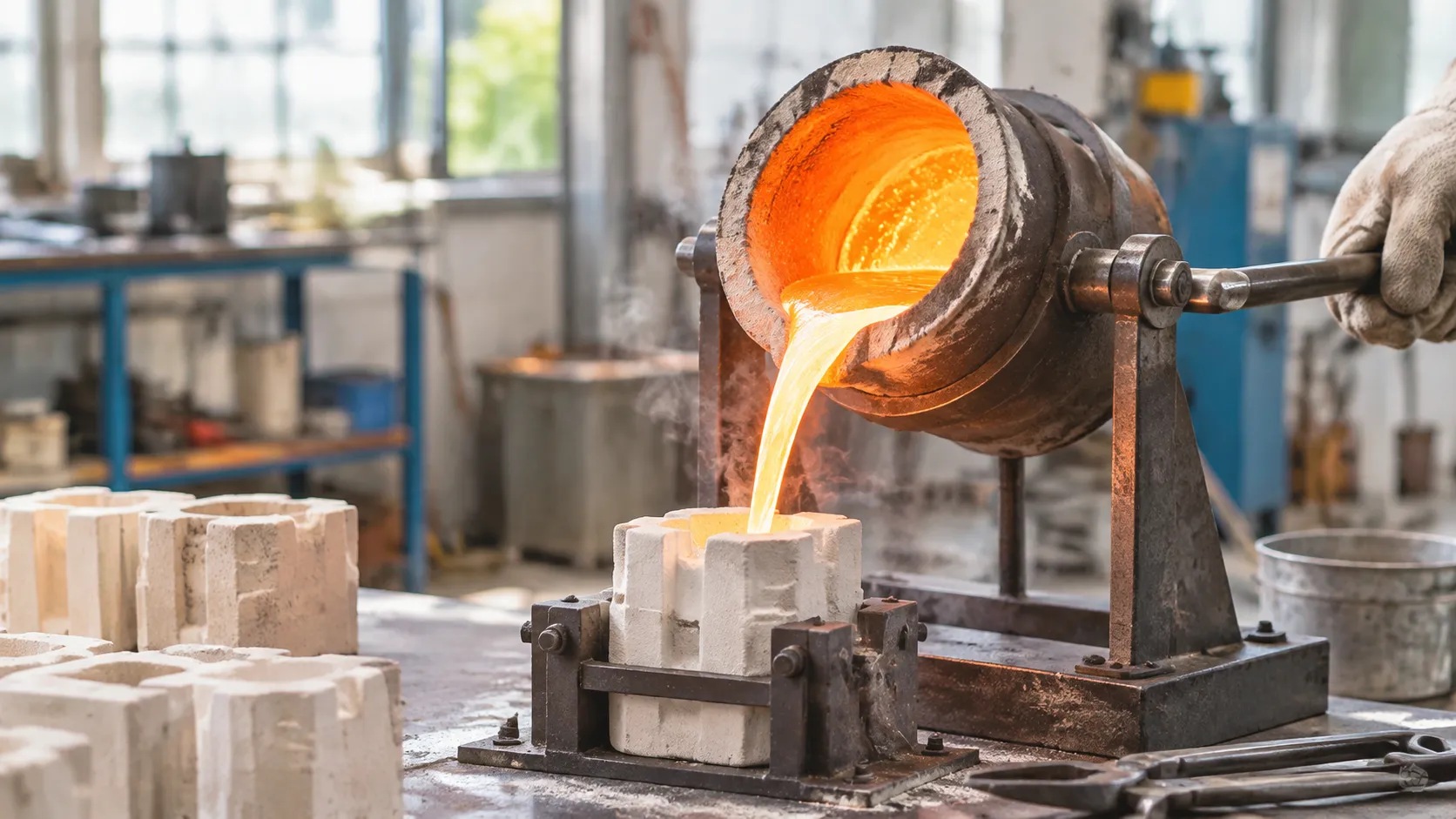
- Pouring and Shakeout: We pour molten metal directly into the preheated shell. Once cooled, we mechanically break the ceramic shell away to retrieve the near net shape casting.
How Traditional Sand Mold Casting Works
Traditional sand mold casting utilizes compacted sand bonded with clay or chemical resins to shape larger, structural components:
- Pattern Production: We machine a reusable pattern from wood, resin, or metal representing the exterior shape of the part.
- Mold Preparation: The pattern is placed into a flask. We pack green sand (sand mixed with bentonite clay and water) or resin-bonded sand tightly around it to create the mold halves (cope and drag).
- Core Placement: If the part features internal hollows, we insert pre-baked sand cores into the mold cavity.
- Pouring and Shakeout: The two mold halves are clamped together, and molten metal is poured into the gating system. After solidification, the sand mold is vibrated apart to release the rough casting.
Metallurgical and Structural Differences
The mold material directly dictates cooling rates, grain growth, and internal soundness:
| Structural Parameter | Investment Casting | Sand Casting |
|---|---|---|
| Mold Thermal Conductivity | Insulating preheated ceramic shell | High thermal mass, moist or bonded sand |
| Cooling & Solidification Rate | Slower, controlled cooling | Rapid heat extraction through sand walls |
| Grain Structure | Uniform, fine-to-medium equiaxed grain distribution | Variable grain size; finer at chill zones, coarser at core |
| Porosity Risk | Low gas porosity; controlled shrinkage via hot mold feeding | Higher risk of sand inclusions, gas entrapment, and shrinkage voids |
| Internal Cleanliness | Superior metal purity and high structural density | Standard structural density; requires careful gating to prevent sand wash |
Dimensional Tolerance and Surface Finish Comparison: Investment Casting vs Sand Casting

When our team evaluates a component drawing, dimensional accuracy and as-cast texture determine whether you save money or spend it all in the machine shop. In the debate of investment casting vs sand casting, the differences in precision and surface finish are stark.
Tolerance Capabilities and Precision Standards
Investment casting delivers significantly tighter linear tolerances straight out of the ceramic mold. We routinely hold linear dimensional tolerances within ±0.005 in/in (±0.13 mm per 25 mm) or ISO CT4–CT6 standards. This consistency allows us to cast bolt holes, thin slots, and mounting faces directly to print without post-processing.
Sand casting works with expendable sand molds that shift slightly during ramming, pouring, and cooling. Standard green sand setups generally yield tolerances around ±0.030 in to ±0.060 in (±0.8 mm to ±1.5 mm) or ISO CT10–CT13 standards. If your part features tight mating fits or locating faces, standard sand casting cannot hold these dimensions without secondary processing.
| Metric | Investment Casting (Lost Wax) | Sand Casting (Green Sand / Resin) |
|---|---|---|
| Typical Linear Tolerance | ±0.005 in/in (±0.13 mm/25 mm) | ±0.030 in to ±0.060 in (±0.8 mm to ±1.5 mm) |
| Tolerance Class (ISO 8062) | CT4 – CT6 | CT10 – CT13 |
| Surface Roughness (Ra) | 1.6 – 3.2 µm (63 – 125 µin) | 6.3 – 12.5 µm (250 – 500 µin) |
| Draft Angle Required | 0° to 0.5° (often none) | 1.0° to 3.0° standard |
| Machining Stock Allowance | 0.5 mm – 1.0 mm (0.020 – 0.040 in) | 2.5 mm – 5.0 mm (0.100 – 0.200 in) |
Surface Roughness (Ra Values) and Aesthetic Quality
- Investment Casting: Yields a smooth, satin finish with surface roughness typically measured between Ra 1.6 and 3.2 µm (63 to 125 µin). The fine slurry used in ceramic shells reproduces intricate details, cast-in part numbers, and smooth fluid passages that need minimal blasting or polishing.
- Sand Casting: Produces a distinctly granular, matte texture ranging from Ra 6.3 to 12.5 µm (250 to 500 µin) or rougher. Sand grain impressions and slight mold wash marks remain visible on non-machined walls. Meeting strict cosmetic requirements or dynamic fluid-flow criteria usually demands secondary grinding or shot blasting.
Machining Allowances and Secondary Finishing
The choice between processes heavily impacts your downstream CNC cycle times.
Because investment casting produces near-net-shape components, we apply a minimal machining allowance of 0.5 mm to 1.0 mm only to critical bearing bores or sealing surfaces. This drastically cuts down on material waste, tool wear, and machining setups.
In contrast, sand casting patterns require a generous stock allowance—often 2.5 mm to 5.0 mm or more—to ensure the cutter reaches sound metal beneath the rough cast skin and clears surface sand inclusions. Meeting rigorous casting quality standards for reliable metal parts on sand-cast components means factoring in added CNC roughing passes, dedicated clamping fixtures to handle draft angles, and longer finishing routines.
Design Flexibility and Geometry Complexity: Investment Casting vs Sand Casting
When we evaluate part geometry on the foundry floor, design complexity often decides the process immediately. The choice between investment casting vs sand casting comes down to how fine your details need to be and how much mass you are pouring.
Thin-Wall Capabilities, Deep Pockets, and Undercuts
Liquid slurry coats an expendable wax pattern in investment casting, allowing us to form complex internal passages, sharp edges, and zero-draft features. Traditional sand molds require a physical pattern pulled directly from packed sand, which demands draft angles and makes undercuts harder to execute.
- Internal Passages & Blind Pockets: Ceramic shell molds capture deep internal recesses and fine fluid passages without multi-piece assemblies.
- Draft Angles: Sand casting requires standard draft angles (typically 1° to 3°) so patterns release without damaging the mold walls. Investment molds melt away cleanly, requiring minimal to no draft.
- Undercuts and Fine Detail: Complex undercuts are routine when utilizing our investment and precision casting services for metal parts. In sand molds, undercuts require loose pieces or delicate core inserts that increase labor and tooling wear.
Minimum and Maximum Wall Thickness Limits
Wall thickness determines how molten metal flows and cools.
- Investment Casting: Delivers reliable thin-wall casting capabilities down to 1.5 mm (0.060 in) in localized areas, reducing dead weight on precision parts.
- Sand Casting: Needs heavier cross-sections, generally holding a minimum wall thickness of 3.0 mm to 5.0 mm (0.120 to 0.200 in) to avoid cold shuts and improper filling.
Weight Capacities: Miniature Components to Multi-Ton Parts
Physical scale defines the upper and lower limits of each method.
| Feature / Metric | Investment Casting (Lost Wax) | Sand Casting |
|---|---|---|
| Typical Weight Range | A few grams up to ~50 kg (110 lbs) | ~1 kg up to several metric tons |
| Minimum Wall Thickness | ~1.5 mm (0.060 in) | ~3.0 mm – 5.0 mm (0.120 – 0.200 in) |
| Internal Cavity Realization | Soluble wax cores, ceramic cores | Sand cores (adds joint lines and labor) |
| Draft Angle Needed | 0° standard | 1° to 3° minimum |
For compact, highly contoured components like impellers, brackets, and valve internals, investment casting eliminates unnecessary bulk. For structural frames, counterweights, and massive machine beds, partnering with a dependable sand casting manufacturer for custom metal parts is the practical route to deliver high-tonnage capacity at a lower tooling entry point.
Material Selection and Alloy Compatibility: Investment Casting vs Sand Casting

Choosing the right metal depends directly on how the mold material handles thermal shock, cooling rates, and chemical reactivity. In our foundry operations, we cast both ferrous and non-ferrous alloys across both methods, but their metallurgical behaviors and defect profiles differ significantly.
Common Metals in Investment Casting
Investment casting uses an inert ceramic shell mold that withstands high pouring temperatures with minimal chemical reaction. We use this method when high alloy purity and clean grain structures are mandatory:
- Stainless Steels: 304, 316, 17-4 PH, and duplex grades for corrosion-resistant pump impellers and marine hardware.
- Carbon and Low-Alloy Steels: 4140, 8620, and WCB for structural components needing precise heat treatment.
- Nickel and Cobalt Superalloys: Inconel and Hastelloy grades poured under vacuum or controlled atmosphere for extreme heat resistance.
- Non-Ferrous Alloys: Aluminum and copper-base alloys for lightweight brackets and fluid components. Review our aluminum alloy casting guide for die, sand, and investment for specific alloy grade comparisons.
Alloy Versatility and Heavy Grades in Sand Casting
Sand molds accommodate almost every commercial melt, especially metals that require massive pour volumes or specialized graphite flakes for vibration dampening:
- Cast Irons: Gray iron (Class 30, Class 40) and ductile iron (65-45-12, 80-55-06) for engine blocks, machine bases, and heavy housings.
- Heavy Carbon Steels: Ideal for large structural components where raw section thickness offsets cosmetic demands.
- Bronzes and Aluminum: Aluminum-bronze and manganese-bronze for large wear rings, bushings, and marine hardware.
For detailed chemical and mechanical baselines across both metal groups, refer to our comprehensive casting alloy properties and material selection guide.
Mechanical Properties, Tensile Strength, and Porosity Risks
| Metallurgical Parameter | Investment Casting | Sand Casting |
|---|---|---|
| Cooling & Solidification Rate | Slower in preheated ceramic shells, yielding uniform, fine-to-medium grain structures. | Slower in sand molds; heavy sections develop coarse grain structures unless chills are applied. |
| Tensile & Yield Strength | Consistently higher due to lower inclusions and tighter microstructural uniformity. | Standard to high; mechanical strength varies across thin versus heavy wall sections. |
| Primary Porosity Risks | Shrinkage porosity in isolated heavy sections; minimal gas porosity due to shell permeability. | Gas entrapment from binder breakdown, sand inclusions, and pinhole porosity. |
| Pressure Tightness | High reliability; excellent for thin-walled pressure vessels and valve bodies. | Moderate; critical pressure-tight sealing surfaces usually require added machining stock. |
Our foundry minimizes casting porosity defects by matching the gating geometry and feed paths to the chosen alloy. When high tensile strength, thin walls, and leak-free reliability are critical without heavy finish machining, investment casting is the safer metallurgical route. For massive section thicknesses, vibration dampening, and high-volume iron applications, sand casting remains the industry standard.
Cost Comparison: Investment Casting vs Sand Casting Tooling and Machining
When evaluating investment casting vs sand casting, looking only at the foundry quote will mislead your budget. Total manufacturing cost combines initial tooling, per-piece production runs, and the machining time needed to turn raw metal into finished components.
Upfront Pattern and Mold Tooling Expenses
Upfront tooling costs casting projects require vary substantially based on mold complexity:
- Investment Casting: Requires machined aluminum or steel dies to produce expendable wax patterns. Tooling demands higher upfront capital, but these metal dies last for tens of thousands of cycles with minimal wear.
- Sand Casting: Relies on wood, resin, or metal patterns packed into sand molds. Initial pattern costs are considerably lower, making entry costs manageable for new designs or low-run projects.
Unit Price Breakdown Across Production Volumes
Part volume dictates where each process becomes financially viable. The table below illustrates how casting unit cost calculations shift across production scales:
| Production Volume | Investment Casting Unit Cost | Sand Casting Unit Cost | Cost Advantage |
|---|---|---|---|
| Low Volume (1 – 100 pcs) | High (tooling amortization spikes the per-part cost) | Low to Moderate (low tooling overhead absorbs small runs easily) | Sand Casting |
| Mid Volume (100 – 1,000 pcs) | Moderate (tooling costs begin spreading out across parts) | Moderate (manual mold prep keeps labor costs steady) | Tie / Application-dependent |
| High Volume (1,000+ pcs) | Low (automated wax injection and high-yield clusters lower labor) | Moderate (labor and cycle times remain consistent) | Investment Casting |
Total Cost of Ownership: Near-Net Shape Savings vs Rough-Cast Machining
A direct machining allowance comparison shows where investment casting reclaims its upfront tooling cost:
- Sand Casting Raw Stock: Typically leaves 3 mm to 6 mm of excess stock. Every critical dimension, mating face, and hole requires roughing, semi-finishing, and final CNC machining. This extra material increases chip waste, cycle times, and cutting tool wear. Review our sand mold casting guide on precision materials and CNC machining to evaluate these finishing trade-offs.
- Investment Casting Precision: Delivers near net shape casting with standard machining allowances under 1 mm to 1.5 mm. Intricate pockets, thin walls, and complex contours cast directly to size, often eliminating secondary rough milling altogether.
When part designs require extensive multi-axis machining from a rough blank, the lower per-part cycle times of investment casting offset higher tooling expenses rapidly. For structurally simple, heavy-section parts with minimal precision faces, sand casting delivers lower total acquisition costs.
Production Lead Times and Manufacturing Speed: Investment Casting vs Sand Casting

Delivery schedules often dictate the choice between casting methods. In our foundry operations, lead times boil down to two distinct phases: upfront tooling fabrication and per-batch manufacturing velocity.
Pattern Creation and Mold Setup Turnaround Times
- Sand Casting Setup: Tooling turnaround is significantly faster. Creating wood, urethane, or aluminum patterns takes roughly 1 to 3 weeks. Once patterns are ready, our team uses them directly to pack molds, detailed in our how to make a sand cast mold guide.
- Investment Casting Setup: Requires hard tooling—typically precision-machined aluminum or steel dies to inject wax patterns. Die fabrication takes 4 to 8 weeks. Additionally, building the ceramic shell mold requires repeated dipping and drying cycles over several days before pouring can begin.
Rapid Prototyping and Short-Run Feasibility
When you need physical samples for fit checks or low-volume casting production, turnaround time depends on whether you invest in hard tooling:
- 3D-Printed Sand Molds: Bypasses hard tooling entirely, delivering cast iron or steel parts in under 7 to 10 days. Ideal for low-volume runs where tooling cost cannot be justified.
- Direct Wax 3D Printing: In the lost wax casting process, 3D printing wax or polymer patterns skips the injection die stage. While it delivers near-net-shape accuracy within 2 to 3 weeks, high-temperature burnout and ceramic drying still add processing days.
High-Volume Manufacturing Throughput and Scalability
Once tooling is approved, cycle speeds shift depending on batch size:
| Production Metric | Sand Casting | Investment Casting |
|---|---|---|
| Initial Tooling Lead Time | 1–3 Weeks | 4–8 Weeks |
| Mold Preparation Time | Minutes (Automated green sand lines) | Days (Multi-layer slurry coating & drying) |
| Rapid Prototype Lead Time | 5–10 Days (3D-printed sand) | 10–20 Days (Printed wax patterns) |
| Mass-Production Scalability | Extreme speed for simple geometries | High output via multi-cavity wax tree assemblies |
| Post-Cast Bottlenecks | Extensive CNC machining & gate grinding | Minimal machining, shell knockout & cut-off |
Automated sand casting lines produce hundreds of molds per hour, making them unbeatable for heavy tonnage and raw component output. Conversely, investment casting takes longer per mold cycle due to ceramic curing, but it cuts down total project lead time by drastically reducing downstream CNC machining queues.
Industrial Applications and Best Use Cases: Investment Casting vs Sand Casting

Selecting between investment casting and sand casting comes down to component geometry, structural demands, and volume. At our foundry, we analyze functional requirements early to ensure you balance tooling investment with post-machining costs.
When Precision Investment Casting Is the Optimal Choice
Precision investment casting delivers tight tolerances and exceptional surface finish right out of the mold. We recommend this process when:
- Complex geometries rule out machining: Components feature internal passages, thin cross-sections, or blind internal cavities.
- Near-net shape is mandatory: Eliminating secondary CNC operations saves labor and material costs on high-value alloys.
- Surface aesthetics matter: Liquid-handling surfaces or visible assemblies require low surface roughness without extra polishing.
- Weight reduction is critical: Thin-wall sections down to 1.5 mm allow for optimized, lightweight part profiles.
We frequently supply precision metal casting parts for industrial applications requiring zero draft angles, intricate logos, and tight assembly clearances.
When Heavy-Duty Sand Casting Is the Right Fit
Sand mold casting remains the standard for massive structural components and cost-sensitive, heavy-duty machinery. Sand casting is the ideal manufacturing path when:
- Handling extreme weight: Parts exceed 50 kg and scale into multi-ton castings where ceramic shell methods become cost-prohibitive.
- Upfront tooling budgets are lean: Wood, aluminum, or 3D-printed patterns lower initial capital expenditure compared to hardened metal dies.
- Walls are thick and robust: Heavy structural frames, housings, and counterweights do not require micro-level surface precision.
- Production cycles demand fast ramp-up: The green sand casting process provides rapid pattern modifications and quick turnaround times for low-to-medium runs.
Common Product Examples Across Key Industries
Both methods serve critical roles across heavy industry, transportation, and fluid handling:
| Industry Sector | Investment Casting Applications | Sand Casting Applications |
|---|---|---|
| Aerospace & Defense | Turbine blades, fuel system manifolds, sensor housings | Ground support brackets, heavy test fixtures |
| Automotive & Commercial Vehicles | Turbocharger wheels, rocker arms, stainless exhaust fittings | Engine blocks, transmission housings, ductile iron brake drums |
| Valves, Pumps & Fluid Handling | High-pressure impellers, sanitary valve bodies, metering gates | Large municipal pump casings, water utility pipeline flanges |
| Mining & Heavy Equipment | Wear-resistant locking pins, hydraulic valve components | Excavator counterweights, track links, crusher frames |
How to Choose: Investment Casting vs Sand Casting Decision Matrix
Choosing between investment casting vs sand casting comes down to balancing tooling capital, secondary machining hours, and annual production volumes. When we evaluate component drawings with mechanical engineers and procurement teams, we assess total finished part cost rather than raw casting purchase price alone.
Evaluating Volume vs. Tooling Costs
Initial pattern and die investments dictate your break-even point:
- Sand Casting Tooling: Relies on wood, resin, or aluminum patterns. Upfront tooling costs are low, making it budget-friendly for small runs, prototypes, and low-volume production (under 500 units annually). However, higher per-unit processing keeps unit prices flat at scale.
- Investment Casting Tooling: Requires precision-machined metal dies to inject wax patterns. Upfront tooling expenses are higher, but automated wax assembly and minimal secondary operations lower the per-piece cost for medium-to-high production runs (1,000+ units annually).
Dimensional Tolerances vs. Machining Labor Costs
Machining hours quickly erode any upfront savings gained from cheaper tooling.
Sand casting requires a generous machining allowance comparison—typically 3 mm to 6 mm—due to broader dimensional drift. That means extra machine cycle time, cutting tool wear, and higher labor overhead to achieve critical mating surfaces.
Investment casting achieves tight precision casting tolerances and exceptional as-cast surface finishes. Producing near net shape casting components directly from the ceramic mold routinely eliminates rough milling, turning, and grinding operations entirely.
| Selection Metric | Sand Casting Preferred | Investment Casting Preferred |
|---|---|---|
| Annual Volume | Low to medium (<500 to 1,000 pcs/yr) | Medium to high (>1,000 pcs/yr) |
| Tooling Budget | Strict budget constraints; fast setup | Capital allocated for dedicated tooling |
| Geometry & Walls | Simple profiles, heavy walls (>5 mm) | Complex features, thin walls (<3 mm), undercuts |
| Secondary Machining | Extensive CNC capability available in-house | Limited CNC capacity; near-net shape preferred |
| Surface Finish | Rough cast profile acceptable (high Ra) | Smooth surface profile required (low Ra) |
| Part Weight | Medium to heavy (up to several tons) | Miniature to medium components (under 50 kg) |
Step-by-Step Checklist for Component Buyers and Mechanical Engineers
Follow this workflow to determine the right production route:
- Calculate Fully Finished Part Cost: Add raw casting unit cost, amortized tooling per part, and secondary CNC machining labor together to find true total cost of ownership.
- Review Geometry and Wall Thickness: If the component features deep internal pockets, thin walls, or intricate lettering that cannot be drafted out of a sand mold, specify precision investment casting.
- Verify Material Specifications: Match alloy requirements to process capabilities early. For complex, corrosion-resistant components, consult our casting stainless steel guide for buyers and engineers to verify alloy pourability and finishing requirements.
- Evaluate CNC Machine Capacity: If your production floor or sub-tier machining supplier has a machine bottleneck, eliminate machining operations by shifting to investment casting.
- Establish Component Weight Requirements: For heavy structural bases, machine frames, and multi-ton housings, sand casting remains the industry standard.
Frequently Asked Questions About Investment Casting vs Sand Casting
Is Investment Casting Stronger Than Sand Casting?
In our foundry operations, we see that the base alloy composition defines theoretical tensile strength, but investment casting consistently delivers better real-world mechanical integrity.
- Porosity Control: Investment casting uses ceramic shell molds preheated before pouring, reducing premature solidification and trapped gas defects.
- Grain Uniformity: Controlled cooling in ceramic molds yields a finer, more predictable metallurgical grain structure compared to standard sand molds.
- Structural Integrity: Sand casting poses a higher risk of sand inclusions and surface micro-cracks, which can lower fatigue strength unless hot isostatic pressing (HIP) or rigorous inspection is applied.
Why Is Investment Casting More Expensive Than Sand Casting?
The cost difference stems from manual processing stages, consumables, and tooling requirements. When reviewing sand casting vs investment casting key differences, the higher unit cost of investment casting reflects several production factors:
- Multi-Step Mold Fabrication: Every investment casting cycle requires creating disposable wax patterns, applying multiple ceramic slurry dips, and dewaxing under high heat.
- Tooling Expense: Metal wax-injection dies require higher upfront machining budgets than standard wooden, resin, or aluminum patterns used in sand foundries.
- Processing Cycle: Ceramic shells require drying periods between dips, making the overall cycle time longer than rapid sand packing.
| Cost Driver | Investment Casting | Sand Casting |
|---|---|---|
| Initial Tooling Budget | Moderate to High | Low to Moderate |
| Consumable Mold Materials | High (Ceramic slurry, specialized wax) | Low (Silica/green sand, binders) |
| Direct Labor per Part | Higher (Multiple coating & finishing steps) | Lower (Automated sand molding) |
| Net Machining Savings | High (Minimal stock removal) | Low (Heavy machining required) |
Can Sand Casting Achieve Tight Tolerances with Post-Machining?
Yes. While as-cast sand parts provide rough dimensional profiles, we regularly use CNC milling, turning, and boring to achieve precision tolerances on functional mating surfaces.
- Machining Allowance: Sand castings need a larger machining allowance (typically 3 mm to 6 mm or more) to clean up surface oxides and core shifts.
- Part Distortion: Heavier parts can safely handle high-load machining fixtures without warping, making sand casting plus CNC post-processing an effective route for large blocks and housings.
- Total Cost Trade-off: Post-machining adds cycle time, operator hours, and tool wear, which can erode the upfront pattern savings on complex parts.
Which Method Is Faster for Low-Volume Prototype Runs?
Sand casting generally wins on speed for simple low-volume runs, especially when leveraging wooden patterns or binder-jet 3D-printed sand molds. Direct 3D sand printing eliminates pattern-making entirely, delivering raw castings in days.
For complex geometries requiring precision surfaces, investment casting can also support rapid prototyping by 3D-printing sacrificial wax or PMMA patterns. However, building and curing the ceramic shell requires multiple days regardless of pattern turnaround.
What Are the Environmental and Recycling Differences Between Both Processes?
Both processes present unique material reclamation and environmental considerations:
- Molding Media Reclamation: Sand casting operations reclaim and recondition green sand or resin sand at rates exceeding 90%, significantly lowering dry aggregate waste. Ceramic shells from investment casting are generally non-reusable after knockout and are discarded as solid waste.
- Material Utilization: Investment casting operates as a near-net-shape process, generating significantly less metal swarf and machining scrap during finishing.
- Wax Recycling: We melt and reclaim pattern wax for use in non-critical sprues and runner systems, lowering consumable petroleum-based wax waste.
 English
 Russian
 German