

2026年11月3日
Explore reliable art casting and sculpture casting equipment designed for precise detailed results and efficient creative production
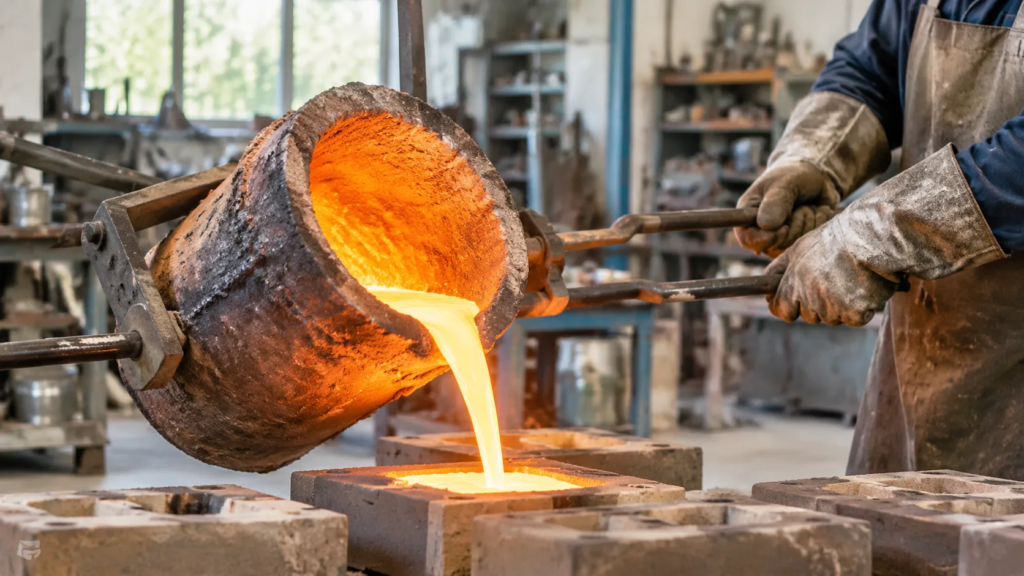
Precision Art Casting & Sculpture Casting Equipment
High-Detail Vacuum Pressure Casting Systems
Porosity, blown molds, and hours of chasing out surface defects drain foundry profits and ruin fine sculptured details. We engineered our art casting / sculpture casting equipment to eliminate these headaches at the pour. By combining deep-vacuum evacuation with rapid positive pressure injection, our systems drive molten metal into the tightest crevices while stripping atmospheric gases out of the melt zone.
Whether you run a private bronze sculpture studio or manage high-volume commercial art foundry runs, our machines deliver clean, dense, metallurgical-grade pours cycle after cycle.
Core Capabilities for Fine Art Foundries
- Broad Lost-Wax Compatibility: Fully supports both solid flask investment setups and reinforced ceramic shell molds without requiring custom tooling.
- Micro-Detail Reproduction: Captures sub-millimeter surface textures, fingerprints, sharp incised lines, and extreme undercuts directly from your wax or resin masters.
- Inert Gas Melt Protection: Integrated argon gas purging shields molten metal from air exposure, preventing dross formation, oxide inclusions, and pinhole porosity.
- Minimized Post-Pour Chasing: High surface fidelity straight out of the investment drastically cuts down your labor costs on manual weld repairs, grinding, and chasing.
Technical Specifications for Sculpture Casting Machinery
We build our art casting / sculpture casting equipment to eliminate the guesswork from fine art reproduction. From ultra-thin bronze figurative works to solid brass sculptured forms, our machinery provides tight thermal management, deep evacuation, and fast overpressure injection to ensure complete mold fill every cycle.
Core System Specifications
| Parameter | Standard Configuration | High-Temp Upgrade Option |
|---|---|---|
| Heating Method | Solid-state medium-frequency induction | Solid-state medium-frequency induction |
| Max Operating Temperature | 1,300°C (Bronze, Brass, Aluminum, Silver) | 1,600°C (High-temp alloys, Stainless steel) |
| Max Flask Envelope | Ø 300 mm × 450 mm Length | Custom heights upon request |
| Vacuum Draw (Chamber & Flask) | Dual-stage rotary vane, down to -0.098 MPa | High-capacity vacuum booster |
| Injection Overpressure | Adjustable up to 3.0 bar (0.3 MPa) inert gas | Up to 4.0 bar (0.4 MPa) |
| Crucible Capacities | Bronze: 15 kg / Aluminum: 5 kg / Gold: 20 kg | Up to 25 kg bronze equivalent |
Induction Power and Thermal Control
- Solid-State Power Supply: Medium-frequency induction delivers rapid, uniform heating directly to the charge, generating a natural metallurgical stirring effect that stops alloy segregation.
- Dual-Zone Thermal Tracking: Real-time liquidus monitoring using an integrated dual-channel optical pyrometer backed by submerged type-S/K thermocouples prevents over-soaking and metal boiling.
- Alloy Versatility: Engineered to handle silicon bronze, white bronze, architectural brass, and specialty light metals in accordance with established casting quality standards for reliable metal parts. If you work with light foundry metals, review our aluminum alloy casting guide for optimal melt temperatures.
Vacuum Injection and Pressure Parameters
- Dual-Stage Vacuum Draw: Pulls an immediate vacuum across both the melting crucible and the flask chamber, stripping ambient air, moisture, and sub-surface bubbles from the mold before the pour initiates.
- Differential Overpressure: Instantly seals and floods the chamber with pressurized inert gas at up to 3.0 bar the moment the stopper rod lifts, driving molten metal into thin sections down to 0.5 mm.
- Flask Accommodation: The expansive mold chamber accepts solid flasks and perforated canisters up to 300 mm outer diameter by 450 mm length, with drop-in reduction collars for smaller production flasks.
Studio Utility Demands
- Electrical Supply: 3-phase, 380V/480V, 50/60 Hz (standard 15 kW to 30 kW industrial configurations).
- Cooling Circuit: Dedicated closed-loop water chiller running at 3 to 4 bar, maintaining coil and seal integrity during back-to-back runs.
- Pneumatics & Cover Gas: 6 bar dry compressed air for pneumatic rams; industrial argon or high-purity nitrogen supply for inert-gas blanket purging.
Vacuum Pressure Casting Machine Engineering
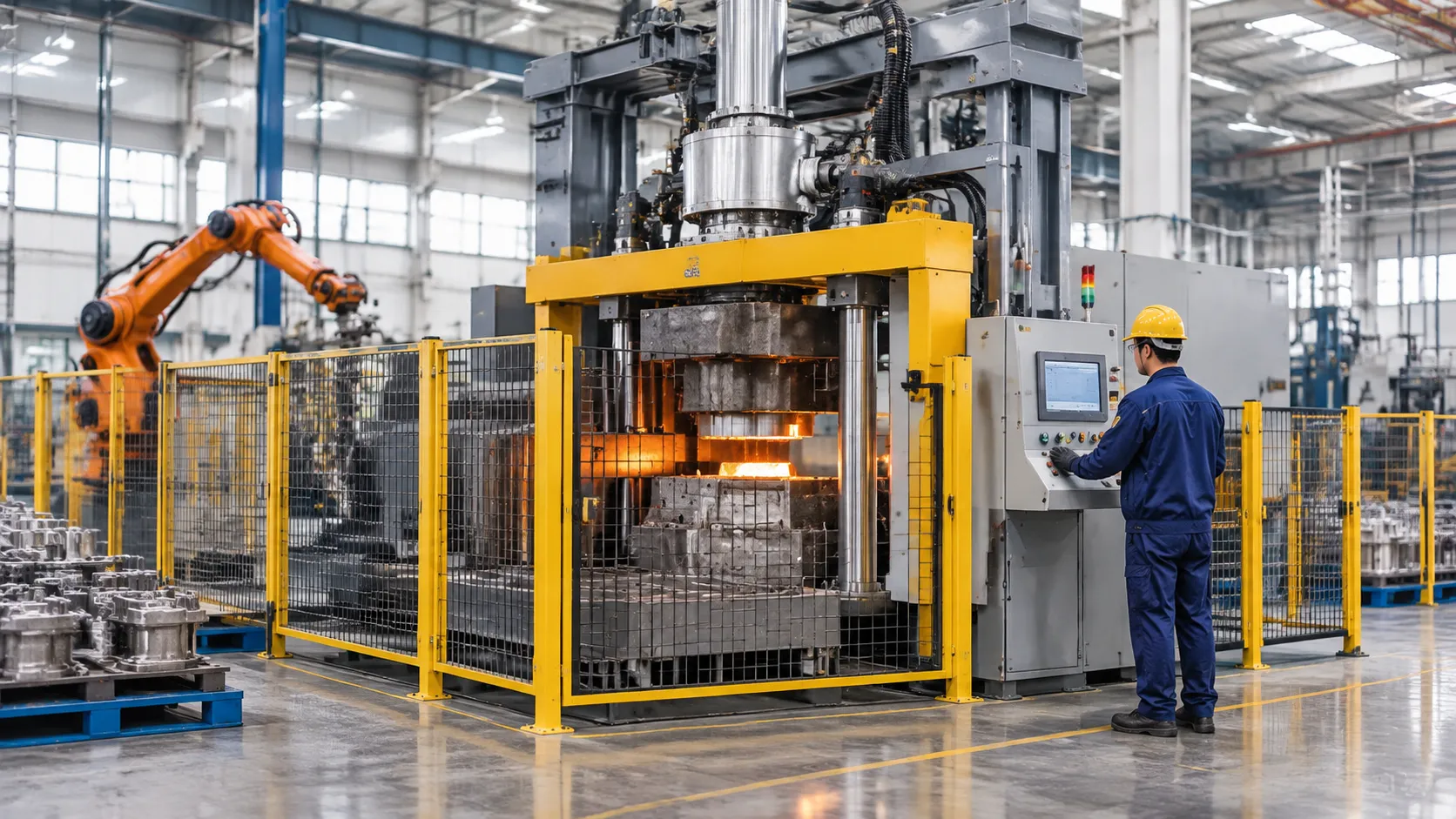
Traditional tilt pouring exposes molten bronze to open air, dragging oxide skins and crucible slag straight into your mold cavity. We engineered our art casting / sculpture casting equipment around an automated bottom-pour vacuum pressure architecture to eliminate that headache. By isolating the melt and mechanically governing every second of the pour, this system turns high-risk studio pours into clean, repeatable runs.
Slag-Free Bottom-Pour Stopper Rod Delivery
Manual ladling and tilting always risk pouring surface dross into the sprue. Our bottom-pour casting furnace setup utilizes a precision-machined graphite stopper rod seated directly into the crucible orifice:
- Clean Molten Metal Flow: Liquid metal discharges directly from the bottom of the melt pool, leaving floating dross, oxides, and impurities behind in the crucible.
- Zero Turbulent Splashing: Direct vertical alignment with the flask sprue minimizes air entrainment and prevents the turbulence that causes inclusions in fine figurative sculpture.
- Instant Pneumatic Lift: The stopper rod lifts cleanly via automated pneumatic control, opening the gate in milliseconds for uniform, uninterrupted cavity filling.
Rapid Vacuum Evacuation to Overpressure Injection
Sculptural works often feature paper-thin cross sections, delicate textures, and deep undercuts that refuse to fill under standard gravity. Our vacuum pressure casting machine relies on an engineered pressure differential:
- Mold Evacuation: The flask chamber pulls a deep vacuum, evacuating trapped air through the permeable investment mold walls.
- Synchronized Pouring: The bottom-pour mechanism opens while the mold remains under negative pressure, pulling the molten stream deep into the cavity.
- Inert Gas Overpressure: Milliseconds after delivery, the melt chamber floods with positive gas pressure, compacting the liquid metal into every micro-crevice before solidification begins.
Electromagnetic Induction Stirring
Alloy segregation ruins chemical patinas and creates weak spots across large sculptural planes. Our solid-state induction generator operates at tuned frequencies to generate an active electromagnetic stirring effect:
- Uniform Element Suspension: Heavier alloying components stay evenly blended throughout the melt rather than settling at the bottom of the crucible.
- Consistent Patina Response: Uniform chemical distribution prevents blotchy, uneven coloring when applying hot or cold patinas to finished bronze sculptures.
Dual-Channel Liquidus Monitoring
Pouring too hot causes severe shrinkage porosity and burn-in, while pouring too cold results in short pours and non-fills. We combine two diagnostic tools to lock in the proper pouring window:
- Type-S/R Thermocouple: Provides steady, reliable tracking through the initial heating and metallurgical soak phases.
- High-Speed Optical Pyrometer: Reads liquidus surface temperatures directly with zero lag, ensuring you hit the ideal fluidity curve outlined in our casting alloy properties and material selection guide.
Oxygen-Free Closed-Chamber Processing
Melting sculptural bronzes, brasses, and fine metals in open air accelerates crucible wear and forces heavy dross formation. Our sealed chamber design protects your alloys throughout the entire cycle:
- Inert Gas Purge: Argon or nitrogen purges the melt zone before the induction field engages, eliminating oxygen before heating starts.
- Crucible Preservation: Shielding graphite crucibles and stopper rods from oxygen prevents rapid carbon burn-off, cutting replacement costs.
- Cleaner Melts: Alloys stay bright and fluid without heavy reliance on chemical fluxes that can pit mold surfaces.
Compatible Art Casting Alloys and Applications
Different metals behave unpredictably under heat. Zinc burns off and clouds the studio, silicon bronze stiffens before filling thin fingers, and aluminum traps hydrogen pinholes that only show up during final polishing. We build our art casting / sculpture casting equipment to give you total metallurgical control over every melt, eliminating dross, gas porosity, and alloy separation across all standard studio metals.
Silicon Bronze for Thin-Walled Sculpture
Silicon bronze remains the backbone of the sculpture foundry. Our system maintains the high fluidity required to shoot walls down to 1.5 mm on complex figurative bronzes. Because the melt chamber stays under inert cover, silicon does not oxidize out of the bath, leaving you with clean metal that flows into deep undercuts without tearing.
Architectural Brass and White Bronze Without Zinc-Flare
Casting brass or white bronze in open crucibles cooks out volatile zinc, shifting alloy color and filling the workspace with hazardous white smoke. Our sealed, pressurized melt environment suppresses zinc vaporization entirely: True-to-spec alloy chemistry: Zinc stays suspended in the melt instead of boiling off into the room. Flawless color consistency: Zero discoloration or dull patches across multi-piece assemblies. Clean studio air: Sealed processing stops toxic metal fumes at the source.
Porosity-Free Sculptural Aluminum
Aluminum sculptures fail when subsurface hydrogen bubbles ruin mirror-polished planes or resist uniform chemical patination. Through vacuum degassing and controlled pressure fill, our equipment produces dense, gas-free aluminum castings ready for high-grit mechanical finishing and anodizing.
Fine Gold and Sterling Silver Reproductions
For limited-edition statuettes, medals, and high-detail historic reproductions, our machines deliver jewelry-grade density on fine art scales. The smooth, bottom-pour delivery avoids turbulence, stopping oxide folds and shrinkage voids in high-value silver and gold alloys. For foundries balancing sculptural projects alongside industrial components, mastering these alloy characteristics parallels standard investment and precision casting services for metal parts.
Pattern Material Compatibility
You do not need to alter your modeling workflow to get crisp fills. Our casting parameters adapt directly to your preferred tooling media: Castable 3D-printed resins: Clean fills even in dense resin patterns that require rapid fill rates. Traditional carving waxes: Perfect reproduction of delicate hand-carved textures, fingerprints, and tool marks. Organic wax setups: Smooth flow through standard spruing trees and complex gated systems.
Lost Wax Casting Workflow and Operation
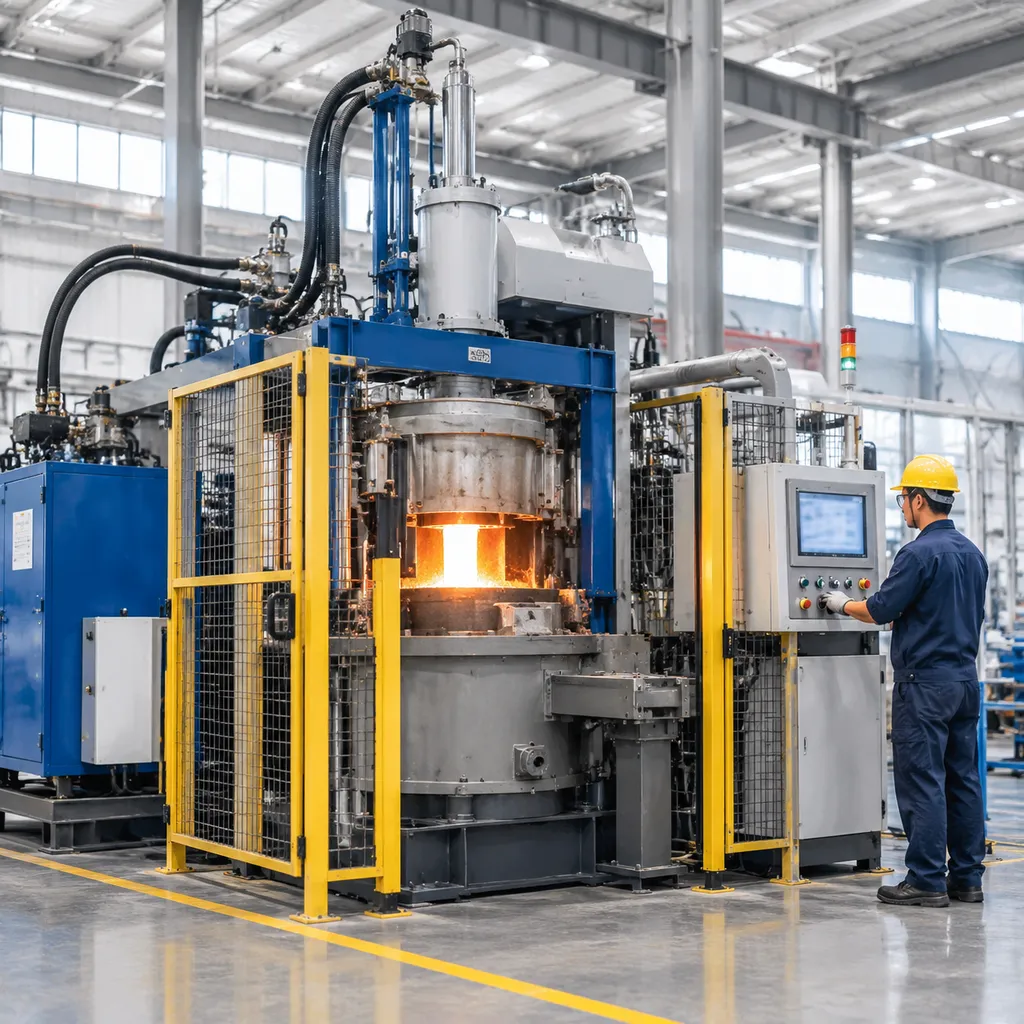
Inconsistent manual pours, temperature guesswork, and unexpected mold blowouts waste valuable studio time. We engineered the operation of our art casting / sculpture casting equipment around an automated, repeatable sequence that protects delicate investments and guarantees dense, razor-sharp reproductions.
Step-by-Step Casting Sequence
- Touchscreen PLC Recipe Recall: Program and store up to 100 custom casting recipes. Set precise target temperatures, soak times, vacuum thresholds, and injection pressures for silicon bronze, brass, silver, or white bronze with one-touch recall.
- Hermetic Chamber Locking and Vacuum Purge: Place your flask into the lower chamber. The pneumatic clamp seals the unit hermetically, initiating an automated pre-melt vacuum draw to eliminate ambient air, moisture, and potential gas pockets before heating starts.
- Induction Melting and Controlled Metallurgical Soak: Using an advanced induction melting furnace for fast, precise alloy casting, the system rapidly melts the charge under an inert argon blanket. A programmed thermal soak ensures consistent liquidus temperatures throughout the crucible without burning off critical alloy elements.
- Synchronized Stopper Rod Injection: The moment the alloy achieves pouring equilibrium, the pneumatic stopper rod lifts. Metal feeds straight into the sprue from the bottom of the crucible while the machine instantly flips from vacuum suction to differential positive overpressure, driving liquid metal into microscopic mold details.
- Inert Gas Cooling Sequence: After mold filling, the chamber maintains a steady, controlled inert atmosphere during solidification. This regulated cool-down shields hot metal from atmospheric oxidation and prevents rapid thermal shock that can crack investment molds or warp thin-walled sculpture sections.
Studio Safety and Footprint for Art Casting Equipment
Operating an artistic foundry in an urban studio or small workshop requires maximum operator protection and efficient space utilization. We design our art casting / sculpture casting equipment to eliminate common foundry hazards—like liquid metal splash, stray toxic fumes, and runaway temperatures—while fitting neatly into tight floor plans.
Enclosed Pouring and Active Fume Containment
Manual ladle pouring exposes operators to open radiation and severe splash risks. Our vacuum pressure casting machines solve this by housing both the melting crucible and the investment flask inside a sealed, heavy-gauge steel containment chamber.
- Complete Splash Containment: The hermetically sealed chamber isolates liquid bronze and brass during the entire melting and bottom-pour cycle, stopping molten blowout risks completely.
- Direct Studio Exhaust Integration: The sealed melt chamber features a standard duct flange engineered for direct connection to local studio exhaust systems. Fumes generated during melting are vented outside without contaminating your studio air.
- Coordinated Studio Safety: Just as proper steam and pressure relief are critical when running a dewaxing autoclave, containing metal vapors and thermal radiation at the pour phase guarantees a clean, code-compliant workspace.
Automated System Interlocks
To safeguard equipment and personnel, our machines run automated hardware and software interlocks that monitor critical utilities before and during every cast:
- Cooling Water Flow Sensors: Automatically cuts induction heating if closed-loop coolant flow drops below safe pressure thresholds.
- Pneumatic and Vacuum Verification: Prevents crucible release or chamber pressurization if the mold seal is unseated or vacuum draw is incomplete.
- Chamber Door Safety Latches: Pneumatic mechanical locks keep the melting and flask chambers locked under positive pressure until alloys solidify.
Compact Shop Footprint
You do not need an industrial warehouse to pour professional bronze statuary. We engineered the machine architecture to minimize required floor area, integrating power electronics, the vacuum manifold, and pneumatic controls into a single chassis.
| Specification | Studio Standard Parameter | Studio Benefit |
|---|---|---|
| Total Floor Footprint | Under 2.5 m² (approx. 27 sq ft) | Fits standard studio doorways and tight shop corners |
| Exhaust Port Diameter | 100 mm (4 in) standard flanged outlet | Direct hookup to standard local studio extraction hoods |
| Chamber Access | Pneumatic top/front swing clearance | Allows ergonomic single-operator loading and unloading |
| Cooling Interface | Quick-connect closed-loop fittings | Eliminates open reservoirs and moisture near molten metal |
Auxiliary Lost Wax and Sculpture Casting Equipment
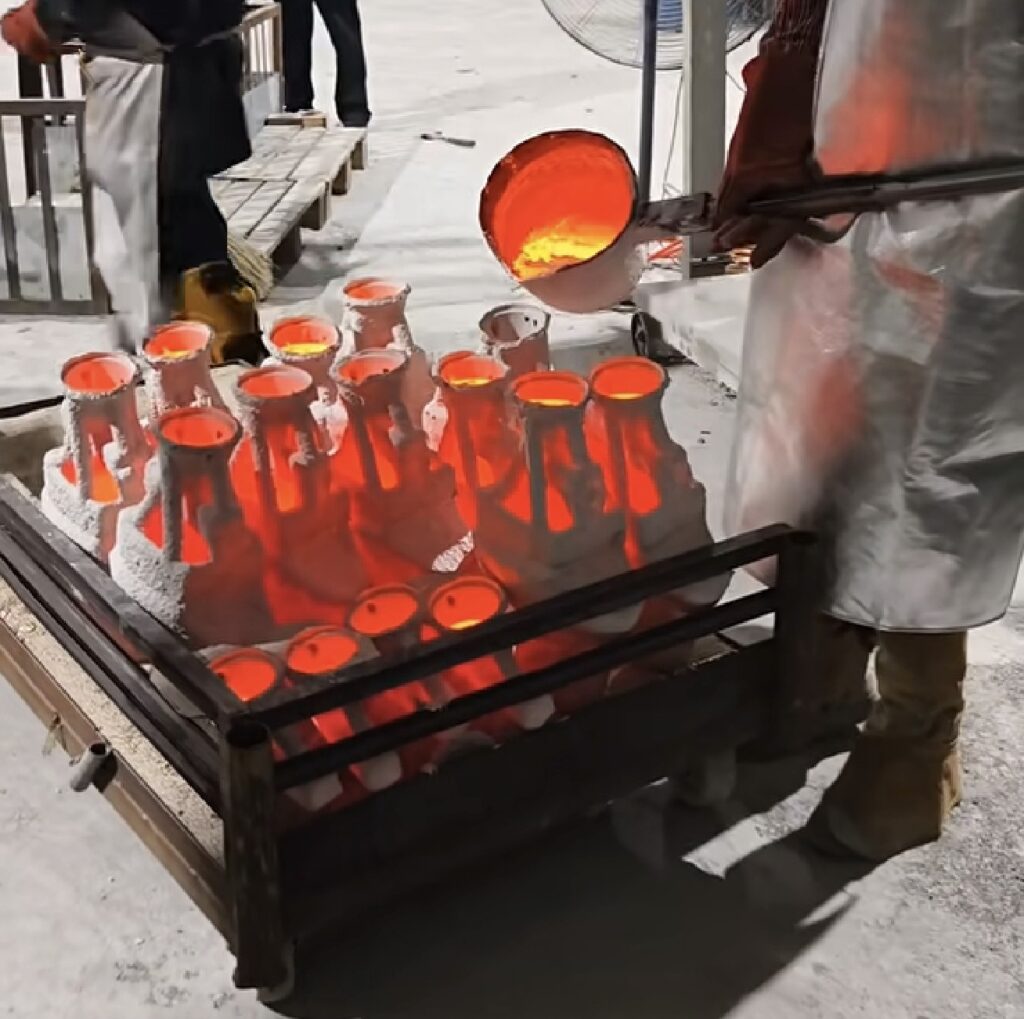
A flawless pour is only half the battle. Trapped slurry bubbles, uneven burnout, and rough mold breakout can ruin a bronze casting before it ever reaches the chasing bench. We build heavy-duty auxiliary art casting / sculpture casting equipment to protect fine surface textures through every phase of preparation and cleanup. Review our investment casting equipment list for efficient production to integrate these workstations directly into your studio workflow.
- High-Vacuum Investment Slurry Mixers
Eliminate air entrapment at the source. Our dual-motion mixing paddles combine with a deep-draw vacuum chamber to degas investment slurry before and during the pour, preventing nodule formation and surface pinholes on intricate wax patterns. - Digital Burnout Kilns with Multi-Stage Ramp-Soak Control
Even heat distribution is critical to avoid mold cracking and wax ash residue. Our digital burnout furnaces feature multi-segment programmable ramp-and-soak controllers, allowing you to tailor thermal profiles for standard casting waxes, heavy sprues, or resin patterns. - High-Pressure Waterjet Wash Stations
Scraping and hammering baked investment out of fragile undercuts risks bending or gouging delicate metalwork. Our enclosed wash stations use variable high-pressure water streams to strip away solid investment and ceramic shell material in minutes without damaging fine bronze surfaces. - Recirculating Micro-Sandblasting Cabinets
Prep your sculptures for patination without rounding off sharp lines. These sealed blasting units run ultra-fine media to remove stubborn refractory residues from deep crevices, delivering a consistent, ready-to-color surface while filtering and recycling abrasive media to keep shop air clean.
Built for Continuous Production: Standards, Warranty, and Support

When you operate an active studio or commercial foundry, machine downtime kills production deadlines. We build our art casting / sculpture casting equipment to handle the severe thermal cycles of back-to-back melts without structural distortion or electronic failures. Every frame uses a heavy-duty industrial steel chassis designed to isolate operational vibration, protect high-temp seals, and withstand daily shop use.
To ensure immediate regulatory compliance and complete operator safety, all assemblies meet the CE Industrial Machinery Directive and utilize UL-compliant electrical switchgear, matching the reliability expected of modern smart factory solutions.
| Standard & Support Feature | Specification Details |
|---|---|
| Chassis Construction | Reinforced structural steel plate with anti-corrosion coating |
| Electrical Compliance | CE Industrial Machinery Directive & UL-certified components |
| Standard Warranty | 12-month full replacement coverage on mechanical and electrical systems |
| Commissioning & Training | On-site factory technician setup or guided remote video onboarding |
| Parts Availability | Lifetime stock guarantee on crucibles, stopper rods, and chamber seals |
Practical Support and Consumable Supply
- Comprehensive 12-Month Warranty: We protect your investment with full 12-month coverage across all primary induction components, vacuum valves, pneumatic actuators, and PLC electronics.
- Direct Operator Training: Get your crew running immediately. We offer full on-site technician commissioning for hands-on setup, alongside detailed remote video sessions covering alloy recipe programming, temperature calibration, and routine preventative care.
- Guaranteed Replacement Consumables: Avoid unexpected production stops. We maintain ready inventory of high-density graphite crucibles, ceramic bottom-pour stopper rods, and high-temperature vacuum chamber seal kits, ready for immediate dispatch whenever your foundry runs low.
Frequently Asked Questions About Sculpture Casting Equipment
Can this equipment burn out direct 3D-printed castable photopolymer resins?
Yes. Our art casting / sculpture casting equipment works smoothly with standard investment materials formulated for 3D-printed resins and traditional carving waxes. When paired with a programmable burnout kiln, the system easily handles the thermal expansion cycles required for clean resin burnout without mold cracking or ash residue.
Why does bottom-pour casting deliver better detail than manual tilt pouring?
Manual tilt pouring exposes molten bronze to ambient air, causing instant oxidation, temperature drops, and turbulent flow. A bottom pour casting furnace releases metal directly from the bottom of the crucible straight into the mold under vacuum. This draws clean, dross-free metal into the finest crevices. While heavy architectural shapes often utilize sand casting equipment for basic forms, our vacuum-assisted bottom-pour system ensures crisp surface textures, ultra-thin cross-sections, and zero air entrapment for fine statuary.
How do adapter rings support varying flask diameters without chamber swaps?
We use quick-change flange adapter rings that drop directly into the upper seal plate of the flask chamber. Universal fit: Run standard flasks from 100 mm up to 300 mm outer diameter using the same chamber. Hermetic sealing: High-temperature silicone O-rings seal against the adapter rim instantly under vacuum. Zero downtime: Switch flask sizes between melts in under two minutes without replacing chamber hardware.
Is inert argon gas mandatory or can molds be cast under vacuum alone?
You can cast under vacuum alone, but using an inert gas purge delivers far cleaner metallurgy: Vacuum only: Pulls metal into thin cavities and evacuates mold air, but leaves hot metal vulnerable to ambient surface oxidation during the pour. Vacuum plus argon overpressure: Clears oxygen from the melt chamber, stops copper and zinc outgassing, and applies positive differential pressure behind the melt to lock in dense, porosity-free walls.
What are the baseline power, ventilation, and chiller requirements for studio setup?
| Utility | Baseline Specification | Studio Operational Requirement |
|---|---|---|
| Electrical Power | 3-Phase 380V–480V, 50/60 Hz | Dedicated 25 kW to 45 kW circuit breaker |
| Water Cooling | Industrial closed-loop water chiller | 5 kW to 8 kW cooling capacity, 16–22°C delivery |
| Inert Gas Supply | Industrial Argon (or Nitrogen) | Regulated tank delivery at 0.4–0.6 MPa (58–87 PSI) |
| Ventilation | Studio exhaust ducting | Minimum 500 CFM extraction directly above melt cover |
 English
 Russian
 German